

There’s a moment many people hit when they know they need more support — but aren’t sure what kind.
Weekly therapy might feel like it’s no longer enough. At the same time, the idea of fully stepping away from daily life can feel overwhelming, disruptive, or unnecessary. That gray space is where a lot of people get stuck — not because they don’t want help, but because choosing a recovery program isn’t always straightforward.
Most people aren’t asking, “Which program is best?”
They’re really asking, “What level of support fits my life right now?”
And sometimes, the answer is a program with a higher level of care.
Why This Decision Feels So Confusing at First
Choosing care isn’t just a clinical decision. It’s emotional, practical, and deeply personal.
People often feel pulled in opposite directions:
-
Wanting strong support, but fearing loss of independence
-
Needing structure, but worrying about stepping away from work or family
-
Wanting relief quickly, but not knowing how much help is “enough”
The confusion usually comes from trying to choose a program before understanding what you actually need — not from a lack of motivation or readiness.
What Most People Consider Before Choosing a Program
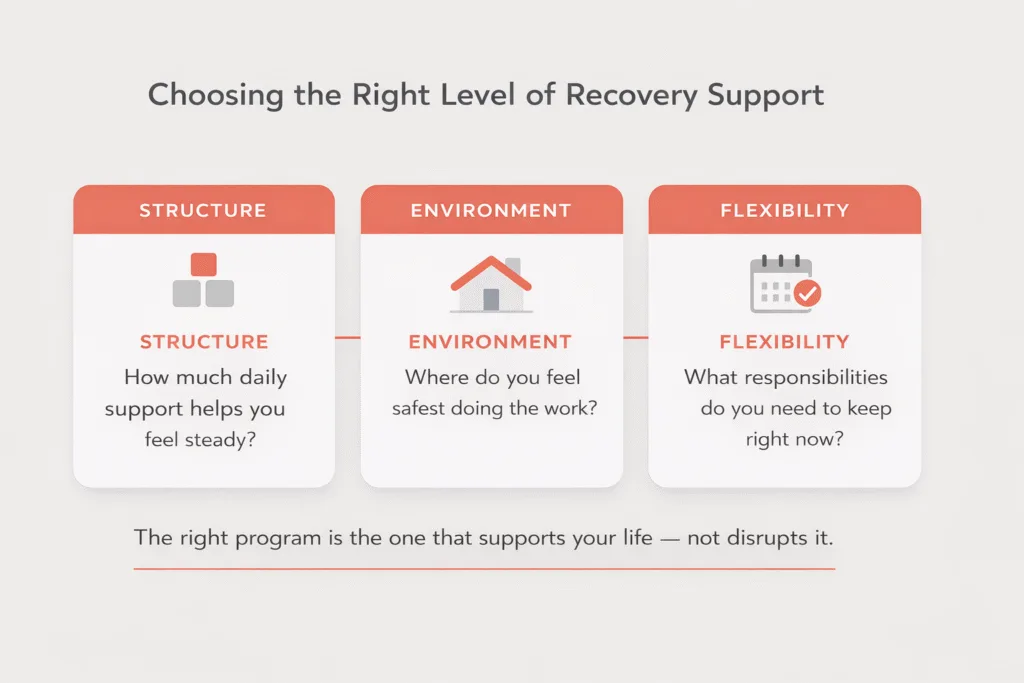
Rather than starting with program names, many people naturally weigh a few core questions first:
-
How stable do I feel day to day?
-
Do I feel safe managing triggers outside of structured care?
-
How much support do I need right now — emotionally and medically?
-
What responsibilities do I realistically need to maintain?
These questions tend to matter more than labels. The right fit often becomes clearer when people focus on support needs instead of program titles.
The Role of Structure in Early Recovery
Structure is one of the biggest factors in choosing a recovery path.
Some people need:
-
A fully immersive environment
-
Distance from daily stressors
-
Around-the-clock clinical oversight
Others benefit from:
-
Strong daily support while still returning home
-
Opportunities to practice skills in real-world settings
-
Flexibility to maintain work or family roles
Neither approach is “more committed” than the other. They simply offer different ways of stabilizing and building momentum.
| Aspect | Inpatient Treatment | Partial Hospitalization Program (PHP) |
|---|---|---|
| Supervision | 24/7 medical and therapeutic support within the facility. | Daily therapeutic sessions with clients returning home in the evenings. |
| Environment | Controlled, immersive setting removing clients from external triggers. | Structured treatment during the day; clients apply skills in real-world settings post-session. |
| Intensity of Care | High-intensity, suitable for severe cases and those requiring medical detoxification. | Intensive care during the day with increased personal freedom. |
| Duration | Typically ranges from 28 days to several months, depending on individual needs. | Varies based on progress; often serves as a bridge between inpatient and outpatient care. |
| Cost | Higher due to residential services and continuous supervision. | More affordable, eliminating costs associated with overnight stays. |
| Ideal Candidates | Individuals with severe addictions, co-occurring disorders, or those lacking a supportive home environment. | Individuals needing substantial support who have a stable home environment conducive to recovery. |
Why There’s No One “Right” Path
Two people can start recovery at the same time and need completely different levels of care — and both can succeed.
The right program depends on things like:
-
Severity and duration of substance use
-
Co-occurring mental health concerns
-
Home environment and support system
-
Past treatment experiences
-
Readiness for independence
Choosing support isn’t about toughness or willpower. It’s about giving yourself the structure you need right now, knowing that it can change as you grow stronger.
How People Often Move Between Programs Over Time
Recovery isn’t static. Many people adjust their level of care as stability improves.
That might include:
-
Beginning with a more immersive setting, then gradually stepping into structured daytime care
-
Starting with daily support and later transitioning into less intensive options
-
Revisiting structure during stressful periods, then scaling back again
Movement between programs isn’t failure — it’s responsiveness. Treatment should adapt to you, not the other way around.
Getting Clear Without Rushing the Decision
If you’re trying to decide what kind of recovery program makes sense, clarity usually comes from conversation — not comparison charts.
Talking through your situation can help you understand:
-
What level of structure is most supportive right now
-
How transitions typically work
-
What flexibility exists as your needs change
For those weighing more immersive support versus a structured day option, learning about inpatient treatment and a PHP can be helpful — especially when that information is grounded in your personal goals and circumstances, not pressure to choose quickly.
You Don’t Have to Figure This Out Alone
Choosing a recovery program isn’t about picking the “better” option. It’s about choosing the support that fits your life, your needs, and your readiness — today.
At Greater Boston Addiction Centers, we help people talk through these decisions thoughtfully, without assumptions or rush. If you’re unsure what level of care makes sense for you, a conversation can help bring clarity and confidence to the next step. Call today to speak to someone who can help you navigate your treatment options.
