

You’re not broken.
And you don’t need to be rebuilt.
If you’ve ever worried that getting sober means losing your edge, your voice, your spark—this is for you.
At Greater Boston Addiction Centers, we talk to a lot of people who don’t just fear withdrawal or failure—they fear invisibility. That the person they’ve been… the one who feels deeply, creates intensely, connects quickly… might disappear in recovery.
But that’s not what medication assisted treatment (MAT) is for. It’s not here to erase you. It’s here to help you stay.
“What If I Get Boring?”: The Identity Fear in Early Recovery
This fear is more common than people think. Especially among those whose personality, creativity, or social confidence seemed amplified by substances.
It’s not vanity—it’s vulnerability.
For many, alcohol or drugs felt like a shortcut to expression. The barrier between their heart and the world got thinner. Emotions flowed more freely. Thoughts made sense. They could cry, connect, dance, laugh, write, speak. For a while, the substance felt like the magic key.
So what happens when that key is taken away?
You might wonder: Will I still be funny? Will I still be able to write songs? Will I still want to go out and be with people?
You might be afraid that recovery will leave you clean—but flat. Functional—but distant. Alive—but not living.
Let’s name that. Let’s respect it. Because until someone validates that fear, no amount of reassurance feels real.
Medication Assisted Treatment Isn’t a Mute Button
One of the biggest misconceptions about MAT is that it dulls your emotions or blocks your creativity.
The truth is: medication assisted treatment is not designed to dampen your inner world. It’s designed to reduce the external chaos—so you can actually access your inner world safely.
Think of it like noise-canceling headphones. Not because life gets silent—but because you can finally hear the parts of yourself that matter. Your values. Your insights. Your emotions that aren’t hijacked by survival mode.
MAT doesn’t rewrite your personality. It lowers the volume on panic. It takes the edge off cravings. It removes the pressure of white-knuckling every moment.
And in that quieter space, you begin to realize—you’re still here.
The part of you that felt things deeply? It’s still there.
The part of you that connected with others? It’s waiting patiently.
The part of you that created beauty or made people laugh? It didn’t disappear—it just needs care, not chaos.
Sobriety Isn’t the Death of Creativity
We need to challenge the myth that suffering is the only path to art. Or that drugs and alcohol are the only things that “unblock” us.
Yes, some people feel more creative when they’re high or buzzed. But what’s often misunderstood is why. It’s not the substance that created your talent—it’s that it temporarily quieted the shame, fear, or self-doubt that kept you from accessing it.
And here’s the powerful truth: you don’t need to destroy yourself to feel free.
In recovery—with the support of things like medication assisted treatment—you can learn to access vulnerability, insight, and inspiration without risking your health or safety.
It takes time. And it takes help. But it’s real.
You’re Not Choosing Between Feeling and Functioning
A lot of people see recovery as a choice between two extremes:
- Option 1: Stay creative, emotional, and intense—but at the mercy of addiction.
- Option 2: Get clean, get flat, and settle for being “fine.”
But that’s a false binary. And it keeps people stuck in ambivalence.
MAT exists for people who don’t want to pick between those two. It gives you enough stability to begin healing—without stripping you of your essence.
You can feel and function.
You can have depth and direction.
You can laugh, cry, write, dance, speak, feel—and not spiral.
MAT Isn’t “The Easy Way Out”—It’s a Tool for Staying In
Some people worry that choosing medication means they’re “cheating” or “not doing it right.”
That’s stigma talking. Not truth.
There is no moral prize for suffering more than necessary. There is no ribbon for doing it the hard way if the hard way doesn’t keep you alive.
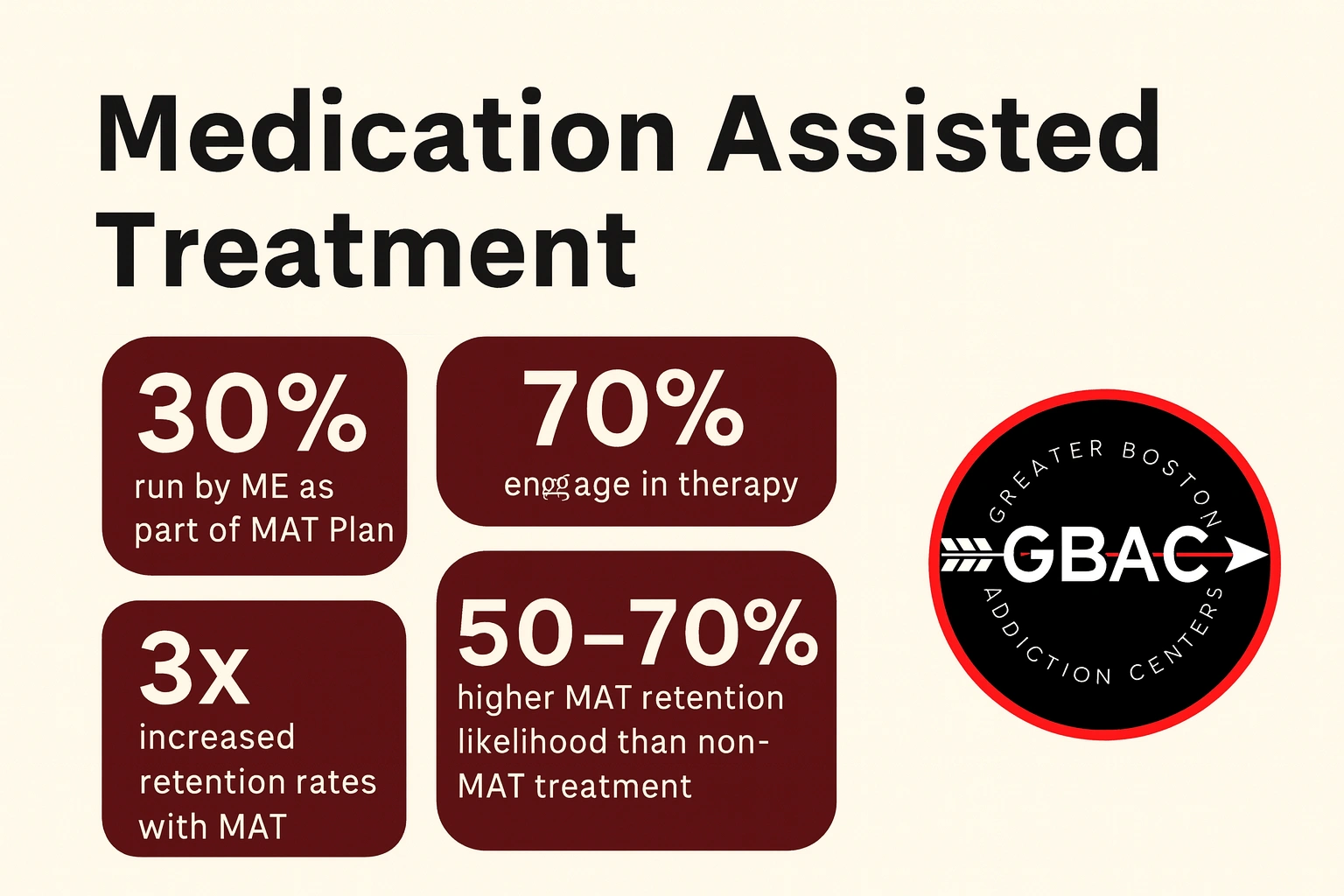
Medication assisted treatment is a clinically proven approach that helps people:
- Stabilize brain chemistry
- Reduce cravings and relapse risk
- Stay engaged in therapy and relationships
- Begin to build a life that doesn’t center around substances
And in places like Needham and Boston, access to MAT is growing—and saving lives.
It’s not a shortcut. It’s scaffolding.
You Get to Keep Your Voice
Let’s say this clearly: recovery is not the end of who you are. It’s the beginning of owning who you are—without fear.
You don’t lose your identity when you choose to get help. You reclaim it.
You don’t erase your personality by taking medication. You stabilize your chemistry so your personality can shine without crashing.
And you don’t trade magic for monotony. You trade chaos for clarity. And with that clarity comes a different kind of magic—the kind you can trust.
FAQ: Medication Assisted Treatment & Identity
Does medication assisted treatment change my personality?
No. MAT is designed to support neurological stability, not suppress emotion or personality. Most people find that they feel more like themselves once cravings and withdrawal symptoms are no longer running the show.
Will I still feel creative if I take medication?
Yes. In fact, many clients report increased creativity once their nervous systems aren’t in constant survival mode. MAT doesn’t erase creativity—it creates a safer space for it to thrive.
Is MAT a permanent solution?
Not necessarily. For some, MAT is a short-term bridge. For others, it becomes part of long-term recovery. The right timeline depends on your individual needs, goals, and progress. Your treatment team will help you decide what makes sense for you.
Is MAT only for opioid addiction?
No. While MAT is most commonly associated with opioid use disorder (e.g., buprenorphine, methadone), it’s also used to support recovery from alcohol use disorder with medications like naltrexone and acamprosate. The goal is always the same: reduce harm, support recovery, and protect the person.
What if I’m still afraid I’ll lose something?
That fear is valid. MAT doesn’t ask you to ignore it—it gives you the support to explore it safely. You’re allowed to grieve what felt like freedom, even if it came with consequences. And you’re allowed to want more from life than just survival.
You Are Still You—With More Support
Let’s be real: recovery asks a lot. It asks you to give up what’s familiar. To risk becoming someone new.
But here’s the reframe: you’re not becoming someone new. You’re returning to someone you’ve always been. The parts that felt too sensitive. Too bright. Too deep. The parts that substances muted, distorted, or tried to magnify.
They’re still here. Waiting.
Medication assisted treatment isn’t about removing them. It’s about protecting them long enough for you to feel safe showing up again.
You’re not “getting clean” to get boring. You’re getting safe enough to come alive in a way that lasts.
Ready to Talk?
Call (877)920-6583 to learn more about our medication assisted treatment services in Boston, MA. We’re here to help you stay—without losing the parts of you that matter most
