

It didn’t start as a problem. It started as a spark.
A glass of wine before painting. A pill to slow the racing thoughts before hitting the mic. A little something to get out of your own head and into the work. It wasn’t about escape—it was about access.
If you’re someone who feels things intensely or lives in the in-between spaces of emotion and art, you understand this. For a long time, substances may have felt like the only thing that helped you reach the rawness—without falling apart in the process.
But slowly, the thing that helped you create began to unmake you. Not dramatically. Quietly. Missed calls. Mornings full of shame. Long stretches where nothing came out at all—not the words, not the melody, not the connection.
And when someone says, “You need help,” part of you knows they’re right. But the other part—the one that holds the pen, the paintbrush, the guitar pick—isn’t just scared of letting go.
It’s scared of losing everything that made you you.
This is where medication assisted treatment (MAT) begins to matter. Because it’s not about flattening your edge or fixing you. It’s about helping you stay you—with more safety, not less soul.
You Don’t Have to Pick Between Emotion and Recovery
It’s a painful false choice many creatives feel trapped in:
- Stay in addiction and keep your emotional depth, but keep unraveling
- Get sober and risk becoming… flat. Numb. Disconnected from what makes your voice yours
That fear is real. Especially when substances helped quiet the critic in your head or helped you cry for the first time in weeks.
But here’s what most people don’t know: medication assisted treatment doesn’t turn you down. It turns down the noise around you so you can hear yourself again.
MAT isn’t about blunting your emotions—it’s about helping you regulate them so they stop running the show.
MAT Makes Space for Emotion—Not Less of It, Just Less Chaos
Substances may have amplified emotion, but they also blurred it. What began as access eventually became distortion. The high was too high, the crash too long, the in-between moments unbearable.
Medication assisted treatment provides a physiological floor—a stabilizing effect that allows your nervous system to settle.
That settling doesn’t eliminate depth. It gives it context.
You’re still you, but now your emotions aren’t weaponized. They’re not so sharp that you bleed just from feeling them.
And in that more even space? Creativity returns. Not rushed. Not desperate. Present.
Real People. Real Return.
One client—a filmmaker in his 40s—came to us after years of bouncing between bursts of brilliance and weeks of collapse. He told us, “My best stuff always came when I was using—but I never finished anything.”
With medication assisted treatment, he didn’t stop creating. He started finishing. And maybe more importantly, he started feeling proud of the work without being wrecked by it.
Another client—a college student studying graphic design—started MAT after a hidden pain pill habit spun into full dependency. What terrified her most wasn’t detox. It was becoming someone who didn’t feel big feelings.
What she found instead was relief.
“MAT didn’t take my emotions away,” she said. “It just gave them a filter. I could feel something without needing to numb it five minutes later.”
These aren’t exaggerations. They’re evidence. That regulation doesn’t erase creativity—it supports it.
Your Art Doesn’t Come From the High. It Comes From You.
Here’s a hard truth that also happens to be deeply freeing:
The substance didn’t make the art. You did.
The lyrics, the colors, the lines—that was you. The substance might have helped you silence your fears long enough to start. But it wasn’t the source. You were.
MAT helps people learn to access that source without requiring chaos to get there. It gives you the bandwidth to sit with a blank page and not panic. To chase the idea without chasing a high.
You still get the spark. But now it doesn’t burn down your whole life every time it shows up.
What Medication Assisted Treatment Looks Like in Practice
So what is MAT, really?
At Greater Boston Addiction Centers, we offer personalized MAT plans using FDA-approved medications like buprenorphine, methadone, or naltrexone—depending on your specific needs. These medications work to:
- Reduce cravings
- Stabilize brain chemistry
- Diminish the intensity of withdrawal symptoms
- Support long-term engagement in recovery
And when paired with therapy, community, and creative integration? It becomes a recovery path that feels like yours.
Not a script someone else wrote. Not a template. A process you get to shape.
If you’re looking for medication assisted treatment in West Roxbury or nearby, our teams specialize in compassionate, identity-protective care. We never ask you to become someone else. We help you protect who you’ve always been—underneath the use.
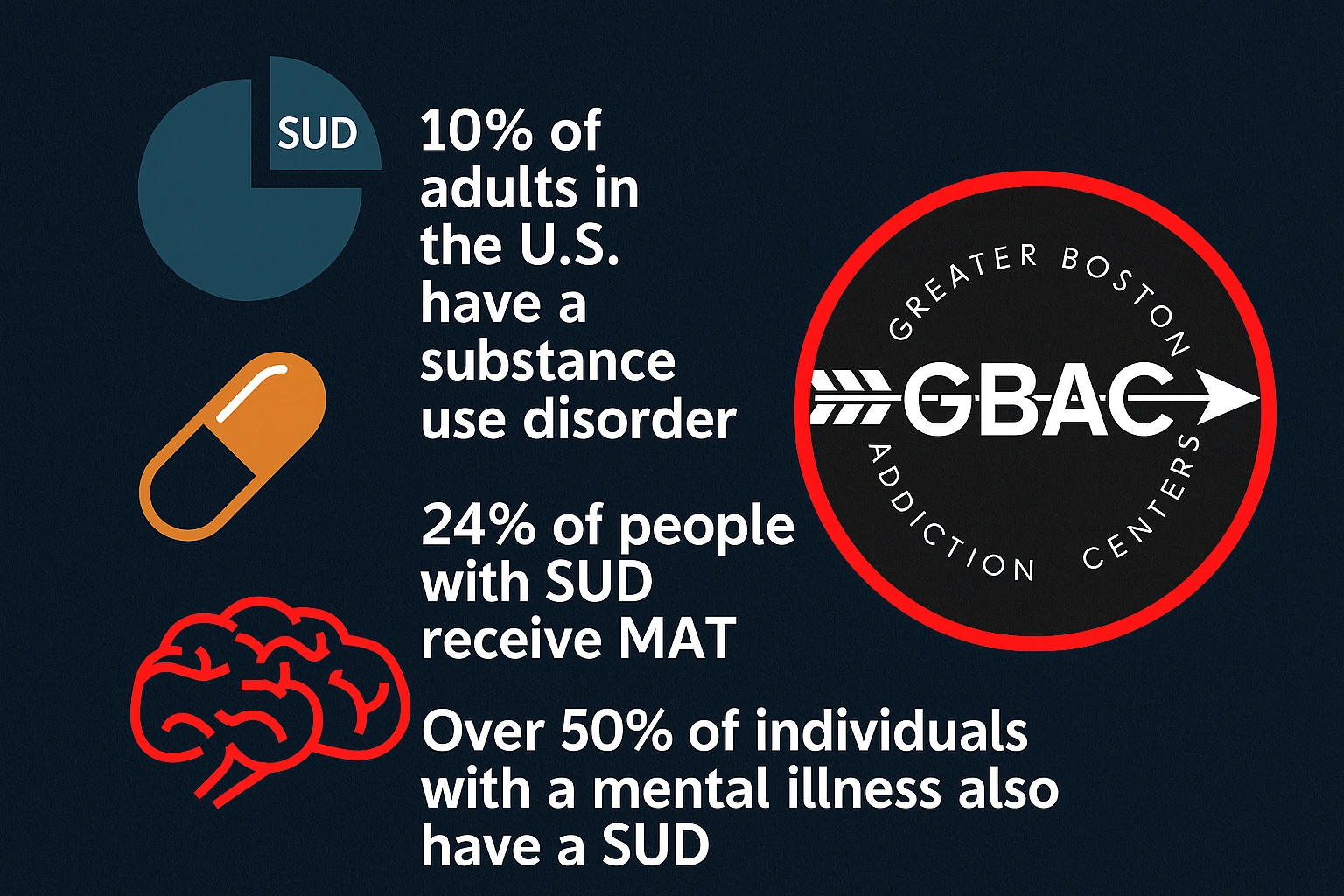
What Success Actually Looks Like for Creatives on MAT
You might not see it at first. It’s not dramatic. It doesn’t come with confetti or awards.
But then:
- You finish a song.
- You make plans and keep them.
- You cry, and nothing falls apart after.
- You get bored without needing to fill it.
- You laugh and mean it—not because you’re high, but because you’re there.
The little victories become a rhythm. A tempo that replaces the all-or-nothing of your old life.
And in that rhythm, you create more. You connect more. You become more of yourself—not less.
FAQ: Medication Assisted Treatment for Creative Thinkers
Will MAT make me less emotional or expressive?
Not at all. In fact, MAT often helps reduce emotional extremes and creates space for genuine expression. Many clients report feeling more emotionally available—not less.
Can I still be inspired without the high?
Yes. The idea that substances are the only access point to inspiration is a myth. MAT helps regulate your baseline so inspiration can arise without the crash or chaos.
Is this just substituting one drug for another?
No. MAT uses medications that support your recovery without inducing a high. When used as prescribed under medical supervision, they don’t produce the same addictive patterns.
How long do people stay on MAT?
There’s no universal timeline. Some people stay on for months, others longer. It’s based on individual needs, progress, and goals—and always done collaboratively.
Will I be able to do therapy or creative work while on MAT?
Absolutely. Many people find MAT actually helps them engage more deeply in therapy and creative projects by reducing emotional volatility and mental fog.
You Don’t Need to Get Flat to Get Free
Recovery is often framed as a moral rewrite. A redemption arc. But for creatives, it’s something more nuanced.
It’s not about becoming someone else.
It’s about reclaiming your voice—without fear that feeling will destroy you.
You are not your addiction.
You are not your highest high.
You are not your worst crash.
You are not your performance at your lowest.
You are the person who felt all of that—and is still here.
Medication assisted treatment doesn’t erase your story. It helps you hold the pen again.
And when you’re ready, it helps you write the next chapter—not from crisis, but from clarity.
Ready to Talk?
Call (877)920-6583 to learn more about our medication assisted treatment services in Boston, MA. Your voice matters—and we’re here to help you protect it.
