
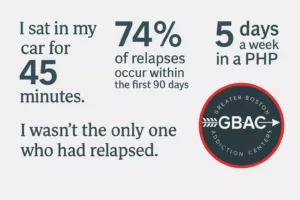
I sat in my car for 45 minutes.
Engine off. Shame full throttle.
I’d parked outside the same treatment center I walked out of three months prior—clean, confident, and convinced I’d never be back. I had 90 days. I was doing the right things. I had plans.
But here I was. Again.
I didn’t want to come back. I didn’t want to face the same intake office, the same staff, the same damn couch in the waiting room. It felt like failure.
But walking through those doors—back into the partial hospitalization program in waltham —didn’t ruin me. It rescued me.
Relapse Wasn’t Dramatic—It Was Quiet
People talk about relapse like it’s some chaotic explosion. Mine wasn’t. It was slow. It was silent.
It started with the voice in my head:
“You’re fine now.”
“You’ve earned this.”
“One night won’t undo everything.”
It was a beer at a barbecue. Then a second one. Then a private bottle in my apartment three nights later. I told myself I’d rein it in. But two weeks later, I was drinking in the mornings again—just enough to “feel normal.”
And somehow, it felt worse than before. Because I knew better this time. That’s what made the shame cut deeper.
What Brought Me Back (Even When I Didn’t Want To)
It wasn’t a health scare. No big blow-up. No one found out.
It was me, waking up on a Tuesday, looking at my toothbrush, and thinking, I hate who I am right now.
Not “I hate myself.” Just… I hate this version of me. The one lying again. Hiding again. Pulling away from people who loved me. Losing sleep. Losing peace. Losing myself.
So I made the call. My voice cracked when I said my name.
The staff at Greater Boston Addiction Centers remembered me. But not like I feared. No disappointment. No judgment.
Just: “We’re glad you called.”
Why I Chose the Partial Hospitalization Program (PHP)
I didn’t want to go backward. But I knew I couldn’t fake forward either.
PHP gave me the space I needed—not to restart recovery, but to deepen it. Because that’s what I actually needed. Not a redo. A reckoning.
Here’s what PHP gave me:
- Structure I couldn’t fake my way through. Five days a week, full-day sessions. It kept me engaged when I didn’t trust my own discipline.
- Support that matched my shame. They didn’t coddle me—but they also didn’t crucify me for relapsing.
- A reset without total detachment. I stayed local. I went home at night. I kept a sliver of my outside life while focusing deeply on healing.
It wasn’t a punishment. It was a second chance that understood I had history here—and that didn’t make me broken.
What Was Different This Time
The first time I did PHP, I was still trying to prove something—to myself, to others, maybe even to the staff. I wanted to be the “good client.” The success story.
The second time? I was done performing.
I cried in group. I admitted I’d felt smug about my progress before. I named the stuff I skipped over the first time: childhood trauma, perfectionism, codependency, control.
And for the first time, it stuck.
Because I finally stopped trying to “win” at recovery and started living in it.
What PHP Actually Looked Like for Me
Every morning, I got up and went to the center like it was a job. Because it was my job—keeping myself alive, honest, and sober.
- Mornings were group therapy: raw, vulnerable, and sometimes uncomfortable.
- Afternoons were a mix: relapse prevention, CBT sessions, one-on-one time with a therapist who didn’t flinch when I admitted I still craved chaos.
- There was routine. But also room to breathe.
I wasn’t cut off from the world. I was being held—carefully, intentionally—until I could hold myself again.
If you’re looking for a partial hospitalization program in Boston that understands how to meet you after relapse, trust me: this was it.
The Hardest Part Wasn’t the Therapy—It Was the Guilt
I felt like I’d wasted everyone’s time. Like the people who cheered for me when I hit 90 days would be embarrassed for me now.
But PHP taught me something simple and radical: relapse doesn’t erase your recovery.
It’s part of the story—not the end of it.
My group didn’t see me as broken. They saw me as someone who came back.
And there’s real power in that.
Because shame thrives in silence. But healing? It thrives in return.
What I Walked Away With (This Time, For Real)
1. Accountability Without Performance
I didn’t need to pretend anymore. I got to be a mess. And still be met with respect.
2. A Community That Got It
There were other alumni in my group. I wasn’t the only one who had relapsed. That changed everything.
3. Deeper Tools for Real Life
I learned how to deal with triggers I never named before—like loneliness that hit after big wins. Or shame that flared when I succeeded.
4. Peace That Didn’t Rely on Perfection
I stopped needing to “get it right.” I just needed to stay present. Every day.
If You’re a Relapsed Alumni and You’re Reading This
Let me say this clearly: you are not starting over.
You are continuing.
Coming back after relapse doesn’t mean you failed. It means you care enough to stay alive. To stay honest. To stay free.
And PHP isn’t a punishment. It’s a parachute.
You don’t have to climb back to day one alone. You can walk into a space that remembers your name—and holds you, not against your past, but toward your future.
FAQs: Returning to PHP After Relapse
Is it common to relapse after 90 days?
More common than you think. Recovery isn’t linear. The brain and body are still stabilizing in early sobriety. Shame makes it worse. Support makes it work.
How long does a partial hospitalization program last?
Most PHPs last between 2 to 6 weeks, depending on your needs. You’ll typically attend 5 days a week, for about 6 hours a day.
Can I keep living at home during PHP?
Yes. PHP is a day program, which means you go home each night. This allows for structured treatment without full-time residential care.
Will I be judged for relapsing?
Absolutely not. Centers like Greater Boston Addiction Centers specialize in meeting people exactly where they are. No judgment—just help.
Is it better to go back to the same program or try something new?
Returning to a program you already trust can provide comfort and continuity. You won’t need to re-explain everything—and that saves emotional energy.
How do I know if PHP is right for me after relapse?
If outpatient support isn’t enough, but you’re not in crisis, PHP is the ideal middle ground. You get immersive care without giving up your whole life.
Final Word: You’re Not Weak. You’re Brave.
If you’re hovering on the edge of coming back… wondering if you’ve “blown it”… thinking you need to hide until you’re more “ready”…
Please hear me: I was you. And I’m still here.
Not perfect. But real. And that’s enough.
You’re allowed to walk back through the door.
You’re allowed to say, “I need more help.”
And you’re absolutely allowed to recover again—and this time, more honestly.
If you’re ready to take that step, you’re not alone.
Call (877) 920-6583 to learn more about our partial hospitalization program services in Boston, MA.
