

You’ve been thinking about trying again.
Maybe things got hard and you stopped going. Maybe you ghosted your treatment team. Maybe you left mid-program and never followed up.
But now, a part of you is ready. Not fully confident. Not completely sure. But ready enough to consider walking back in.
And then your brain stops you cold: What will I say to them?
Not the counselors—your family. Your partner. Your friends. The people who know you’ve tried before. The ones who might say, “Again?”
Talking about going back to treatment can feel like holding your breath, waiting for the other shoe to drop. But here’s the truth:
You don’t need a perfect record to deserve support. And you’re not alone in feeling nervous about this conversation.
At Greater Boston Addiction Centers, we work with people every day who are taking a second, third, or even fifth step toward healing—and feeling unsure how to share that with the people they love.
This guide is for you.
1. Know This: Wanting to Try Again Is Not a Failure
Let’s name the fear first.
You might be thinking:
- “They’re sick of hearing about this.”
- “What if I can’t finish it again?”
- “They’ll just roll their eyes.”
You may even feel like you’ve burned through your “chances.”
But here’s the truth that treatment teaches over and over again: trying again is a sign of strength—not failure.
It means something inside you still believes change is possible. It means you haven’t given up on yourself.
You are not disqualified from recovery because your path hasn’t been straight.
2. You Don’t Have to Justify This Step to Anyone
It’s natural to want your loved ones to understand. But it’s not your job to convince anyone of your worthiness.
You’re not asking for permission.
You’re sharing something important—something that matters to your well-being.
If the first thing that comes out of your mouth is:
“I know I’ve done this before, but…”
Stop right there.
You don’t owe anyone a perfect explanation. Try something like:
“I’m thinking about going back to an intensive outpatient program. I wasn’t ready before, but I feel different now.”
That’s enough.
3. Don’t Let Fear of Disappointment Silence You
When you’ve left a program before, the fear of disappointing people again can feel overwhelming.
But the longer you wait to be perfect, the longer you stay stuck.
You’re allowed to say:
“I know I haven’t gotten it right before. I might not get it perfectly this time either. But I still want to go back.”
That honesty? It builds trust. More than pretending everything will be different this time.
People respond to authenticity—even if they’re cautious. And remember, caution doesn’t mean disapproval. It means they’re human too.
4. Be Clear About What You Need—Not Just What You Fear
Before starting the conversation, it helps to get grounded. Ask yourself:
- Am I looking for encouragement?
- Do I need practical support (rides, child care, flexibility)?
- Do I just want to be heard without being fixed?
If you’re clear on what you’re asking for, you can lead with that.
“I’m planning to rejoin IOP. I’d really appreciate just having someone to talk to during this time—no fixing, just support.”
Setting expectations protects both of you from misunderstandings.
5. Try Not to Lead With Shame
Shame will try to hijack this moment. It’ll tell you to apologize for every misstep before you even speak.
But here’s something we say often at GBAC:
Shame is not a requirement for change.
You can acknowledge the past without being owned by it.
Try this:
“Last time, I left before I was ready to stay. But I’m still learning, and I want to take the next right step now.”
You are not your dropout. You’re the person trying again.
6. Give Loved Ones Time—But Don’t Take Their Reactions as Truth
You might get support right away. You might get hesitation. You might get blank stares.
People react based on their own pain, fear, or past experiences.
But that doesn’t mean your choice is wrong.
If someone says, “We’ve been here before,” you can say:
“I know. And I’m still willing to show up.”
That’s where change begins: not in dramatic speeches, but in quiet consistency.
You don’t have to get them on board right away. You just have to keep going.
7. You Can Do This Even If They Don’t Understand
It’s a beautiful thing to be supported by loved ones—but it’s not a requirement for healing.
If you’re near Boston or looking for an intensive outpatient program in Needham, you’ll find people who do understand—who’ve walked similar paths and had similar conversations.
The IOP community often becomes the first place where people feel truly seen. You deserve that space. Even if your loved ones take time to catch up.
Frequently Asked Questions
What if my family doesn’t take me seriously after dropping out before?
That’s a valid fear. Trust is often rebuilt through action, not promises. Start the conversation with honesty, and then let your consistency do the rest.
Do I have to explain why I left treatment last time?
No. You can share if you want, but there’s no requirement to justify your decision. Try: “It wasn’t the right time. This is.”
How do I handle it if they respond with doubt or skepticism?
Stay calm and grounded. You’re not here to argue. You’re here to share a decision that matters to your health. Doubt often softens over time.
Can I start IOP again even if I left suddenly or didn’t say goodbye?
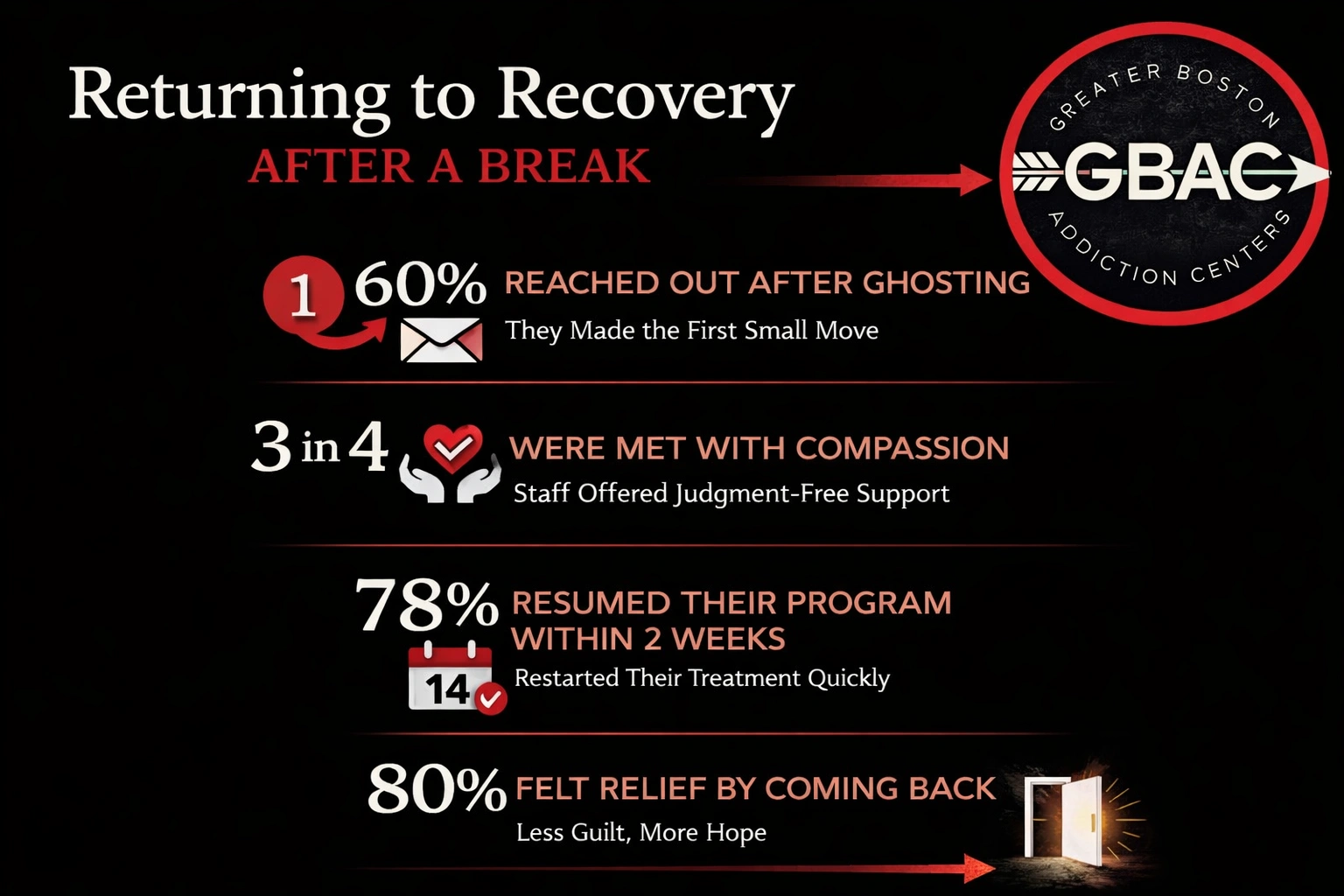
Yes. At GBAC, we welcome returning clients without judgment. Whether it’s been weeks or months, you’re still eligible for care.
How do I ask for support without sounding needy?
You can be clear and direct. Example: “This is something I want to do for myself. Your encouragement would mean a lot, but I understand if you need time.”
This Time, You’re Bringing More Than Regret—You’re Bringing Awareness
You’re not the same person who left. You’ve learned something. You’ve lived more life. You’ve had time to reflect.
Even if you’re scared. Even if you don’t feel ready.
If you’re thinking about trying again, that’s not nothing. That’s a sign of hope, not failure.
And that makes this conversation worth having.
We’re Ready When You Are
Call (877) 920-6583 to learn more about our intensive outpatient program services in Boston, MA.
Whether this is your second time or your seventh—you’re still welcome here.
