

Sometimes it’s a slow fade. One missed session becomes two, then a week goes by. Maybe you stopped responding to check-ins. Maybe you told yourself, “I’ll call next Monday”—but Monday came and went. Or maybe something big happened: stress, relapse, life just getting loud again.
And now, you’re here. Wondering if it’s too late to go back. Wondering if you’re still welcome. Wondering how much explaining you’ll have to do.
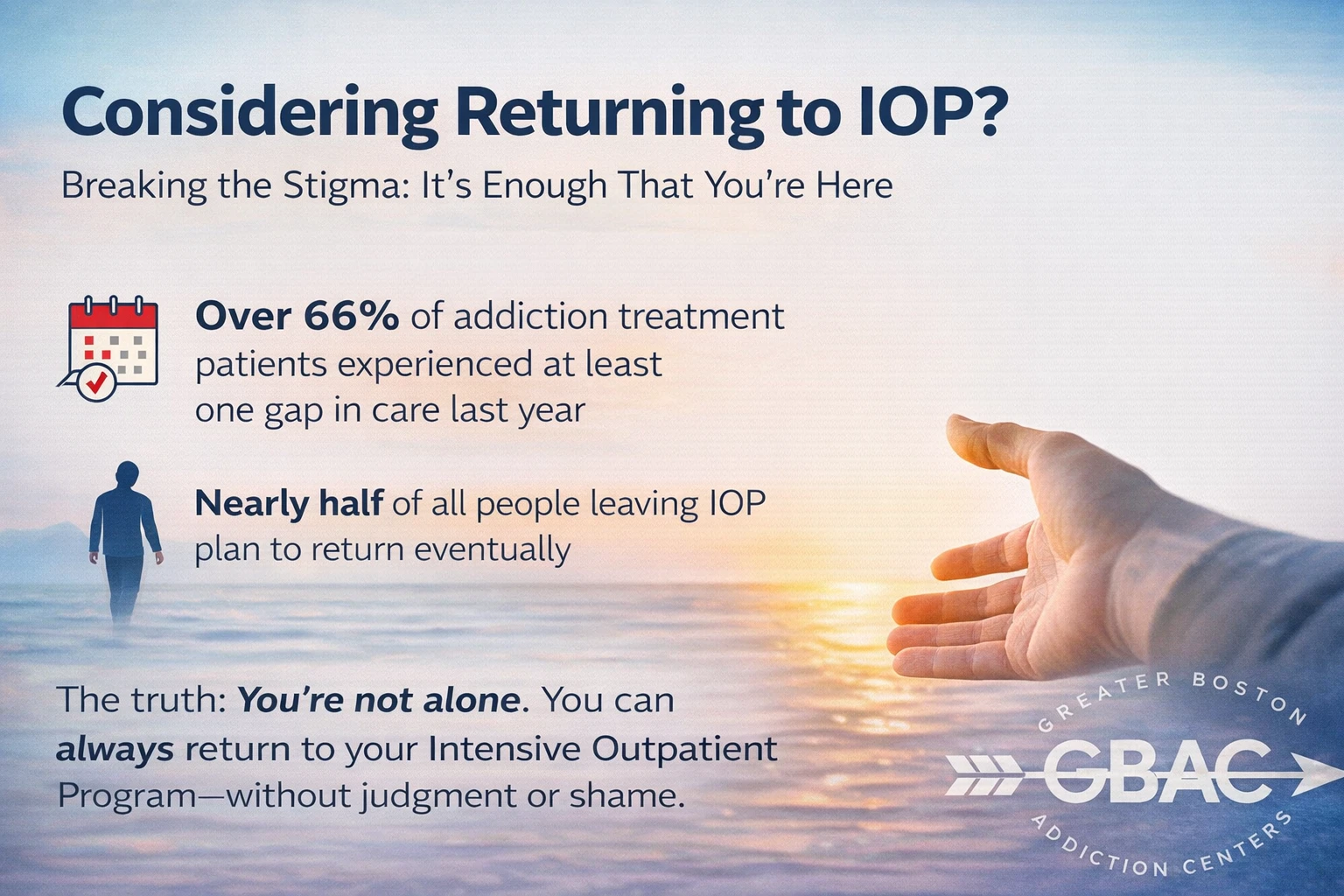
Here’s the truth: You’re not alone. And yes, you can return to your intensive outpatient program—without judgment, without having to start over, and without pretending everything went perfectly.
1. Understand This Happens All the Time—And You’re Not “Bad” for It
First, take a deep breath: stepping away from treatment, even temporarily, is incredibly common. Especially with intensive outpatient programs (IOPs), where people are trying to balance real life and real recovery at the same time. Work, kids, burnout, transportation issues, relapse—it doesn’t take much to knock things off course.
You might think you’re the only one who “ghosted” mid-program. You’re not. Life gets overwhelming. Mental health ebbs and flows. Even the most motivated clients can hit a wall.
What matters now isn’t how long you’ve been away—it’s that you’re considering coming back. That says something powerful about where you’re at, even if things still feel messy.
2. Ditch the Shame Story—It’s Not Yours to Carry
One of the biggest things that keeps people from returning to treatment is shame. That gnawing voice in your head that says:
- “They probably think I wasn’t serious.”
- “I left without saying anything. That’s disrespectful.”
- “I messed up again. They won’t take me seriously now.”
Here’s the counterpoint: the door is still open.
No one at Greater Boston Addiction Centers is keeping score. There’s no red mark by your name, no judgment, no lecture waiting for you. Treatment is not school. It’s not church. It’s not some club where you lose your place forever if you miss a few weeks.
The most important thing? You’re showing back up. That takes courage—and that’s what gets honored here.
3. Reach Out in Whatever Way Feels Doable
You don’t need the perfect words or a long explanation. Just start.
Call. Text. Send an email. Say something like:
“Hey, I was in your IOP a while ago. I had to step away, but I’d like to come back. Can we talk about what that might look like?”
That’s it. You’re not expected to rehash everything that happened or apologize for being human. The team at GBAC is used to these calls—and they know how to make it easy, not awkward.
If you’re not ready to talk on the phone, send a message through the contact form on the site. Start small.
4. Re-Entry Doesn’t Mean Starting Over
One fear that keeps people from reengaging is the idea that they’ll be “back at square one.” But that’s rarely the case. When you return to an intensive outpatient program in Boston, your care team will meet you where you are—not where you were.
Depending on how long you’ve been away, you might:
- Rejoin the same group you were in
- Do a quick reassessment to see what support you need now
- Have a couple of one-on-ones before reentering the full IOP schedule
It’s not about punishment or “making up” for missed time. It’s about plugging you back into care that makes sense for who you are today.
5. If You Relapsed, You’re Still Welcome
Let’s name it: some people leave IOP because they start using again. That can feel like the hardest reason to return—because relapse often brings shame, fear, and the thought that you “blew your chance.”
But relapse isn’t failure. It’s information. And it’s something many people experience on the road to recovery.
If you’ve had a setback, you don’t have to hide it to come back. In fact, being honest about where you’re at will help your team support you better.
You won’t be kicked out, scolded, or looked down on. You’ll be met with compassion and offered a way forward.
6. Be Honest With Yourself About What You Need Now
Coming back is also a good chance to check in with yourself. Maybe your needs have shifted since you left. Maybe you need:
- A different group format or schedule
- More trauma-informed care
- Medication support or a psychiatric evaluation
- A mix of virtual and in-person options
- A fresh start in a new IOP cohort
Let your return be a reset, not a redo. You’re not going back to the beginning—you’re moving forward with more information than before.
7. The Group Will Probably Just Say, “Glad You’re Back”
Worried about what your group members will say? That they’ll judge you, or ask questions you don’t want to answer?
Most of the time, group welcomes returning members with open arms—or quiet nods of understanding. Why? Because they get it. They’ve had their own hard weeks, missed sessions, or dark moments.
You’re not a burden or a distraction. You’re a reminder that it’s okay to fall and still come back.
8. Rebuild One Brick at a Time
Don’t feel like you have to jump back in full-speed. Start with what feels manageable. Maybe that’s just one session. Maybe it’s making your therapy appointment. Maybe it’s showing up and saying, “I’m not okay, but I’m here.”
Progress isn’t about intensity—it’s about consistency. You’ll find your rhythm again. One day, one session, one conversation at a time.
9. Look for the Small Win—Then Build on It
If you’ve made it this far in the blog, that’s already a win. You’re thinking about change. That spark matters.
Rejoining IOP isn’t about being perfect—it’s about being supported.
If you’re looking for an intensive outpatient program in Boston, GBAC has teams ready to meet you with open hands, not crossed arms.
FAQs About Returning to IOP After a Break
What if I ghosted completely? Will I be in trouble?
Nope. People ghost sometimes. Life happens. The admissions team is more interested in helping you re-engage than asking where you went.
Do I have to redo the whole intake?
Not necessarily. If it’s been a while, you might do a brief check-in or reassessment, but it won’t be like starting from scratch.
I’m embarrassed about using again. Should I wait until I stop?
You don’t have to wait to be “sober enough” to return. In fact, returning while you’re struggling can get you the exact help you need.
What if my schedule changed? Can I do a different time slot or group?
Yes. Many IOPs, including GBAC, offer flexible scheduling. When you call, just ask about current options and what might work for your needs.
Will the group be different?
Maybe. It depends on timing, availability, and what kind of support you’re looking for. But whether it’s familiar faces or new ones, the spirit of group remains the same—nonjudgmental, healing, real.
Can I just do individual therapy for a bit?
Absolutely. If rejoining group feels too big right now, individual therapy can be a solid first step back.
You’re Still Welcome. Always.
There’s no wrong time to return. No perfect version of you that needs to show up. Just the real version—the one that’s reading this, thinking about calling, maybe feeling scared but still curious.
That version of you? Deserves support. Deserves to heal. Deserves a space in the circle.
Call (877) 920-6583 or visit Greater Boston Addiction Centers’ intensive outpatient program page to find out what coming back could look like—for you, today, without pressure.
We’re glad you’re thinking about it. We hope you reach out. And we’ll be here when you do.
