

When I got sober, I thought the biggest problem would be cravings. Like, physical, desperate, can’t-stop-thinking-about-it cravings.
What I didn’t expect? How much I’d miss the idea of drinking.
The fantasy version of it. Late-night laughs. Getting out of my head. Feeling confident for once. And yeah—feeling like I belonged.
Even months into recovery, I found myself looking at old photos and thinking, “Was it really that bad?” I wasn’t craving a drink. I was craving the version of myself I thought alcohol gave me.
Cognitive Behavioral Therapy (CBT) changed that.
It didn’t make me magically stop missing drinking. It helped me understand what I was missing, and rewire how I responded to it. CBT helped me feel less alone in my brain—and more in charge of it.
If you’re newly sober, especially if you’re young and your whole social world still revolves around alcohol, I see you. CBT helped me shift how I think about drinking, belonging, and myself. Here’s what that looked like.
You can also learn more about CBT therapy at Greater Boston Addiction Centers, where I found a real turning point in my recovery.
1. I Learned That Missing Drinking Was Just a Thought
CBT starts with one idea: Your thoughts aren’t facts.
That voice in my head saying “You’re missing out,” “You were more fun back then,” or “Maybe you overreacted”? Those were just thoughts. Not truth.
CBT helped me slow down and challenge those automatic beliefs. I didn’t have to believe every mental pop-up just because it was loud.
2. I Stopped Watching My Own Drinking Highlight Reel
My brain had this amazing way of playing a trailer for drinking—laughs, hookups, freedom. But it never played the rest: the hangovers, the blackouts, the 3 a.m. self-hate.
CBT taught me to notice when that mental movie started—and pause it.
I started asking: “What am I actually remembering? What am I conveniently forgetting?”
And that question alone saved me so many spirals.
3. I Realized I Didn’t Miss Alcohol—Just What It Gave Me
This one wrecked me in the best way.
CBT had me journal what I thought drinking did for me. The list? Confidence. Belonging. A break from anxiety. A social pass.
Turns out, I didn’t miss alcohol. I missed connection. I missed feeling relaxed. I missed feeling normal.
CBT helped me find those things in new ways—without self-destructing to get them.
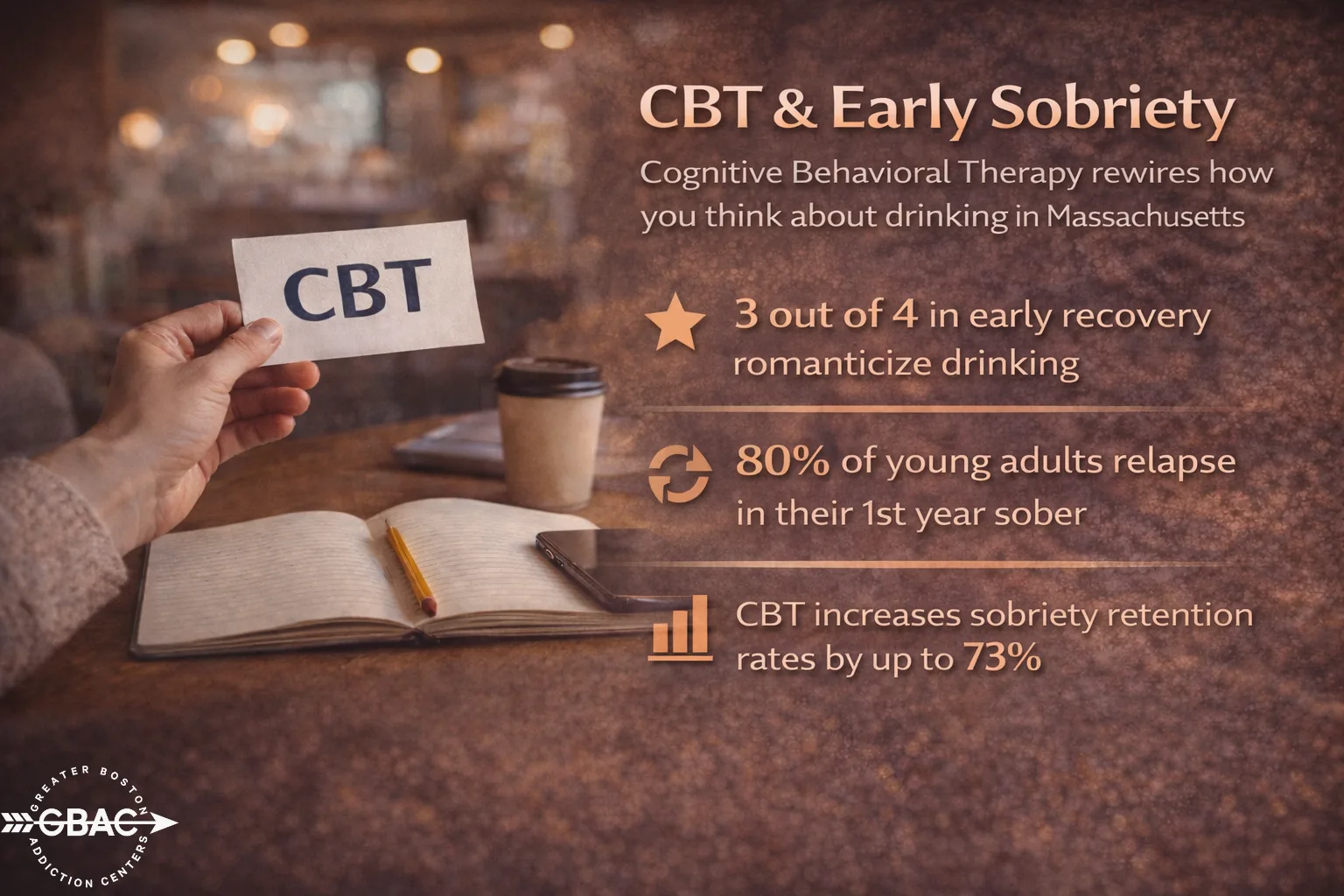
4. I Rebuilt Social Confidence Without Needing a Buzz
Going to my first sober party was like walking into a dream where everyone else knew the script and I’d forgotten my lines.
CBT gave me strategies: small goals like staying 30 minutes, using breathing skills when anxiety spiked, and not assigning meaning to every awkward moment.
The more I practiced, the less I needed a drink to feel “okay.”
In West Roxbury, MA, I started finding people and places where being sober didn’t make me weird—it made me free.
5. I Started Treating Cravings Like Clues, Not Red Flags
CBT doesn’t treat cravings like emergencies. It teaches you to get curious.
I started tracking when my “I miss drinking” thoughts hit. Usually it was when I felt rejected, bored, lonely, or disconnected from my body.
That info became gold. It meant I could respond to what I really needed—not just default to what I used to do.
6. I Found New Defaults for Fun (That Didn’t Feel Forced)
I thought being sober meant my life would be a never-ending string of serious conversations and kombucha.
But CBT challenged me to build a life I didn’t want to escape from. That meant adding joy—on purpose.
I started dancing again. I leaned into dumb movies, art classes, even rock climbing. At first, it felt fake. Eventually, it started to feel like mine.
7. I Made Space for Nostalgia—Without Letting It Own Me
Here’s the thing: sometimes I did miss it. The wild nights, the chaos, the drama.
CBT didn’t tell me to ignore that. It helped me honor it, without letting it control me.
I started writing down memories, talking about them in group, and holding both truths at once: Yes, some of it was fun. And no, I don’t want that life back.
8. I Finally Stopped Apologizing for Being Sober
For a while, I treated my sobriety like a weird fact people had to “get used to.” I’d overexplain, overcompensate, try to make people comfortable with my choice.
CBT helped me rewrite that narrative. My job wasn’t to make others okay with my sobriety—it was to make me okay with it.
I stopped shrinking. I stopped smiling when I didn’t mean it. I started taking up space.
And damn, it felt good.
What I’d Tell Anyone Newly Sober and Still Romanticizing It
You’re not broken if you miss drinking. You’re not weak for feeling nostalgic. You’re normal. Especially if everyone around you still drinks like it’s nothing.
But if you’re still mentally chasing what alcohol gave you? CBT is worth exploring.
At GBAC in Massachusetts, I learned how to shift why I drank—and found new ways to meet those needs that actually felt good after.
If you’re not ready for therapy, that’s okay. But if you are, especially if you’re feeling stuck in the mental tug-of-war of missing the very thing that hurt you? CBT hits different.
Frequently Asked Questions About CBT in Early Sobriety
Can CBT help even if I’m not in a full-blown relapse?
Yes. CBT is especially helpful for people who are mentally sober but struggling—wrestling with nostalgia, cravings, or feeling “over it” emotionally.
Is CBT just about positive thinking?
Nope. It’s about accurate thinking—not just flipping everything to “yay, sobriety!” It helps you identify distorted patterns (like “everyone thinks I’m boring now”) and challenge them with evidence.
How long does CBT take to work?
Some people notice mindset shifts in a few sessions. Others take longer to fully rewire their patterns. It’s less about speed and more about building skills you’ll actually use.
Do I have to be in crisis to try CBT?
Absolutely not. In fact, CBT is perfect for people in middle-stage recovery who aren’t in danger of relapse but feel mentally stuck or emotionally flat.
Can I do CBT in outpatient, or do I need inpatient?
You can do CBT in both. Some people start in care in Residential for structure, while others begin with outpatient therapy. At GBAC, we help match the level of care to your needs—whether you’re in Dorchester, MA or anywhere nearby.
Call (877) 920-6583 to learn more about our Cognitive-Behavioral Therapy in Massachusetts. If you’re sober, young, and still wondering if it’s all worth it—this might be the thing that helps it finally feel real.
