

Being newly diagnosed doesn’t come with a handbook—just a swirl of emotions, decisions, and often, pressure. You may hear terms like bipolar disorder, borderline personality disorder, or generalized anxiety and suddenly feel boxed in. Then comes the conversation about medication. Maybe it was offered gently. Maybe it was pushed too fast. Either way, something in you hesitated.
At Greater Boston Addiction Centers, we believe in honoring that pause. You deserve options—and one of the most effective, empowering ones is Dialectical Behavior Therapy (DBT).
You’re Not Wrong to Hesitate About Medication
Let’s say it clearly: You’re not anti-help just because you’re unsure about meds. That suspicion, that “What if this changes me?” thought, is more common than people think—especially if you’ve spent your life relying on your creativity, sensitivity, or emotional depth to navigate the world.
For some, medication can be stabilizing. For others, it can feel like a compromise they’re not ready for—or like a tool that doesn’t address the full picture. If you’re feeling overwhelmed by the idea of starting something you don’t fully understand, that’s not resistance. That’s discernment.
DBT Can Be the Bridge Between Chaos and Control
Dialectical Behavior Therapy wasn’t designed as a medication alternative—but for many people, it becomes one. DBT helps you create an internal structure strong enough to hold the weight of your emotions, without needing to mute or escape them.
What makes DBT unique is its focus on skills training, built into four modules:
1. Mindfulness
Learn how to slow down your racing mind, observe thoughts without getting swept away, and build a more stable relationship with your emotions.
2. Distress Tolerance
These skills help you survive emotional crises without making things worse—no impulsive texts, no self-sabotage, just moment-by-moment steadiness.
3. Emotion Regulation
Understand your emotional patterns, where they come from, and how to influence them without suppression or denial.
4. Interpersonal Effectiveness
Learn to express your needs, set boundaries, and navigate conflict with clarity and confidence.
Each of these skill sets can help reduce symptoms that might otherwise require medication to manage. And for those who do choose medication down the line, DBT makes it more effective by giving you the tools to understand what’s happening inside you.
A Tool for When You Feel Everything, All the Time
People who seek DBT often describe feeling like their emotions are “too big” or that they switch too fast between extremes. They might say things like:
- “I go from calm to overwhelmed in seconds.”
- “I’m either numb or I’m drowning—there’s no in-between.”
- “Everything feels too intense. I can’t just brush it off like other people.”
If that sounds like you, medication might be one option—but it’s not the only one. DBT teaches you how to ride those emotional waves without going under. You’ll learn how to feel without falling apart.
Choosing Therapy First Is Still Choosing Help
We live in a world that sometimes treats therapy like the long road, and medication like the shortcut. But healing isn’t linear—and it’s not a race. Choosing DBT doesn’t mean you’re refusing care. It means you’re asking for care that feels aligned with who you are.
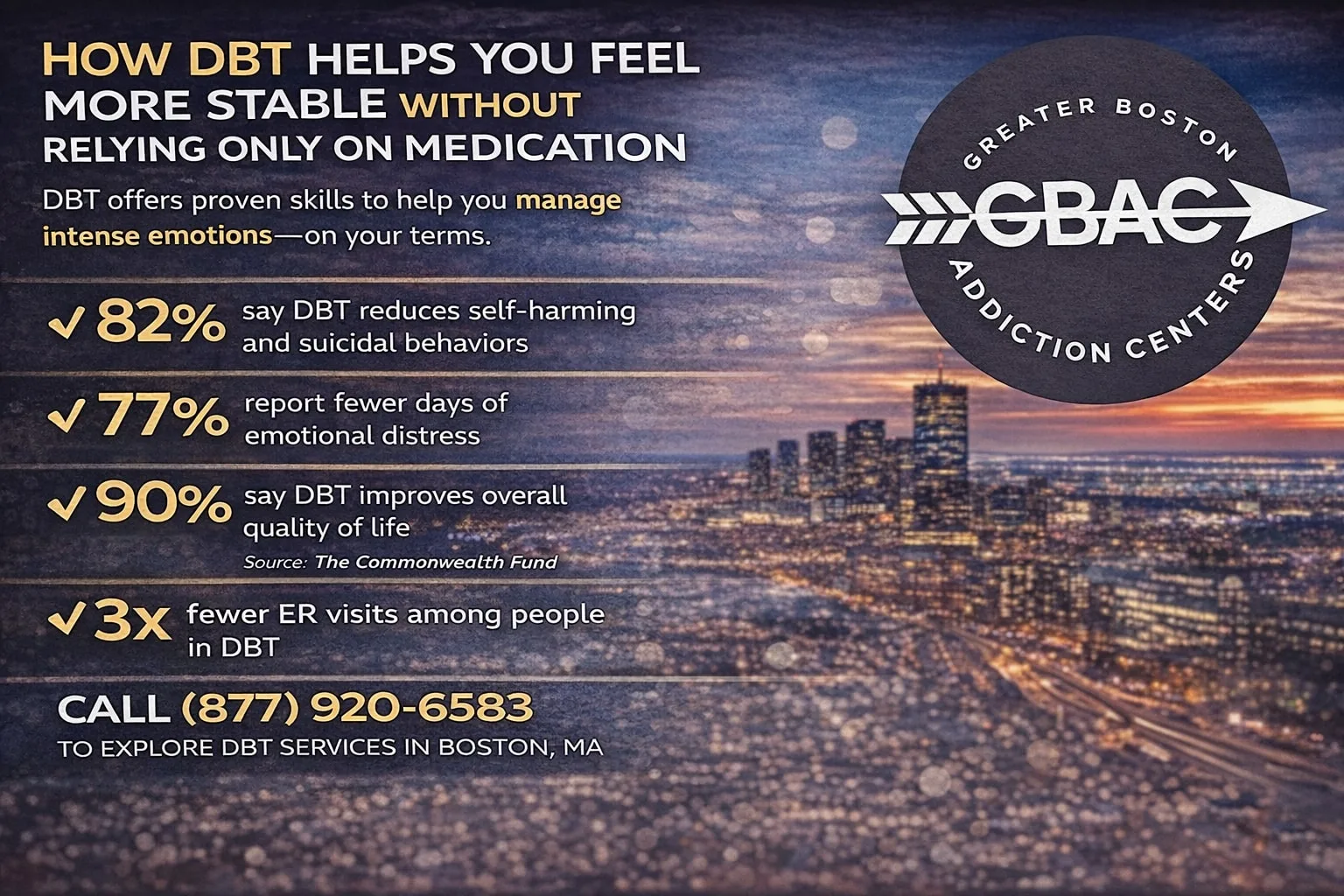
In fact, research consistently shows that DBT reduces:
- Self-harming behaviors
- Emotional reactivity
- Interpersonal conflict
- Suicidal ideation
And it does so without requiring medication as a foundation.
DBT Doesn’t Ask You to Be Less Sensitive
This part matters: DBT doesn’t try to dull your intensity or make you more “normal.” It meets you right where you are—sensitive, emotional, maybe even chaotic—and helps you build stability within that. You don’t have to trade your insight or depth for functionality.
If you’ve ever worried that treatment would make you feel like someone else—DBT offers a different path. One that says, “You get to be yourself. Let’s just help you stay safe inside your own skin.”
In Boston, You Don’t Have to Navigate This Alone
If you’re in or near Boston, Dedham, Waltham and feeling overwhelmed after a recent diagnosis, our team at Greater Boston Addiction Centers is here. We specialize in supporting people who are exploring DBT as either a stand-alone therapy or as a complementary tool to medication. There’s no one-size-fits-all plan here. Just real humans helping you find your footing—with respect, not pressure.
We’re easy to talk to. We listen. And if you’re looking for treatment options in Boston that don’t begin and end with a pill bottle, you’re in the right place.
FAQ: DBT and Medication—What You Might Be Wondering
Can I do DBT without taking any medication?
Yes. Many people start DBT without taking medication and still see significant improvement in their emotional stability, relationships, and day-to-day functioning.
What if I start DBT and still feel like I need medication later?
That’s completely okay. DBT helps you build emotional awareness, which can actually make decisions about medication more informed and intentional later on.
Is DBT only for people with Borderline Personality Disorder?
Not at all. DBT is helpful for anyone experiencing intense emotions, unstable relationships, impulsivity, or suicidal thoughts—regardless of their diagnosis.
How long does DBT take to work?
Many people begin noticing changes within a few weeks, especially as they start using new skills in daily life. Full DBT programs typically last 6–12 months, depending on your needs.
Is DBT available in group or individual therapy?
Most DBT programs include both. At Greater Boston Addiction Centers, we tailor your care plan to what works best for you—whether that’s individual sessions, group skills training, or a combination.
Want to feel more stable—without rushing into medication?
Call (877) 920-6583 or visit our DBT services page to explore DBT in Boston, MA. We’re here when you’re ready—and we’ll go at your pace.
