

When your child is in crisis, every conversation can feel loaded. You try to stay calm. You try to say the right thing. But nothing seems to stick.
You might hear insight. You might hear regret.
And then, days later, the same behaviors return.
At Greater Boston Addiction Centers, we often meet parents at this breaking point—loving, terrified, and unsure what else to try. For many families, structured, skills-based treatment like dbt becomes the next right step when traditional talk therapy hasn’t created enough change.
This isn’t about giving up on therapy.
It’s about adding tools that match the intensity of what your child is facing.
What Is DBT—and Why Does It Work When Other Therapy Hasn’t?
Dialectical Behavior Therapy (DBT) is an evidence-based treatment designed for people who experience intense emotions, impulsive behaviors, or unstable relationships.
Traditional talk therapy often focuses on insight:
- Understanding trauma
- Exploring patterns
- Processing emotions
And that work matters.
But insight alone doesn’t always prevent:
- Self-harm
- Substance use
- Explosive arguments
- Emotional shutdown
- Risky or impulsive decisions
DBT adds something critical: structured skill-building.
Instead of only asking, “Why do I feel this way?”
DBT also asks, “What do I do when this feeling hits at full volume?”
For young adults in behavioral health crisis, that distinction can change everything.
When Talk Therapy Isn’t Enough
Many parents tell us the same thing:
“They understand what’s wrong. They just can’t stop doing it.”
That’s not a character flaw. It’s often a regulation problem.
Emotional regulation isn’t automatic. It’s learned.
Imagine someone trying to drive a car without ever being taught how to brake. Insight won’t stop the crash. Skill will.
DBT teaches:
- How to pause
- How to tolerate distress without escalating
- How to regulate emotional surges
- How to communicate needs clearly
It bridges the gap between awareness and action.
The Four Core DBT Skill Modules
DBT is structured around four major skill areas. Each one directly addresses behaviors that often frighten families.
1. Mindfulness: Slowing the Spiral
Mindfulness in DBT isn’t abstract meditation. It’s practical awareness.
Your child learns how to:
- Notice thoughts without acting on them
- Identify emotional triggers
- Pause before reacting
This creates a crucial buffer between emotion and behavior.
Even a few seconds of pause can prevent a relapse, a fight, or self-harm.
2. Distress Tolerance: Surviving the Emotional Storm
Distress tolerance skills are about crisis survival.
When emotions spike, the goal isn’t to fix everything. It’s to get through the moment safely.
These skills help young adults:
- Sit with discomfort without numbing through substances
- Avoid impulsive decisions
- Reduce self-destructive behavior
For many families, this is the first sign of change: fewer emergencies.
3. Emotion Regulation: Understanding and Managing Intensity
Some young adults feel everything at 150%.
Emotion regulation skills help them:
- Identify patterns in mood shifts
- Reduce vulnerability to emotional swings
- Build routines that stabilize mood
Instead of being overwhelmed by anger, shame, or anxiety, they begin to anticipate and manage those waves.
4. Interpersonal Effectiveness: Repairing Communication
Many crises escalate inside relationships.
DBT teaches young adults how to:
- Ask for what they need
- Set boundaries
- Say no
- Navigate conflict without aggression or shutdown
When communication improves, family dynamics often begin to stabilize too.
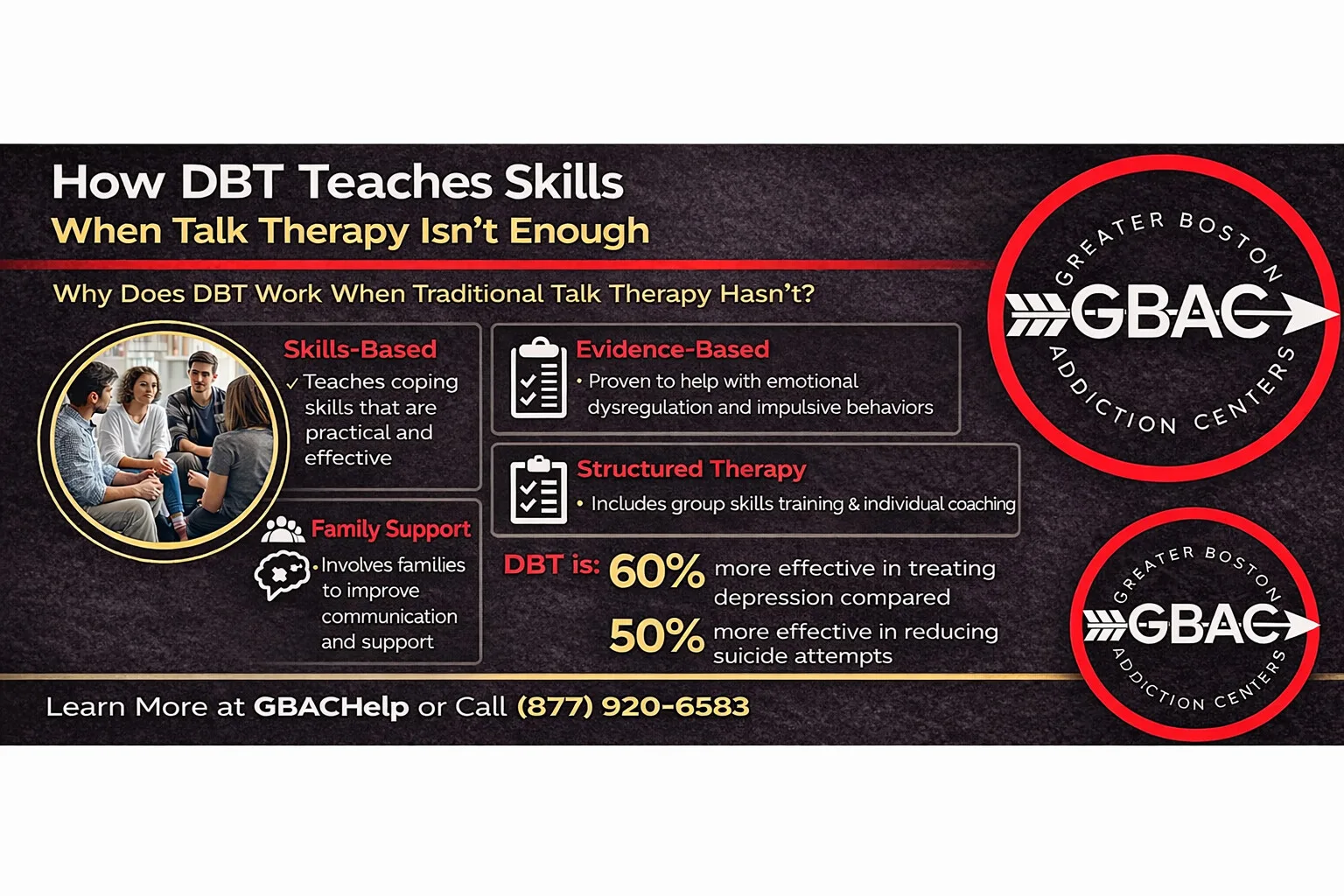
What DBT Looks Like in Real Treatment
DBT is not just a weekly office visit.
In structured settings, it includes:
- Skills training groups
- Individual therapy
- Behavioral goal tracking
- Coaching around real-life challenges
At Greater Boston Addiction Centers, DBT is integrated into comprehensive addiction and mental health programming. For some young adults, that support begins in structured levels of care such as our help in Residential program, where skills are practiced daily in a stable environment.
This consistency matters.
Skills become habits through repetition—not intention.
Why DBT Can Restore Hope for Parents
Crisis often feels chaotic and unpredictable.
DBT introduces structure.
Structure creates safety.
When parents begin to see:
- Fewer impulsive behaviors
- Better communication
- More emotional awareness
Something shifts. Not overnight—but steadily.
You may notice your child:
- Pausing before reacting
- Using language instead of aggression
- Taking responsibility for choices
These small shifts can rebuild trust. And trust rebuilds connection.
Is DBT Only for Severe Cases?
No.
While DBT was originally developed for high-risk behaviors, it’s now widely used for:
- Substance use disorders
- Mood instability
- Trauma-related symptoms
- Self-harm behaviors
- Intense anxiety or depression
If your child struggles with emotional extremes or repeated setbacks despite therapy, DBT may be appropriate.
It’s not about labeling them as “severe.”
It’s about matching the treatment to the intensity of their experience.
What If My Child Resists Structured Therapy?
Resistance is common—especially in young adults who feel misunderstood or overwhelmed.
DBT can help because:
- It feels practical rather than abstract
- It focuses on skills, not blame
- It emphasizes both acceptance and change
The balance is important.
DBT doesn’t say, “You’re broken.”
It says, “You’re struggling—and you can learn new tools.”
That difference matters.
Frequently Asked Questions About DBT
How long does DBT treatment usually last?
DBT programs can range from several weeks in structured care to longer-term outpatient skill development. Duration depends on your child’s needs, risk level, and progress.
Is DBT only for borderline personality disorder?
No. While DBT was originally developed for borderline personality disorder, it is now widely used for addiction, trauma, depression, anxiety, and emotional dysregulation.
Can DBT help with substance use?
Yes. DBT is especially effective for individuals who use substances to cope with intense emotions. Distress tolerance and emotion regulation skills directly address relapse triggers.
Will parents be involved in DBT?
In many programs, family education or therapy is included. When appropriate, parents learn communication strategies that align with DBT skills, improving consistency at home.
What makes DBT different from CBT?
Cognitive Behavioral Therapy (CBT) focuses heavily on identifying and restructuring thought patterns. DBT includes cognitive work but places stronger emphasis on emotional regulation, crisis survival skills, and acceptance strategies.
How do I know if my child needs a higher level of care?
If you’re seeing:
- Escalating risky behaviors
- Repeated relapses
- Self-harm
- Emotional volatility that feels unsafe
It may be time to consider more structured support. Assessment can clarify the safest next step.
You Are Not Failing. You’re Responding.
If you are reading this because you’re scared, that fear comes from love.
Crisis can make parents feel powerless. But seeking the right treatment is not an act of desperation—it’s an act of protection.
DBT does not erase pain overnight.
It teaches your child how to live through it.
And sometimes, that’s the beginning of everything changing.
Call (877)920-6583 or visit to learn more about our dbt services in Boston.
