

You got sober—but now you feel weird.
Not broken. Not in crisis. Just… out of sync.
Maybe you’re in your 20s and everyone else you know is “living it up” at bars and music festivals while you’re Googling late-night support groups. Maybe you’re back on campus, trying to find something to do on a Friday night that doesn’t involve red Solo cups. Maybe you’re at work, quietly avoiding the after-hours wine crowd.
Wherever you are, it’s easy to start wondering: Is it just me?
If you’re young and in recovery, especially early recovery, you might feel like the odd one out. But here’s the truth no one tells you loudly enough—drug addiction treatment doesn’t just help you stop using. It helps you rebuild a life that actually fits you. One that doesn’t need numbing. One that makes sense.
Here’s how.
1. You Get Space to Ask Big Questions Without Judgment
Most of us aren’t taught how to sit with hard questions. Especially when we’re young. And especially if we’ve used substances to avoid them.
Treatment gives you space—structured, guided, supportive space—to ask the things that matter. Stuff like:
- What kind of life do I actually want?
- What parts of me were real, and what was performance?
- What hurts when I slow down—and what’s worth healing?
You don’t have to figure it all out right away. But asking is part of building a life that feels real.
2. You Learn the Difference Between Numbing and Enjoying
Early on, many young people in treatment worry that life without substances will be boring. No dopamine, no edge, no spontaneity—right?
Actually, no.
In reality, drug addiction treatment helps you learn how to enjoy things without dissociating through them. There’s a big difference between pleasure and escape. And once your nervous system starts regulating again, you can feel joy without crashing after.
It’s not that life gets boring. It’s that your capacity to feel real joy comes back online—and that hits different.
3. You Build Friendships That Are Based on Reality, Not Roles
If you used to be “the fun one,” “the chill one,” or “the party starter,” sobriety can make your social life feel like a bad fit overnight.
You might worry: Who am I if I’m not that version of me anymore?
The good news: treatment environments are designed to help you rebuild relationships without needing a role to perform. Group therapy, sober housing, alumni support—they all center people being real, not impressive.
For many young adults, this is the first time they’ve ever experienced friendships that don’t ask them to shrink or self-destruct to belong.
4. You Get to Be Curious About Who You Are—Without the Pressure to Be Fixed
Let’s be real: you don’t need a 10-year plan. You need space to figure stuff out.
Drug addiction treatment helps you slow down. You get to ask:
- Do I like mornings?
- Do I actually want to go back to school?
- Was I performing confidence because I was scared to be seen?
And best of all—you’re not doing it alone.
Whether you’re in outpatient drug addiction treatment in Boston or just dipping a toe into recovery support, it’s okay to be unfinished. You’re not late. You’re just… beginning.
5. You Learn How to Handle Big Feelings Without Breaking Things
Young recovery can feel like riding a bike with the training wheels off and the wind in your eyes. Every feeling hits harder. Every emotion feels louder.
That’s not a flaw. That’s your brain re-learning how to feel without being flooded.
In drug addiction treatment, we talk about emotional regulation like a real skill—not a personality trait. You learn how to calm anxiety spikes, how to name what you’re feeling, how to not spiral every time something hard happens.
It’s not just about managing triggers. It’s about building resilience—one emotion at a time.
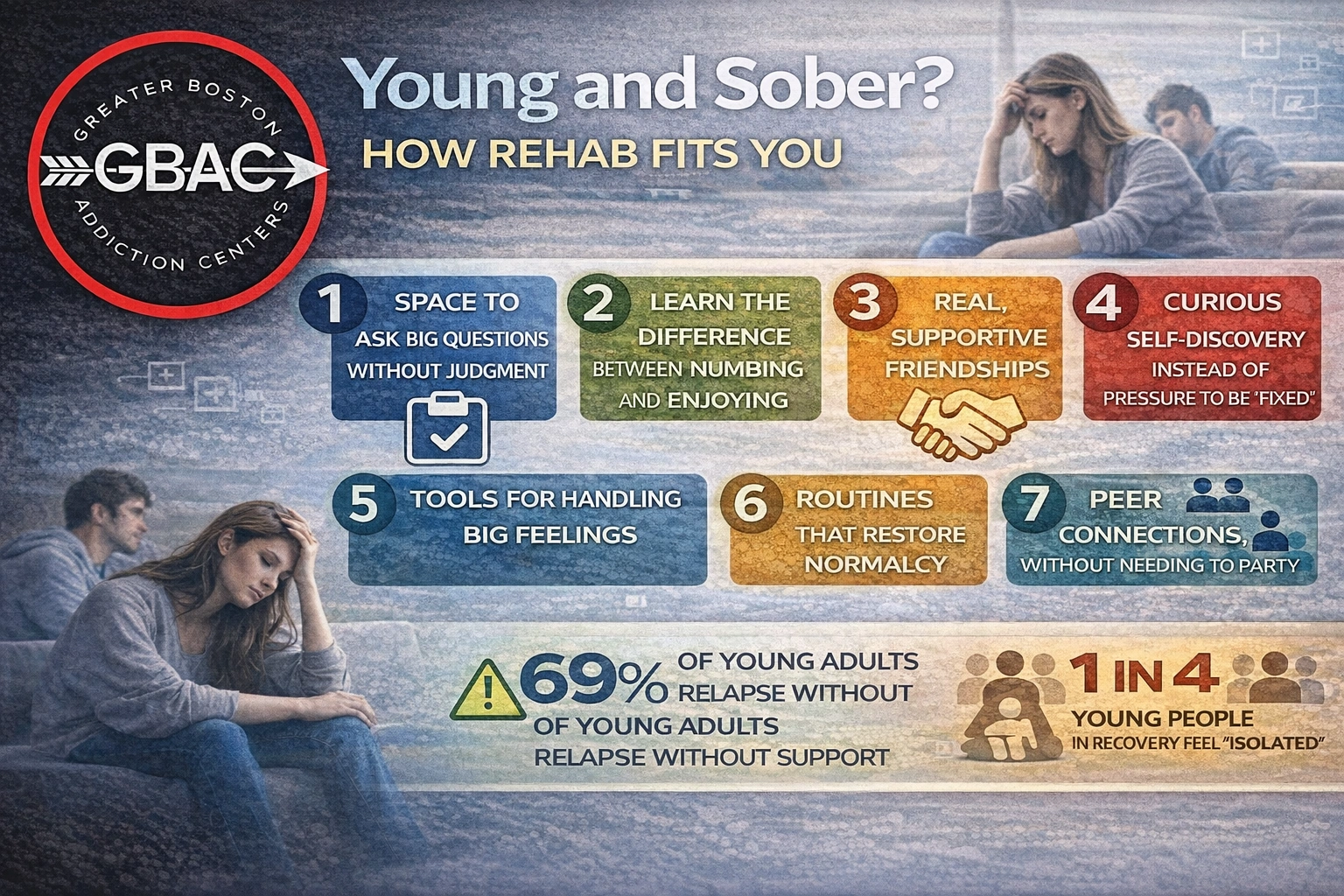
6. You Build Routines That Make You Feel Human Again
Young people often hear “routine” and think “boring.” But here’s the secret: the right kind of structure doesn’t box you in—it builds you out.
Maybe for the first time in years, you start sleeping through the night. You eat food that isn’t gas station pizza. You wake up without wondering what you said the night before. You don’t dread 8 a.m. anymore.
Looking for drug addiction treatment in Dorchester? Whether you’re in a full-day program or attending weekly groups, recovery helps you build a daily life that feels sustainable—not soul-sucking.
And guess what? You get to decide what that looks like.
7. You Realize You’re Not the Only “Weird One”
This is maybe the most healing part.
The first time you say out loud, “I feel like the only sober person in the world,” and someone else says, “Me too,” something shifts.
The shame cracks. The loneliness eases.
In treatment, you meet other people in your age group who get it. People who didn’t have a dramatic rock bottom, but knew something wasn’t working. People who were “high-functioning” but miserable. People who are rebuilding—awkwardly, honestly, bravely.
Being young and sober is hard. But it’s less hard when you stop doing it alone.
FAQs for Young People Considering Treatment
Do I have to identify as an “addict” to get help?
No. Labels are not required to deserve support. If substances are interfering with your peace, your relationships, or your sense of self—that’s reason enough.
What if I’m not sure I’m ready to quit forever?
Totally fair. Treatment helps you explore what’s going on beneath the surface, even if you’re not sure about lifelong sobriety. Curiosity is a valid place to start.
I’m in college. Can I still do outpatient treatment?
Yes. Outpatient programs are designed for people with school, work, or family responsibilities. We’ll work with your schedule to make care fit your life.
Will I still be able to have fun without using?
Absolutely. It may feel strange at first, but real fun—where you’re present, connected, and not recovering for three days afterward—is part of what recovery makes possible.
I’m scared I’ll lose my friends. What do I do?
You might lose some friends. But you’ll also find new ones—ones who care about you sober, not just you under the influence. Support groups, alumni networks, and peer programs can help you build those relationships.
Want to build a life that feels like yours?
Call (877) 920-6583 to learn more about our drug addiction treatment services in Boston, MA. You’re not behind. You’re just starting something real.
