

It doesn’t always start with a rock bottom. Sometimes, it starts with a subtle hunch—an uneasy feeling that your relationship with alcohol might not be serving you anymore. You’re not falling apart. You’re functional. But something feels off. The wine that once helped you unwind now leaves you feeling a little disconnected. The drinks that used to be “just social” seem more necessary than enjoyable. You’re not looking for a label. You’re looking for clarity.
If this sounds familiar, you might be what’s often called sober curious—interested in exploring life without alcohol, but unsure whether that means you need “treatment.”
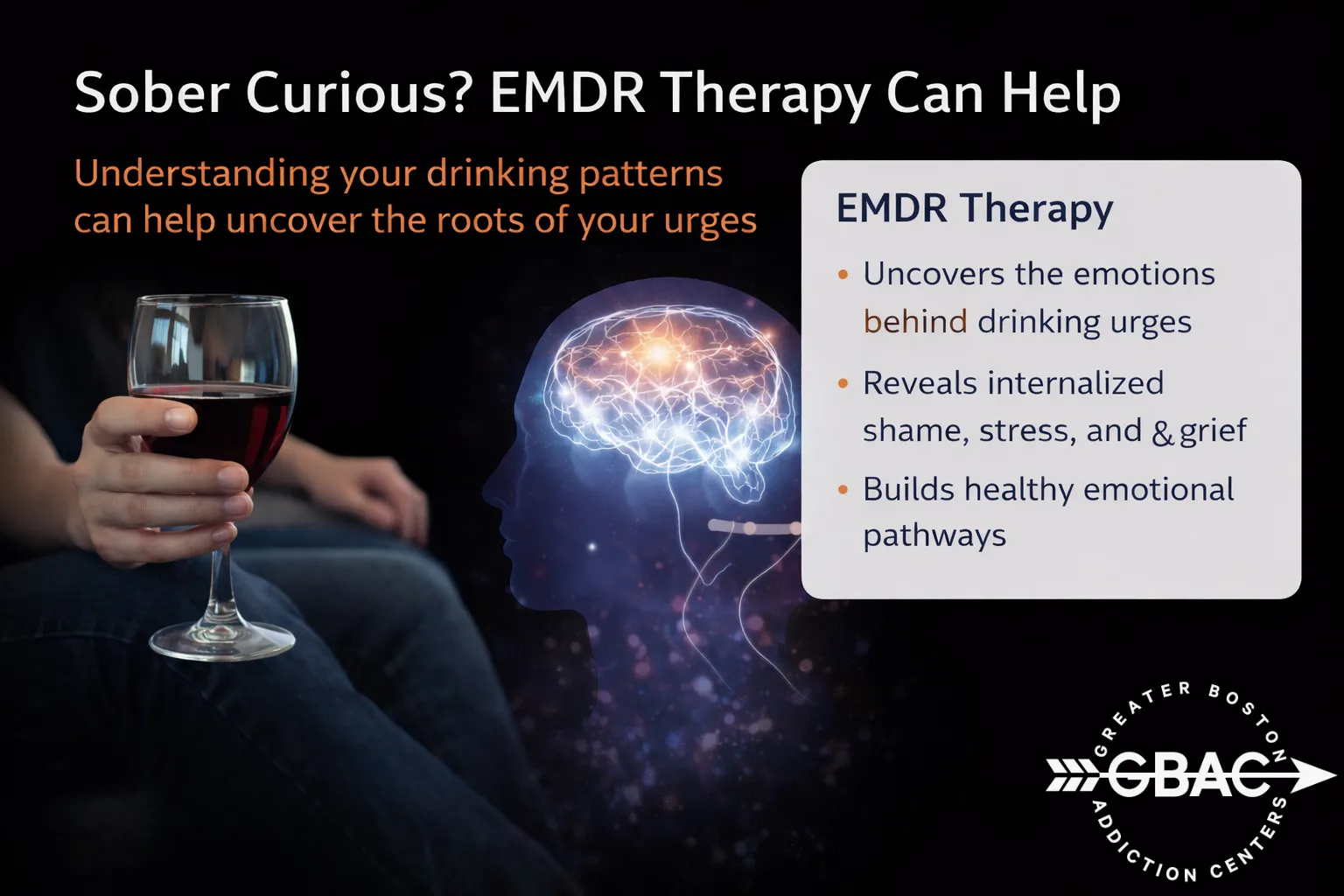
Here’s the good news: You don’t need to identify as an addict or commit to abstinence forever to benefit from therapy. In particular, EMDR (Eye Movement Desensitization and Reprocessing) can help uncover what’s behind the urge to drink—so you can move forward with more freedom and self-trust.
At Greater Boston Addiction Centers, we offer EMDR therapy as part of our trauma-informed care model in Massachusetts, supporting people at all stages of self-discovery—not just those in crisis.
EMDR Isn’t Just for Trauma Survivors
One of the biggest myths about EMDR is that it’s only for people with capital-T trauma—like combat veterans or survivors of abuse. But EMDR isn’t just for the dramatic or the devastating. It’s also for the subtle, the chronic, the things you brushed off but still carry.
Think of it this way: EMDR helps process stuck emotions—and stuck doesn’t always mean severe. It could be the lingering embarrassment from middle school rejection that still makes you feel unworthy in adult relationships. It could be your parents’ emotional unavailability that taught you to numb out with alcohol rather than risk vulnerability. These are the kinds of emotional echoes EMDR can help resolve.
You don’t need a specific memory or a diagnosis. You just need curiosity and a willingness to explore.
Drinking Might Not Be the Problem—But It Might Be the Messenger
Maybe you’ve told yourself, I don’t drink that much. And maybe that’s true. But if alcohol is your go-to when you’re anxious, bored, overwhelmed, or lonely, EMDR can help you figure out why those feelings hit so hard to begin with.
It’s not about blaming your past or psychoanalyzing every sip. It’s about understanding what your drinking patterns might be protecting you from feeling. For many clients, EMDR reveals unconscious emotional loops—like internalized shame, unresolved grief, or chronic stress—that alcohol temporarily mutes.
Once those emotional patterns get processed, the urge to drink often softens on its own. Less effort. More ease.
EMDR Helps You Feel Safe Inside Your Own Head
Here’s how EMDR works, simply put: Your brain gets to finish a story it never had the chance to resolve.
Using bilateral stimulation (like eye movements, tapping, or sound), EMDR helps both sides of your brain communicate more effectively while you think about distressing memories or feelings. The process mimics the natural healing your brain does during REM sleep. But this time, you’re awake, supported by a therapist, and guiding the experience.
You don’t have to re-live traumatic events in detail. You don’t have to say everything out loud. You stay in control the whole time, and you can stop or pause at any point.
For people who are sober curious, this sense of safety is crucial. Because you’re not just processing past pain—you’re also confronting a future without a familiar coping mechanism. EMDR gives your brain new pathways to manage emotions—so you don’t need alcohol to feel okay.
You Don’t Have to Quit to Start Healing
Let’s be clear: You don’t have to stop drinking to do EMDR. You don’t even have to be 100% sure you want to stop drinking.
This isn’t rehab. It’s reflection. It’s a space where you can be honest about what’s working, what’s not, and what you want more of in your life. Many people use EMDR as a tool for insight—not abstinence.
That said, it’s common for people to naturally reduce their drinking after a few sessions—not because they’re forcing themselves to quit, but because the pull toward alcohol weakens when emotional wounds begin to heal.
You don’t have to commit to a sober identity. You just have to be open to change.
EMDR Often Works Faster Than Talk Therapy Alone
Traditional talk therapy can be powerful—but sometimes you know why you feel the way you do, and the insight alone doesn’t change the behavior.
That’s where EMDR shines. It’s less about explaining and more about reprocessing. Clients often report that years-old emotional triggers lose their charge after just a few sessions.
One client, for example, realized that every time she felt criticized—even mildly—she’d reach for a drink to soothe the sting. EMDR helped her connect that reaction to childhood dynamics she’d never consciously linked. Once her brain reprocessed that early pattern, she didn’t need alcohol to manage those feelings anymore. She still drank on occasion—but without the edge of compulsion.
EMDR Is Just One Part of the Healing Toolkit
At Greater Boston Addiction Centers, EMDR is part of a larger ecosystem of care. We integrate it with talk therapy, mindfulness techniques, and holistic wellness practices, all designed to support your goals—whether that’s cutting back, quitting, or just understanding yourself better.
And if you ever decide you want more structured support—like group therapy, accountability, or residential care—we can guide you toward the right treatment options in Residential or outpatient services in Massachusetts.
The point is: You don’t have to go from “maybe I drink too much” to “I need a 30-day program” overnight. There’s a middle path—and EMDR fits right in.
What If I Don’t Know What to Work On?
That’s totally normal. You don’t have to show up with a list of trauma bullet points.
Your EMDR therapist will help you identify emotional patterns that may be worth exploring. These could include:
- Times you’ve felt emotionally stuck, even if you don’t know why
- Recurring thoughts like “I’m not enough” or “I always mess things up”
- Past moments where you felt powerless, humiliated, or unseen
Even if you’re not sure what connects your drinking to your emotions, EMDR helps uncover the threads gently, piece by piece.
What If It Brings Up More Than I Can Handle?
This is a common fear—and a valid one. But EMDR is designed with safety in mind.
Sessions begin with preparation and resourcing, meaning you’ll build tools for staying calm and grounded before diving into emotional work. If something feels overwhelming, the therapist slows down. You’re never pushed past your edge.
And because EMDR is offered in a clinical setting, you’ll always have access to additional support if something deeper surfaces.
Frequently Asked Questions About EMDR for the Sober Curious
Do I have to be sober to do EMDR?
No. While being under the influence during sessions isn’t recommended, many people begin EMDR while still drinking. The process itself may organically reduce the emotional reliance on alcohol over time.
How long does EMDR therapy take?
That depends. Some people notice major shifts in 3–6 sessions, while others benefit from longer-term support. Your therapist will tailor the pace based on your needs and goals.
Is EMDR covered by insurance?
Many insurance plans do cover EMDR when it’s part of a licensed therapy program. Our team at Greater Boston Addiction Centers can verify your benefits and help you understand your options.
Will EMDR make me stop drinking?
EMDR doesn’t force any outcome. It helps you process emotional drivers that may be linked to drinking. From there, you decide what changes feel right.
Is it weird if I’m not ready to stop but still want to try therapy?
Not weird at all. That’s exactly the kind of person EMDR can help. Curiosity is enough.
Ready to Find Out What’s Really Behind the Urge?
Whether you’re drinking more than you want or just wondering what your life might feel like without the constant need to numb, you deserve clarity. You deserve options. And you don’t have to do it alone.
Call (877) 920-6583 to learn more about our EMDR services in Massachusetts. You don’t need a label to start healing—just a willingness to look beneath the surface.
