

The holidays carry a weight that doesn’t show up in wrapping paper. On the outside, it’s twinkling lights and smiling family photos. But for many—especially those in early recovery or considering it—it’s a pressure cooker of emotions: nostalgia, loneliness, guilt, and fear all tangled in a season that insists on joy.
If you’re someone who’s used substances to feel—deeper, freer, more connected—this season can trigger a quiet panic. Not because you don’t want to get better. But because you’re afraid of what sobriety might take from you.
Your spark.
Your rhythm.
Your edge.
Your voice.
At Greater Boston Addiction Centers, we’ve heard it all. And we’ve seen what happens when people feel forced to choose between recovery and identity. The good news? That’s a false choice. And medication assisted treatment (MAT) is one of the reasons why.
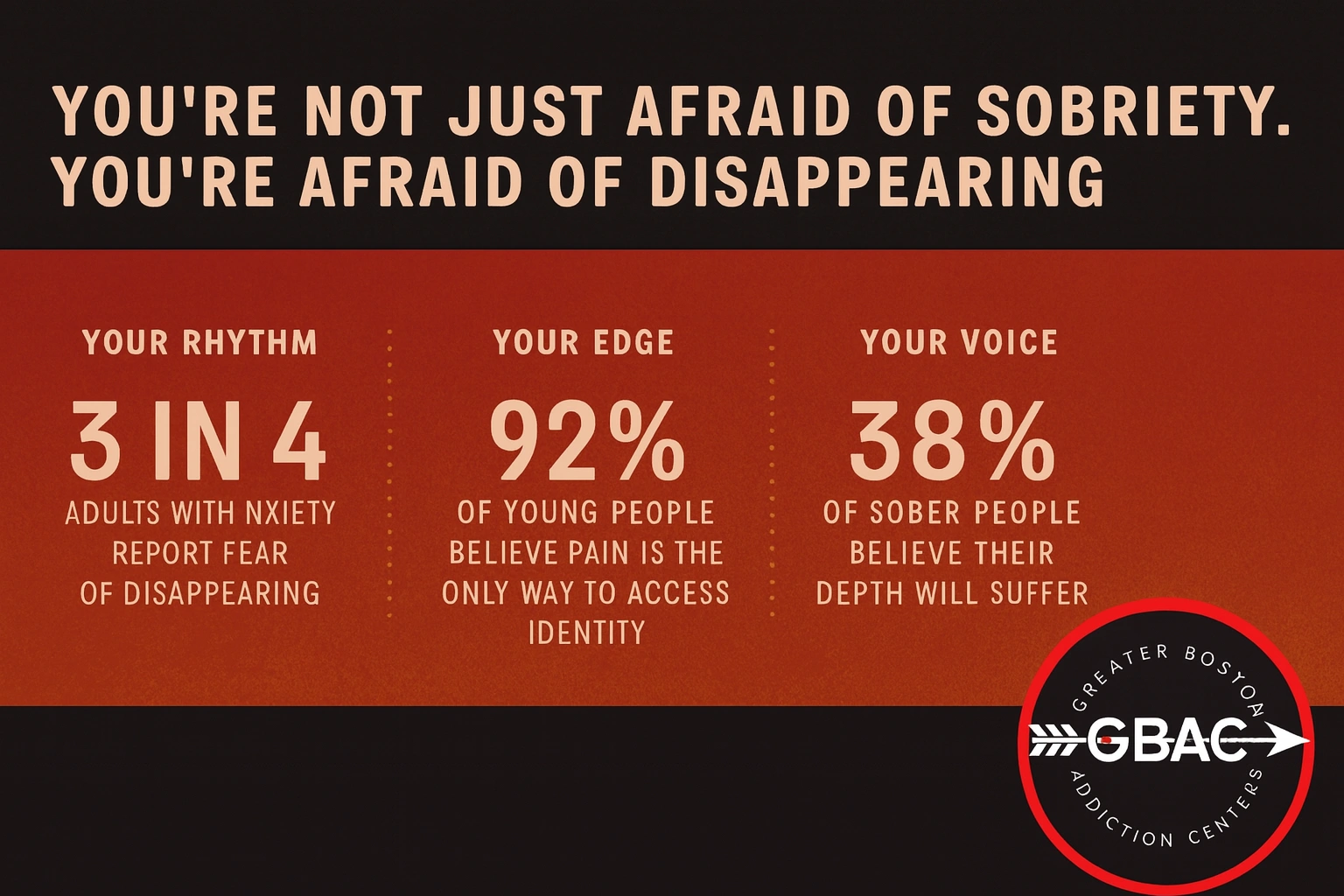
You’re Not Just Afraid of Sobriety. You’re Afraid of Disappearing.
Let’s name it with compassion: some people aren’t afraid of getting sober—they’re afraid of becoming someone else in the process.
You might worry that without substances, your colors will fade. That your sense of humor will fall flat. That the music will stop. That your depth will dry up.
If drinking made you brave enough to perform…
If weed helped you create…
If opioids dulled the noise enough to feel peace…
Then of course sobriety feels risky.
But it’s not the joy, depth, or connection you’re afraid of losing. It’s the shortcut.
And here’s where MAT comes in—not to judge that shortcut, but to gently offer a safer way to the same places.
Medication Assisted Treatment Isn’t the End of Feeling—It’s the Beginning of Feeling Safely
When people imagine MAT, they sometimes think of sedation. Of emotional flatlining. Of becoming mechanical or disconnected.
But that’s not how MAT works.
Medication assisted treatment helps reduce cravings, stabilize brain chemistry, and soften withdrawal symptoms. For many, it makes space to actually feel—without being overwhelmed or hijacked by those feelings.
It’s not about suppressing your highs and lows. It’s about regulating them enough that they don’t run your life.
Think of it this way: if your emotions are music, addiction turns the volume to 100 with no off switch. MAT helps you control the dial.
You still get to feel the full range. But now you get to decide when and how.
You Don’t Have to Suffer to Be Real
There’s a toxic myth—especially among artists, creatives, and deep-feeling people—that pain equals authenticity. That struggle is the price of depth. That chaos creates character.
And yes, some of the most moving work comes from broken places. But so does healing.
Medication assisted treatment doesn’t numb you out or dilute your soul. It simply makes it possible to explore your emotions without losing yourself in them.
You can still write the poem, paint the canvas, speak the truth—but now you’re doing it without burning down your life to get there.
You don’t lose access to the deep parts of yourself. You just stop letting the pain be the only way in.
What MAT Makes Possible (That Substance Use Never Could)
Let’s be honest: substances work—until they don’t.
They can unlock a moment. Dull a fear. Amplify a feeling. But over time, they also steal.
What starts as a shortcut becomes a detour. Then a dead end.
MAT helps people return to themselves. And not in a half-version kind of way. In a fully present kind of way. Here’s what that can look like during the holidays:
- Laughing at your cousin’s bad jokes and actually meaning it
- Crying during the movie without needing to drink after
- Playing guitar in your room because you want to, not because you’re high
- Being in a room full of people and not needing to perform or escape
- Writing something raw and real without the crutch of a chemical muse
It’s not glamorous. But it’s sacred.
Recovery Isn’t About Becoming Someone Else. It’s About Coming Home.
People think recovery means turning into a completely different person.
The truth? It’s often about remembering who you were before things got so loud.
Before substances started calling the shots. Before shame built a wall between you and your own intuition.
Medication assisted treatment gives you the mental clarity and emotional bandwidth to rebuild that relationship—with yourself.
And if you’re looking for medication assisted treatment in Newton or surrounding areas like Wellesley, we’re here to walk with you—not strip you down or build you into something new, but help you stay grounded in your own skin.
You’re Still You—Even Without the Noise
You don’t need a substance to be:
- Creative
- Insightful
- Magnetic
- Emotional
- Expressive
- Connected
You were all of those things long before the chemicals came in. They didn’t create you. They amplified what was already there.
MAT doesn’t take those things away. It simply allows them to exist without the instability. Without the crash. Without the cost.
You still get to be you. Just with more room to breathe.
FAQ: Medication Assisted Treatment & Identity in Recovery
Will I still be creative if I use MAT?
Yes. Many people report that their creative work actually improves in recovery because they’re no longer writing or creating from a place of chaos. With the support of MAT, emotional access becomes more consistent and sustainable.
Is MAT just replacing one drug with another?
No. MAT uses FDA-approved medications that support neurochemical stability without producing a high. These medications are part of a clinically guided recovery plan and do not create a new addiction when used properly.
Will MAT make me feel numb?
MAT is not designed to suppress emotion. It helps reduce withdrawal symptoms and cravings, allowing you to engage more fully with therapy, relationships, and your own emotional life. If a medication ever feels numbing, adjustments can be made.
Can I still connect with others emotionally on MAT?
Absolutely. In fact, many people find they’re more emotionally available once their brain and body aren’t in survival mode 24/7. MAT supports connection, not isolation.
How long do I stay on MAT?
There’s no one-size-fits-all answer. Some stay on MAT for a few months. Others for years. What matters is finding the timeline that supports your health, safety, and personal goals. MAT can be tapered when appropriate under medical supervision.
You Don’t Need to Earn Your Voice Back—It Was Never Gone
Recovery isn’t about worthiness. It’s not a redemption arc or a performance.
You don’t need to prove your value by struggling. You don’t have to be punished before you’re allowed peace.
And if the fear this season is, “What if I get sober and disappear?”—let this be your answer:
You don’t disappear.
You emerge.
Clearer. Steadier. Still messy, maybe. But not erased.
Medication assisted treatment isn’t about flattening you into something safe and digestible. It’s about creating space for your real voice—your actual one, underneath the fear and noise—to come through.
That’s not just a different kind of holiday miracle.
That’s what coming home sounds like.
Ready to Talk?
Call (877)920-6583 to learn more about our medication assisted treatment services in Boston, MA. This season, let your voice be the thing you keep—not the thing you fear losing.
