

If you’ve ever thought, “I don’t need to quit, but I’m not loving how this feels anymore,” you’re not alone.
The sober curious crowd is growing—and it’s not just about avoiding rock bottom. It’s about craving clarity. Wanting more control. Hoping for mornings that don’t start with regret and a headache.
Maybe alcohol or weed isn’t ruining your life, but it’s definitely messing with your peace. You’re not here to be lectured. You’re here to figure out how to feel better. And that’s exactly what a partial hospitalization program can help you do. No labels, no pressure—just structure, support, and a real way forward.
Greater Boston Addiction Centers offers a PHP that meets you where you are. Not in crisis? That’s fine. Still on the fence? Still valid. Let’s walk through what it actually takes to build a sobriety routine that works—and why starting with a partial hospitalization program could change everything.
1. First, Name the Real Reason You’re Rethinking Substances
This is the part that gets skipped in most sober-curious content. We rush into routines before we get honest about why we want to change.
So pause here for a second and ask:
- What’s making you want to stop or cut back?
- What’s starting to feel…off?
- What would you hope to feel instead?
Maybe you’re noticing anxiety that hits harder after a night out. Maybe the wine you used to enjoy feels like a stress crutch now. Maybe you just want to prove to yourself that you can feel okay without it.
Whatever it is—that’s your reason. You don’t need a dramatic bottom to justify the shift. Naming your “why” is powerful. PHP programs like ours help you hold onto that why when motivation dips (because it always will).
2. Don’t Rely on Willpower—Rely on Structure
Let’s be real: white-knuckling your way through sobriety doesn’t usually stick. Even if you’re not in “treatment or bust” territory, you still need structure. You still need a routine that can hold you when your willpower tanks at 7:43 pm on a Thursday.
That’s where a partial hospitalization program makes the difference. It gives you:
- A consistent daily schedule
- Professional therapy and accountability
- Peer support from others who get it
- Time to focus on your life—without pressing pause on everything
In PHP, you don’t have to explain why you’re there if you don’t have a “bad story.” You just have to show up, be curious, and stay open.
3. Build a Week That Helps You Stay Sober—Not Just Avoid Substances
It’s easy to say “build a routine,” but what does that actually look like in early sobriety? Here’s the formula we recommend inside PHP—and help you create for your real life:
Your Weekly Sobriety Map:
- Morning Anchor: Stretch, shower, coffee, sunlight. You don’t need a 5 a.m. cold plunge routine—just a few reliable signals to your body that you’re starting the day.
- Midday Purpose Point: Work, group, volunteering—something that gives structure and meaning.
- Evening Reset: Screen-free hour, journaling, a walk, a group meeting. The key here is intentional wind-down—not just collapse-into-bed energy.
Inside PHP, you’ll practice this structure in real time. So when you graduate, your sobriety routine isn’t an abstract theory—it’s muscle memory.
4. Include Both Anchors and Outlets in Your Routine
Too many people design their sobriety routine like a punishment. No drinking, no parties, no friends, no fun. No wonder it falls apart.
Sustainable recovery routines need two things:
- Anchors – consistent habits that create stability (think: meal prep, therapy, bedtime, yoga)
- Outlets – safe, satisfying ways to release emotion and energy (music, dance, kickboxing, paint night, a messy journal)
When you enter a partial hospitalization program, we help you map out your version of this. No cookie-cutter worksheets. No toxic positivity. Just support in building a week that feels like it fits.
5. Add Real Feedback Loops (Not Just Self-Talk)
Sobriety is trial-and-error. Some days you’ll crush it. Others? You’ll feel like quitting. That’s normal. That’s human. What matters is having a place to process those ups and downs in real time.
At GBAC, our PHP clients don’t just “talk about feelings.” They get support in navigating:
- Social invites with alcohol
- Emotional triggers
- Dating while sober (yeah, that’s a whole chapter)
- How to deal with friends who still drink
With daily therapy and group work, you’re not stuck trying to make sense of everything alone in your head. You’re learning to trust your own experience—without needing to have it all figured out.
6. Choose a Program That Matches Your Version of Recovery
Not everyone in recovery fits the same mold. Some of our clients are managing full-time jobs while doing PHP. Others are taking a pause to get their footing. Many are “gray area drinkers” who aren’t sure where they land—but they know they want better.
If you’re looking for a partial hospitalization program in Boston that respects the in-between space you’re in, that’s what we offer. No pressure. No judgment. Just support that adapts to where you’re starting.
7. Start Small. But Start Strong.
The biggest myth in sobriety is that you have to know it’s forever. You don’t. You just have to start. With a week. A plan. A team. And a willingness to see what changes when you give yourself the tools to actually feel better.
At Greater Boston Addiction Centers, we’ll help you build a routine that supports clarity, peace, and sustainable change. You’re not broken. You’re just ready for more than what alcohol is offering you right now.
FAQs About Partial Hospitalization Programs for Sober-Curious Adults
What exactly is a partial hospitalization program (PHP)?
A PHP is a structured treatment option that offers intensive therapy, psychiatric support, and peer connection—without requiring overnight stays. It’s often a middle step between residential rehab and outpatient care. For sober-curious adults, it provides a safe space to explore change with guidance.
Do I have to call myself an “addict” to attend PHP?
Not at all. Many of our clients are still figuring out how they relate to substances. You don’t need a label to ask for support. You just need curiosity, openness, and a willingness to try something new.
Can I keep working or going to school while in PHP?
Possibly. PHP usually requires a few hours a day (often five days a week), so we’ll work with you to determine what’s realistic. Some clients reduce hours or take leave; others schedule around their responsibilities.
What if I’m not sure I want to be sober forever?
That’s okay. PHP isn’t about making forever decisions. It’s about giving yourself space to explore what life feels like with more support and less substance reliance. You get to decide what comes next.
Is this only for people who’ve hit rock bottom?
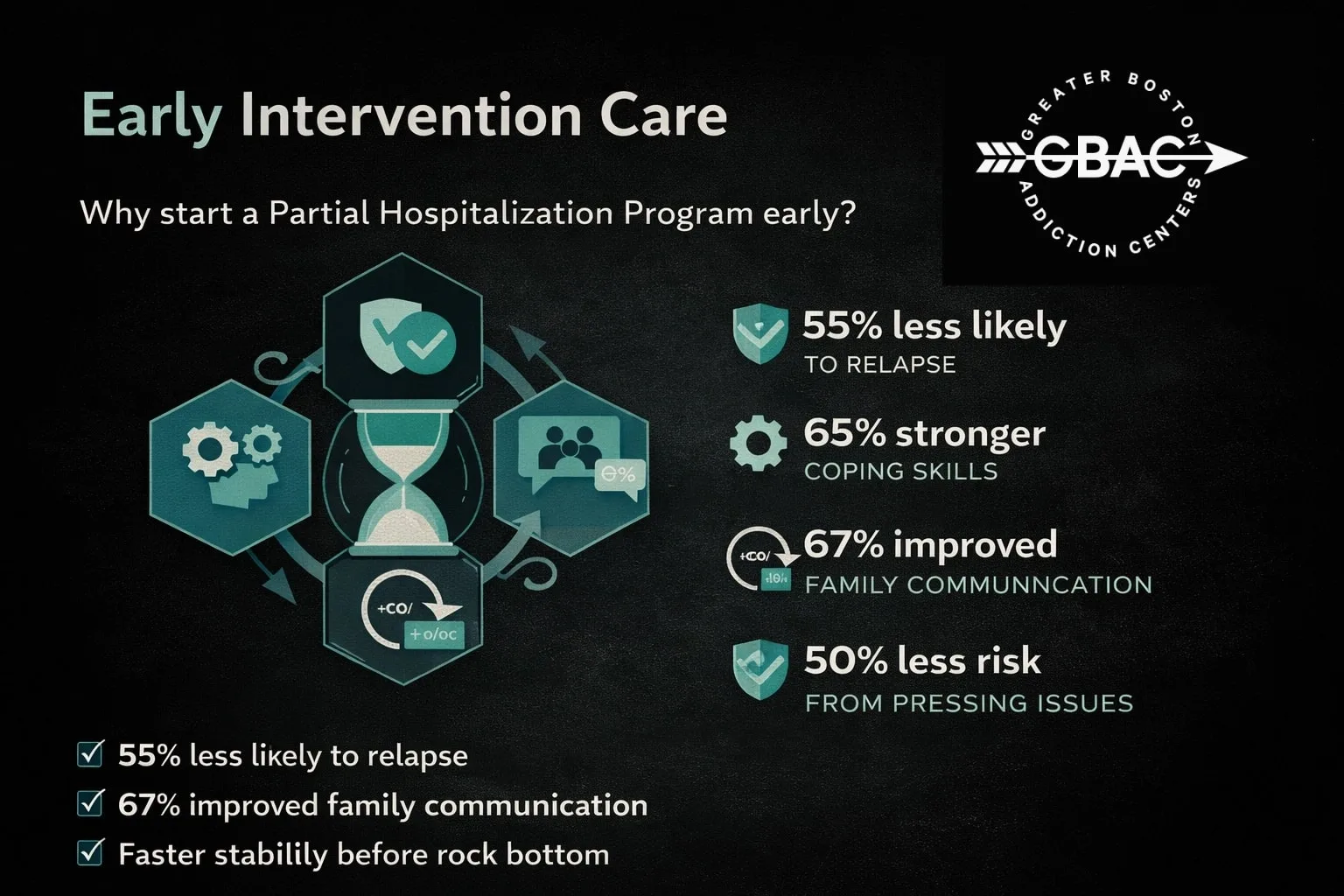
Absolutely not. PHP is ideal for people who want structured help but don’t need detox or 24/7 supervision. If you’re sober curious and serious about change, this level of care could be the perfect fit.
Call (877) 920-6583 to learn more about our partial hospitalization program services in Boston, MA. You don’t need to be broken to want better. And you don’t need to wait to start.
