

You don’t have to hit rock bottom to question your drinking.
In fact, some of the most powerful turning points come quietly: in the middle of a conversation you don’t remember, while scrolling your camera roll from the night before, or sitting on your couch wondering, Why did I even drink last night?
If you’ve found yourself asking whether alcohol is still serving you—or starting to take more than it gives—that’s not overthinking. That’s awareness. And it matters.
At Greater Boston Addiction Centers, we work with people across the spectrum of change—from those who are ready for sobriety to those just starting to question the role alcohol plays in their lives.
This blog is for you if:
- You wouldn’t call yourself an “alcoholic,” but drinking doesn’t feel quite right anymore.
- You’ve tried cutting back but find yourself slipping into old patterns.
- You’re curious about what life might feel like with less alcohol—or none at all.
1. Start by Noticing the “Normal”
Drinking is deeply woven into social norms, especially in Boston. It’s how we bond, relax, celebrate, and sometimes even grieve. But that makes it harder to recognize when “normal” starts becoming harmful.
Ask yourself:
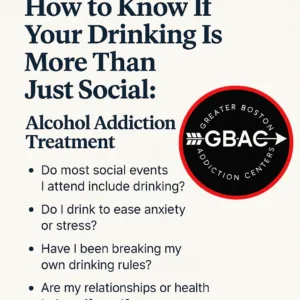
- Do most social events I attend include drinking?
- Do I ever feel pressured to drink—by others or myself?
- Have I ever felt bored or uncomfortable without a drink in hand?
These questions aren’t meant to diagnose. They’re here to help you get honest about what drinking looks like in your life—not on paper, but in practice.
2. Look at the Role Alcohol Plays Emotionally
Sometimes, it’s not the quantity of alcohol that’s most concerning—it’s the why behind it.
Do you drink to:
- Ease social anxiety?
- Manage stress after work?
- “Take the edge off” emotions you haven’t named?
These patterns are more common than you think. But over time, alcohol stops being a tool and becomes a trap. It masks discomfort, instead of resolving it. And it often brings more anxiety, not less.
You don’t need to be in crisis to admit that alcohol may be taking more than it gives.
3. Watch for Shifting Boundaries
Maybe you’ve said:
- “Just one glass tonight.”
- “Only on weekends.”
- “Never alone.”
But those rules keep bending—or breaking.
When you start creating boundaries with drinking and can’t stick to them, it may be a sign that alcohol has more control than you intended. This doesn’t make you weak. It makes you human. Alcohol affects impulse control, decision-making, and even memory. But if your actions are starting to drift from your intentions, it might be time to get curious about why.
4. Check for Subtle Consequences
Not all signs of problem drinking are dramatic. In fact, some of the most telling ones are quiet:
- Feeling foggy or low-energy in the mornings
- Cancelling plans due to hangovers
- Emotional distance from partners or friends
- Feeling disconnected from your goals or values
If alcohol is starting to create tension—not just in your relationships, but in your sense of self—that matters. And it’s worth exploring.
5. Know That Labels Are Optional
One of the biggest barriers for people who are sober curious is the fear of being labeled.
You don’t have to call yourself an alcoholic to want help.
At Greater Boston Addiction Centers, we offer alcohol addiction treatment in Boston for people at all stages of questioning. Whether you’re ready to stop drinking completely or just want a space to explore moderation and support, you’re welcome here.
We’ll never push you to fit a label. We care about your quality of life, your peace of mind, and your freedom to choose.
6. Consider the Cost of Going It Alone
Many people try to change their drinking habits solo. That’s brave—but it’s also incredibly hard.
Having support—whether clinical, peer-based, or both—makes a huge difference. You don’t need to wait for things to get “bad enough” to deserve help. If alcohol is making your life feel smaller, tenser, or foggier, that’s enough reason to reach out.
If you’re looking for Alcohol Addiction Treatment in Needham or the Greater Boston area, we provide judgment-free care that meets you wherever you are.
7. Take a Small Step Toward Clarity
You don’t need to decide everything today. But what if you just took one step?
Here are a few low-pressure ways to explore your relationship with alcohol:
- Try a week without drinking and journal how you feel—physically and emotionally.
- Talk to a friend who’s cut back or gone sober—ask what surprised them.
- Schedule a consultation with a program like ours, just to explore what’s available.
Every change starts with curiosity. Every healthy step begins with permission to question.
Frequently Asked Questions: Alcohol Addiction Treatment in Boston
Do I have to stop drinking completely to get help?
No. Many people start treatment while still drinking or while unsure what kind of change they want. We’ll meet you where you are—whether you’re exploring moderation or ready for full sobriety.
What happens in alcohol addiction treatment?
Treatment may include therapy, group support, wellness planning, relapse prevention, and skill-building. Programs range from outpatient (a few hours a week) to more structured options depending on your needs.
Is alcohol treatment only for “severe” cases?
Not at all. In fact, early support often prevents bigger issues down the road. If alcohol is affecting your relationships, mood, sleep, or goals, you’re a valid candidate for support.
How do I know which program is right for me?
We offer personalized assessments to help you find the right level of care—without pressure. Whether it’s therapy, outpatient care, or something in between, we’ll walk you through the options.
I live near Dedham. Do you serve my area?
Yes! If you’re looking for Alcohol Addiction Treatment in Dedham, we’re nearby and ready to help. We also serve surrounding communities throughout Greater Boston.
Ready to Take the First Step?
If you’re wondering whether your drinking is more than just social, that’s reason enough to explore support.
Call (877) 920-6583 or visit our Alcohol Addiction Treatment program page to learn more about our compassionate services in Boston, MA.
You don’t have to have it all figured out. You just have to be curious—and willing to see what else is possible.
