

You didn’t plan to stop showing up.
Maybe it was one missed session that turned into a week. Maybe it felt easier to ghost than to admit things got hard again. Maybe you were doing okay—until you weren’t.
And now, you’re thinking about going back. But the shame is loud. Loud enough to make you hesitate. Loud enough to tell you: They probably don’t want to see me.
Here’s the truth: They do.
At Greater Boston Addiction Centers, we know life in recovery isn’t linear. And we know how heavy it can feel to walk back into a space you left without explanation. That’s why we meet people exactly where they are—not where we wish they had been.
Whether you left a few days ago or months back, here’s how to restart your intensive outpatient program without the guilt, fear, or spotlight.
1. First, Know You’re Not the Only One Who Left
It’s easy to believe you’re the only person who ever dropped out of IOP. But that’s just the shame talking.
In truth? It happens all the time.
People leave treatment for all sorts of reasons:
- Stress at home ramps up.
- A relapse feels too embarrassing to admit.
- Mental health symptoms get overwhelming.
- Motivation fades and the couch feels safer than a therapy chair.
None of that makes you weak. It makes you a person navigating something hard.
We’ve had clients pause, disappear, or relapse—and then come back stronger. Not because they “fixed” everything in the meantime, but because something inside them still believed they were worth the effort.
That part of you? It’s still here. It brought you to this blog.
2. Start Small: A Call, a Text, or Even Just Reading This
Reaching back out doesn’t need to be dramatic. You don’t have to have the right words. You don’t even have to feel ready.
You just have to crack the door open.
You could start with:
“Hey, I was in IOP a while ago. Things got off track, but I’m thinking about coming back. What are my options?”
That’s enough. You’re not expected to tell your whole story right away. The team will know how to guide you from there.
And if you’re looking for support locally, we offer care through:
Don’t worry about perfection. Just pick one next step.
3. The Team Isn’t Waiting to Judge You
You might imagine the staff wondering where you’ve been—or worse, being annoyed that you left.
That’s not how this works.
At GBAC, we’re not waiting with judgment. We’re waiting with compassion. Because we’ve worked with enough clients to know that people leave for all kinds of reasons—and that most of them still want help, even when they’re silent.
When you come back, you won’t be met with interrogation. You’ll be met with:
“We’re glad you’re back. What do you need now?”
We’re not in the business of guilt-tripping people. We’re here to help them restart—gently, respectfully, and at their own pace.
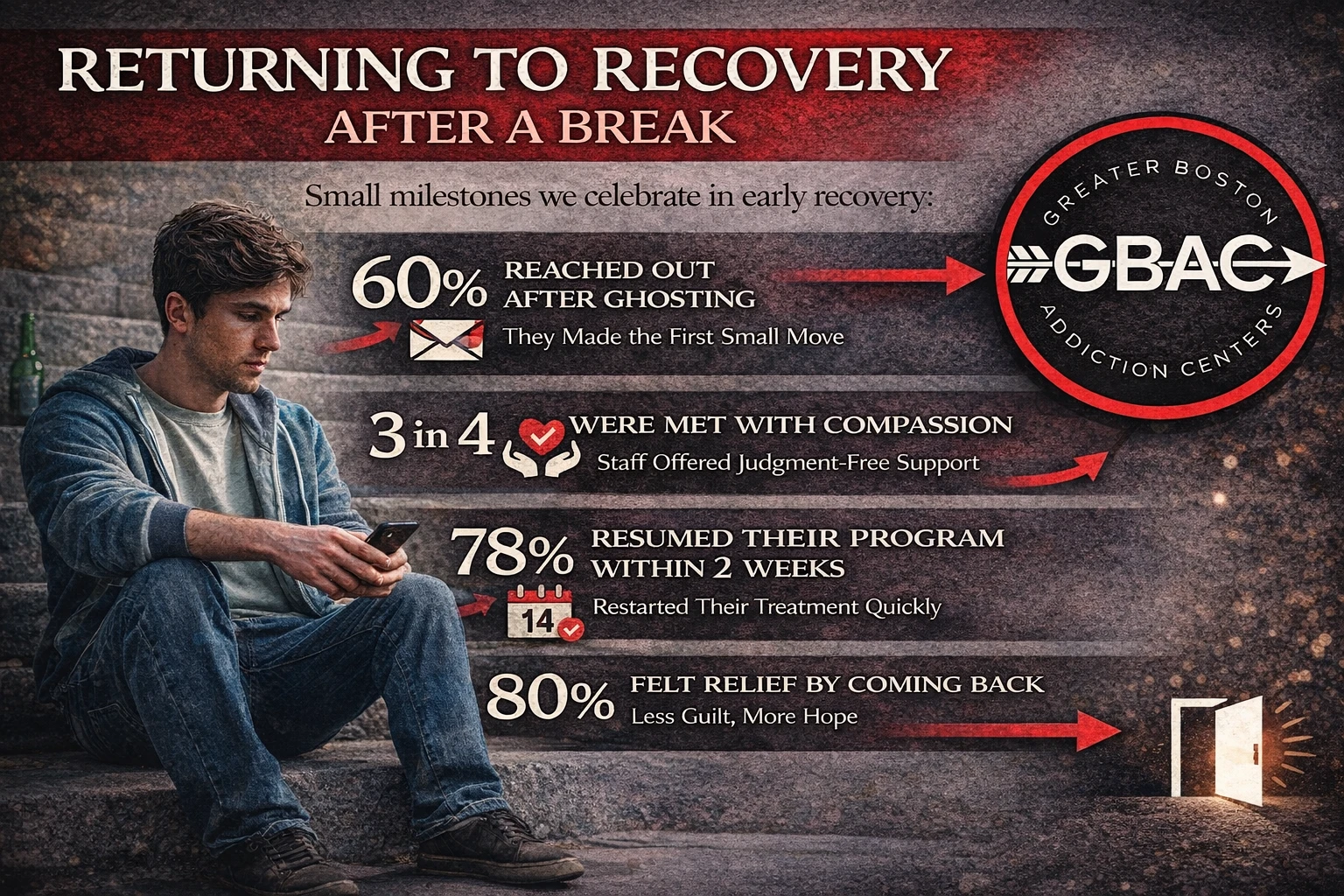
4. You Might Not Have to Start Over
One of the biggest fears we hear is: “Will I have to start everything from the beginning?”
Not necessarily.
If you had already begun your intensive outpatient program, there may be ways to pick up where you left off or adjust the plan to match where you are now. It’s not about making you repeat work—it’s about supporting the next step that makes sense for you.
That might mean:
- Resuming individual therapy with the same counselor
- Re-entering a group you already started
- Modifying your schedule to better fit your current needs
You’re not starting from zero. You’re continuing the work—with more awareness than before.
5. Let Go of the Need for a “Good” Reason
This is a big one. So many people believe they need a justifiable excuse for why they ghosted or dropped out.
But here’s the thing: You don’t need a polished explanation to come back.
You don’t need to rehearse your story or prove how sorry you are. We’re not here to weigh your reasons. We’re here to respond to your present—not your past.
If all you can say is, “I wasn’t doing well, and I want to try again,” that’s more than enough.
6. You’re Allowed to Be Nervous
Walking back into the building—or even dialing the number—might feel like one of the hardest things you’ve done.
That’s okay.
You don’t need to fake confidence. You don’t need to pretend this is easy. Being nervous doesn’t mean you’re not ready. It just means you’re human.
And here’s what often happens:
- You make the call.
- Someone kind answers.
- You feel a little less alone.
The tension starts to soften, and a little relief trickles in. It’s not magic—but it’s real.
7. Guilt Is Heavy—You Can Set It Down Now
You might be carrying thoughts like:
- “They probably think I’m a mess.”
- “I should have stayed. I blew my shot.”
- “I can’t face those people again.”
But guilt doesn’t make you stronger. It just makes you stuck.
At GBAC, we believe that recovery is an open-door process. You can walk back in whenever you’re ready—no confession required.
You’re not behind. You’re not a failure. You’re just here. And that’s the most important place to start.
8. You’re Still Eligible for Help
No matter how long you’ve been gone. No matter how far things spiraled. No matter how unsure you feel.
You are still allowed to want help. You are still deserving of support.
Recovery doesn’t expire. And your spot at the table is still open.
Frequently Asked Questions
Can I come back to IOP after ghosting or dropping out?
Yes. Many people take breaks from treatment and return when they’re ready. We welcome you back with compassion, not questions.
Will I have to start over completely?
Not always. Depending on how long it’s been and what progress you made, you may be able to pick up where you left off or create a new starting point that makes sense for your needs.
Will the staff judge me or be disappointed?
Absolutely not. At GBAC, our team understands that recovery is nonlinear. You won’t be punished or shamed—only supported.
What if I relapsed after leaving?
You’re not alone. Many people relapse after leaving treatment. You’re still eligible to return and receive the care you need. There’s no judgment here.
Do I have to explain why I left?
You can share as much or as little as you’re comfortable with. We don’t require detailed explanations. Your desire to come back is what matters.
Looking for a Soft Landing? We’ve Got You.
Whether you’re near Boston or Needham, we’re here for you—not the polished version of you. The real one.
The one that’s trying again.
No judgment. No lectures. Just a door that’s still open.
Call (877) 920-6583 to learn more about our intensive outpatient program services in Boston, MA.
You didn’t burn the bridge. You just took a detour. And it’s never too late to come home to yourself.
