

Something in your child has changed—and it doesn’t fit into one explanation. It’s not just anxiety. It’s not just drinking. It’s both, and it’s tangled.
If you’ve been searching for answers, you’re not alone. Many families land on this exact question before finding real clarity through co-occurring disorder treatment.
It Can Look Like Everything Is Falling Apart at Once
You might see mood swings, isolation, anger, or withdrawal. Then substance use enters the picture—or maybe it was already there.
It becomes hard to tell what came first.
Is your child drinking because they’re depressed?
Or are they depressed because of what alcohol is doing to them?
The truth is: it’s often both.
And trying to separate them can feel like trying to untangle two wires that keep tightening around each other.
Why Treating Just One Piece Often Doesn’t Work
It’s common for families to try addressing one issue at a time.
Maybe your child saw a therapist—but kept drinking.
Or they went to rehab—but their mental health symptoms came rushing back.
This isn’t a failure. It’s a sign that something deeper is being missed.
When mental health and substance use are connected, treating only one side can leave the other untreated—and still driving the behavior.
That’s why many families start looking for depression and alcohol rehab Boston options that address both at the same time, even if they didn’t know that approach existed before.
What It Means When Both Are Happening Together
When your child is dealing with both mental health struggles and substance use, it’s often called a “dual diagnosis.”
But labels aside, here’s what matters:
- The emotional pain is real
- The substance use is not random
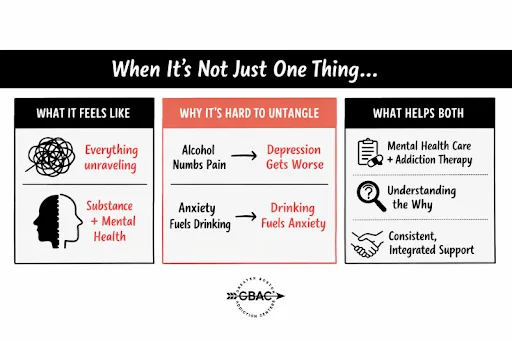
- Each issue is feeding the other
Alcohol might be numbing anxiety, easing depression, or quieting intrusive thoughts—for a moment.
But over time, it deepens those same struggles.
That’s why this cycle can feel so relentless.
What Integrated Treatment Actually Looks Like
Treatment that addresses both doesn’t just “add more therapy.” It changes the entire approach.
It might include:
- Mental health support alongside addiction care
- Medication management when appropriate
- Structured, consistent support throughout the week
- A focus on understanding why your child is using—not just stopping it
For some families, that begins with more immersive care, like live-in treatment or exploring options like treatment options in Residential.
Others may start with structured daytime or multi-day weekly support, depending on what’s safest and most appropriate.
There isn’t one path—but there is a path.
What Parents Often Worry About (And What We Want You to Know)
You might be wondering:
- “Did I miss something?”
- “Did I cause this?”
- “Is it too late?”
These thoughts are incredibly common. And they come from love—not failure.
Nothing about this situation means you didn’t care enough or act soon enough.
What matters now is understanding what your child actually needs.
And sometimes, that means stepping into a more complete picture of what’s really going on.
There Is a Way Forward—Even If It Doesn’t Feel Clear Yet
One of the hardest parts of this experience is not knowing what you’re looking at.
Once families understand that it’s not just one issue—but two connected ones—things begin to make more sense.
And more importantly, treatment starts to work in a different way.
Not overnight. Not perfectly. But more fully.
You Don’t Have to Keep Guessing
If you’ve been trying to figure this out on your own, you’ve already done so much.
You’ve paid attention. You’ve stayed involved. You haven’t looked away.
That matters more than you probably realize.
If you’re ready for clearer answers and a path that addresses both sides of what your child is facing, we’re here to help.
Call 877-920-6583 or visit our dual diagnosis treatment services to learn more about our Dual Diagnosis Treatment services in Boston.
