

There’s usually a moment people remember clearly.
Not the worst day. Not the biggest crisis. Just a quiet realization that the cycle isn’t sustainable anymore.
If that moment feels familiar, you’re not alone.
Many people eventually explore options like our heroin addiction treatment in Massachusetts after reaching that point. But before anyone walks through a treatment center door, they usually have one big question:
What actually happens next?
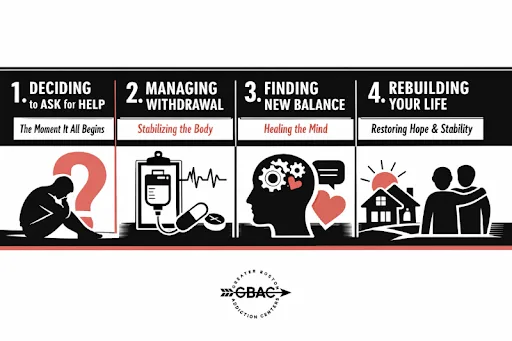
Admitting You Need Help Can Feel Like Standing on a Cliff
Knowing you need help doesn’t make the decision easier.
People often worry about everything at once:
- Will treatment actually work?
- What will people think?
- Can I really stop?
- What happens after?
That fear is normal. It shows you still care about your life.
And caring—even when things feel chaotic—is where recovery begins.
Your Body Needs Time to Reset
Opioids change the way the brain and body function. Stopping suddenly can create intense physical discomfort.
The first stage of treatment focuses on helping the body stabilize safely.
During this time, medical professionals monitor symptoms, reduce risk, and help people get through the physical adjustment period.
For many people, something surprising happens shortly after:
Their mind begins to clear.
It’s the first time in a long time they can think without the fog of withdrawal or the pressure to use again.
Healing Starts After the Physical Storm
Getting through withdrawal isn’t the end of recovery—it’s the beginning.
Addiction often grows around deeper struggles. Stress, trauma, anxiety, grief, or emotional pain can all play a role.
That’s why many people move into more structured care afterward, where they can focus on rebuilding stability.
Some choose programs with round-the-clock support in a live-in environment. If you’re exploring that type of care, you can learn more about help in Residential.
Being in a safe environment removes daily triggers and gives your brain the chance to reset.
The Small Wins That Start to Add Up
Recovery rarely arrives in one big breakthrough.
It’s built from smaller moments:
- Sleeping through the night
- Feeling hungry again
- Laughing with someone without substances
- Going a full day without obsessing about using
- Having an honest conversation for the first time in years
Those moments seem small at first.
But together, they create momentum.
The Fear That Life Will Feel Empty Without Substances
A lot of people hesitate to seek help because they’re afraid of what sobriety might take away.
They worry they’ll feel bored. Flat. Disconnected.
But many people discover something different.
The things they thought they needed substances for—connection, relief, confidence—slowly begin to return in healthier ways.
Recovery doesn’t erase who you are.
It helps you find the parts of yourself that addiction buried.
Recovery Is Really About Getting Your Life Back
The goal isn’t just stopping the drug.
It’s rebuilding the life that addiction slowly narrowed.
That includes things like:
- Restoring physical health
- Reconnecting with family and friends
- Learning new coping tools
- Building routines that support stability
- Rediscovering purpose and direction
These changes don’t happen overnight.
But they do happen.
And many people who once believed recovery was impossible now live full, stable lives they never thought they’d have again.
If You’re Thinking About Reaching Out
You don’t need to be perfectly ready.
You don’t need all the answers.
You just need to start the conversation.
Call (877)920-6583 or visit our Heroin addiction treatment services in Massachusetts to learn more about our Heroin addiction treatment services in Massachusetts.
One step today can lead to a very different life tomorrow.
