

I’ve sat across from people who nearly didn’t come in. Not because they didn’t need help—but because their lives didn’t look like they did.
They were functioning. Showing up. Holding it together.
And quietly falling apart.
Early in that first conversation, many of them had already looked at our multi-day weekly treatment options—and almost closed the tab.
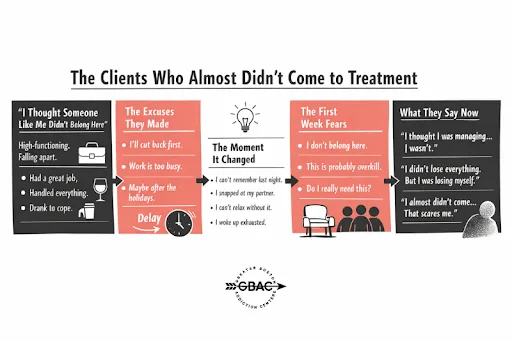
“I Thought Someone Like Me Didn’t Belong Here”
They had a picture in their head of what “real” addiction looks like.
It didn’t include:
- Making partner at a firm
- Coaching their kid’s soccer team
- Answering emails at midnight
- Or drinking every night just to feel normal again
So they told themselves a story: This isn’t bad enough yet.
What they meant was: I’m still getting away with it.
The Exhaustion They Couldn’t Explain
High-functioning doesn’t mean okay.
It means you’ve built a life strong enough to hide the cracks.
They described it the same way, almost word for word:
- “I’m tired all the time.”
- “I can’t shut my brain off without something.”
- “I feel like I’m performing my own life.”
One client said, “It’s like I’m buffering… all the time.”
That’s the part people don’t see.
The Argument That Nearly Kept Them Away
Right before they reached out, there’s usually a negotiation.
It sounds logical. Calm. Responsible, even.
- “Let me just cut back first.”
- “Work is too busy right now.”
- “I’ll deal with this after the holidays.”
- “Other people need this more than I do.”
No drama. No crisis.
Just delay.
And delay is sneaky. It doesn’t feel like a decision—it feels like patience.
What Changed Their Mind
It wasn’t always a big moment.
Sometimes it was small. Quiet. Almost forgettable.
- Forgetting a conversation they swore they’d remember
- Snapping at someone they love—and seeing the look on their face
- Realizing they couldn’t relax without alcohol or pills
- Waking up already tired of the day
One person told me, “Nothing terrible happened. I just couldn’t keep pretending I was fine.”
That’s often the turning point.
Not rock bottom—just clarity.
The First Week They Almost Didn’t Show Up For
Even after they committed, doubt didn’t disappear.
They walked in thinking:
- “I don’t belong here.”
- “This is probably overkill.”
- “I’ll try it… but I don’t think I need it.”
And then something uncomfortable happened.
They recognized themselves in other people.
Not in the details—but in the feeling.
That quiet, constant effort to stay in control.
That’s usually when the walls start to come down.
What They Say Now
Not one of them says, “I wish I waited longer.”
What they say is simpler than that:
- “I didn’t realize how much energy I was spending just coping.”
- “I thought I was managing. I wasn’t.”
- “I didn’t lose everything—but I was losing myself.”
And maybe the most honest one:
“I almost didn’t come. That scares me now.”
If You’re Still Debating It
You don’t have to hit some invisible threshold to deserve support.
You don’t have to fall apart publicly.
And you definitely don’t have to wait until your life becomes unrecognizable.
If you’re tired in a way that sleep doesn’t fix…
If you’re functioning, but it feels fragile…
If part of you knows this isn’t sustainable…
That’s enough.
You’re allowed to take that seriously.
And if a higher level of support ever does feel necessary, there are also options like care in Residential that meet people at different stages.
You don’t need a dramatic story to justify getting help.
Just an honest moment.
Call (877)920-6583 or visit our treatment options to learn more about our intensive outpatient program services.
