

Sometimes the hardest sentence we hear is: “I already tried treatment.”
And when someone says that, they usually mean something deeper. They mean they showed up, did the work, and still walked away feeling like nothing really changed.
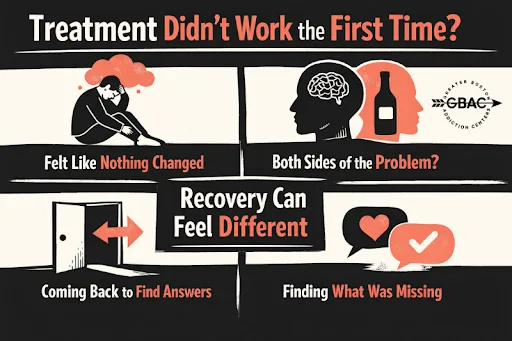
At Greater Boston Addiction Centers, we hear that story often. Many people who return to care discover something important along the way: when both mental health and substance use are addressed together, recovery can feel very different. Our approach to co-occurring disorders care is built around that understanding.
Sometimes It Was Never Just the Substance
Many people enter treatment believing the substance is the whole problem.
But underneath the drinking, pills, or drugs, there might be anxiety that never quiets down. A depression that drains energy from everything. Trauma that never found language.
If those layers stay untreated, recovery can feel like trying to hold water in your hands. You can try harder. You can want it more. But something keeps slipping through.
What often changes the experience is recognizing that both pieces need attention at the same time.
The Moment People Realize Something Was Missing
We’ve had clients come back months—or even years—after their first program.
Not because they failed.
Because something didn’t fully connect.
One person told us:
“The first time I went to treatment, everyone focused on the drinking. No one asked why I couldn’t sleep for three days straight or why my thoughts wouldn’t slow down.”
When those mental health symptoms were finally addressed, recovery didn’t feel like constant resistance anymore. It felt manageable.
That shift matters more than people expect.
Why Skepticism Is Completely Understandable
If treatment once felt like a dead end, skepticism makes sense.
You might wonder:
- Why would it be different now?
- Was the problem actually me?
- Am I just going to repeat the same cycle?
Those questions are honest ones.
And often, the difference isn’t about trying harder. It’s about having the right kind of support, one that recognizes how closely mental health and substance use can interact.
That’s the core idea behind Dual Diagnosis Treatment, which focuses on both sides of the struggle instead of treating them separately.
What Clients Often Notice the Second Time Around
People who return to care often describe a few surprising differences.
They feel heard sooner.
Their symptoms make more sense.
Their coping tools actually work in daily life.
One client explained it this way:
“The first program helped me stop using. The second one helped me understand why I needed to.”
When someone starts addressing the anxiety, trauma, or mood swings that were driving the cycle, recovery stops feeling like white-knuckling through every day.
Recovery Doesn’t Always Work the First Time
That truth doesn’t get talked about enough.
Recovery is rarely a straight line. For many people, it’s a process of learning what didn’t fit the first time and discovering what does.
Trying treatment again doesn’t mean starting from zero.
It means starting with more insight.
And sometimes the right environment, structure, or level of care makes the difference. For some people, that includes exploring more immersive support like treatment options in Residential, where healing can happen away from everyday pressures.
The Quiet Shift That Makes Recovery Feel Possible
When both mental health and substance use are acknowledged together, something subtle begins to change.
People stop feeling like they’re constantly fighting themselves.
Instead of forcing recovery, they begin understanding it.
And for many who once believed treatment “didn’t work,” that shift becomes the moment things finally start to move forward.
If you’ve tried treatment before and it didn’t feel like enough, you’re not alone and it doesn’t mean recovery isn’t possible. Call 877-920-6583 or visit our co-occurring disorders program to learn more about our Dual Diagnosis Treatment services in Massachusetts.
