

It’s a specific kind of fear—the kind that sits quietly in your chest when you start noticing the signs again. The distance. The defensiveness. The small changes that don’t feel small at all.
If you’re here, you’re not overreacting. You’re paying attention. And that matters more than you think.
In moments like this, parents often begin searching for options like a partial hospitalization program—not because they want something extreme, but because they want something that actually works before things get worse.
The Moment You Realize Something Isn’t Right Again
It rarely comes as a dramatic event.
It’s a shift. A feeling. A conversation that doesn’t land the way it used to.
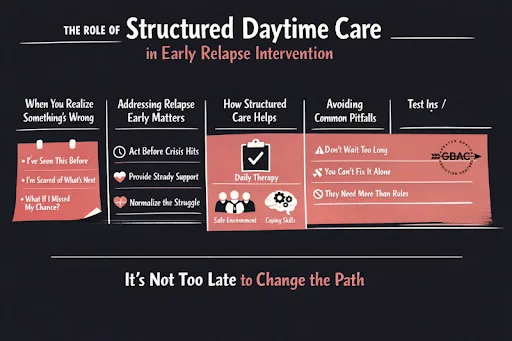
You might catch yourself thinking:
- “I’ve seen this before.”
- “I don’t want to jump to conclusions… but I’m scared.”
- “What if I wait too long again?”
That internal tug-of-war is exhausting. Part of you wants to trust them. Another part is quietly bracing for impact.
Both parts come from love.
Why Early Intervention Feels So Hard (Even When You Know It Matters)
There’s a myth that you have to wait until things fall apart before stepping in again.
You don’t.
But emotionally, it’s complicated. Parents often hesitate because:
- They don’t want to push their child away
- They’re afraid of being wrong
- They feel guilty for “not fixing it the first time”
Let’s gently correct something here: You didn’t cause this, and you’re not failing now.
Relapse—or the early signs of it—is not a reset to zero. It’s information. It tells us that something still needs support.
What Structured Daytime Care Can Do in This Stage
At this point, your child may not need to be removed from their entire life—but they likely need more than occasional check-ins or weekly therapy.
This is where structured daytime care becomes incredibly valuable.
It creates a consistent rhythm:
- Regular clinical support multiple days a week
- A safe place to process what’s actually going on beneath the surface
- Accountability without isolation
Think of it less like “starting over” and more like tightening the safety net before the fall gets deeper.
It’s Not About Punishment — It’s About Stabilizing
Many young adults resist help because they assume it means losing control of their life.
But the goal here isn’t to take things away. It’s to help them regain steadiness.
That might look like:
- Addressing stress, anxiety, or depression that’s fueling use
- Rebuilding routines that quietly fell apart
- Learning how to handle cravings before they turn into patterns
There’s a big difference between reacting to a crisis and interrupting one early.
What Parents Often Get Wrong (And Why It Makes Sense)
You may feel the urge to:
- Monitor everything
- Have “one more serious conversation”
- Set stricter rules
None of that makes you a bad parent. It means you’re trying.
But here’s the hard truth: you can’t out-manage a pattern that needs clinical support.
Your role isn’t to become the treatment plan.
Your role is to help connect them to one.
You’re Allowed to Act Before It Gets Worse
There’s no award for waiting until things are undeniable.
In fact, the earlier you respond, the more options you have—and the less disruption your child may experience overall.
If you’ve been thinking:
- “It’s not bad enough yet”
- “Maybe it’ll pass”
- “I don’t want to overreact”
Try reframing it:
“What if stepping in now is the most loving, stabilizing thing I can do?”
There Is Still Time to Change the Direction
This moment—right now—is not the end of their story.
It’s a turning point. And turning points don’t always look dramatic. Sometimes they look like a parent quietly deciding not to ignore what they see anymore.
If your child needs more support than you can provide at home, options like structured care or even help in Residential settings are there—not as a last resort, but as a way to protect what’s still possible.
You haven’t missed your chance.
You’re right in it.
Call 877877920-6583 or visit our partial hospitalization program services to learn more about our partial hospitalization program services.
