

Some people worry that therapy will make them disappear.
Not physically—but emotionally. Artistically. Spiritually. That the things they feel most intensely—their sadness, their rage, their brilliance, their hunger to be alive—will get pressed down, smoothed out, and silenced.
They’re not wrong to be afraid.
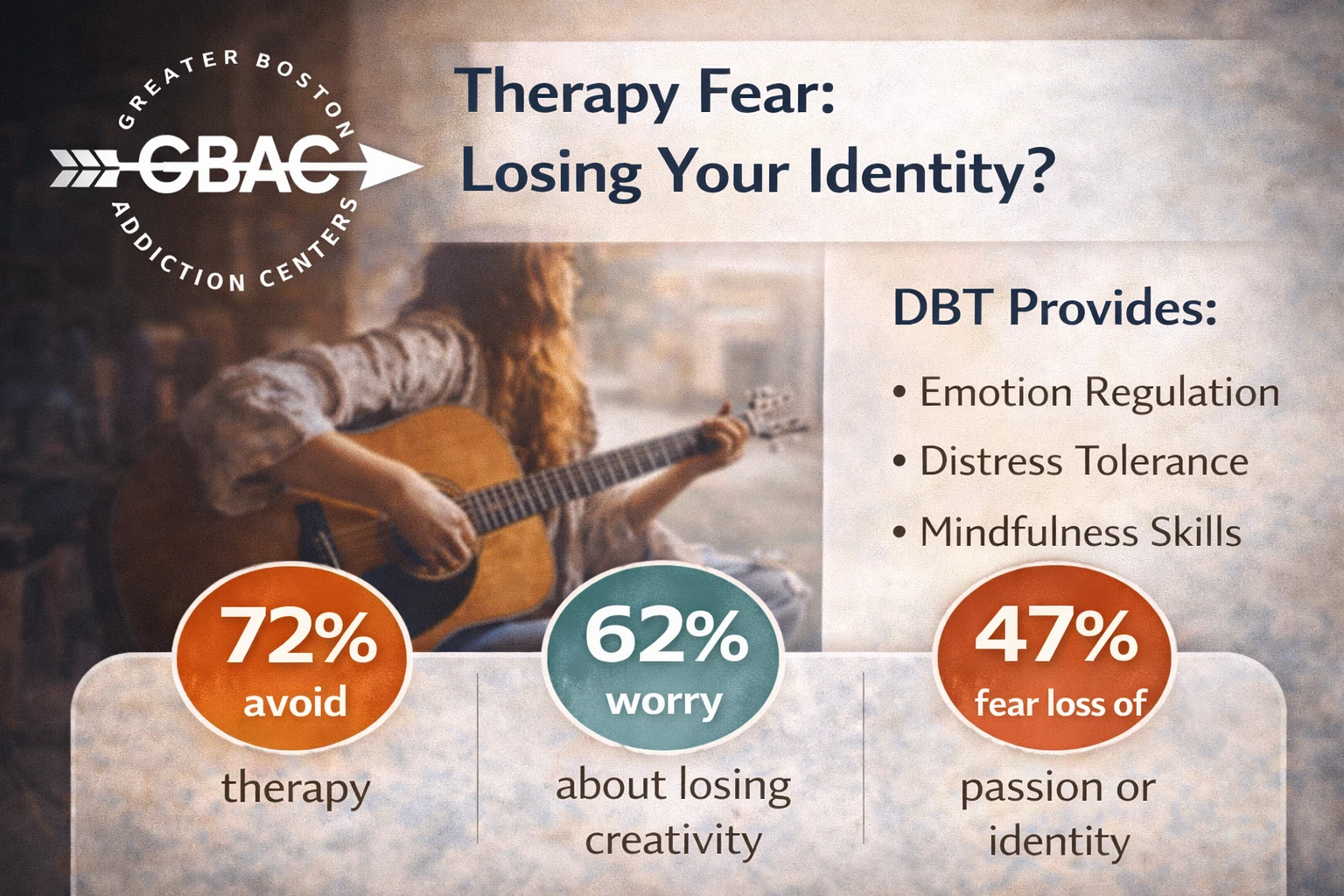
When your identity is wrapped in feeling deeply, being told to “regulate” your emotions can sound like being told to shut them off. But DBT isn’t about making you less. It’s about helping you live more fully—with choice, not chaos.
That’s what we see in our Dialectical Behavior Therapy program: not people being fixed—but people finally being heard, held, and supported without losing themselves.
If You’ve Ever Thought “Will Therapy Make Me Boring?”
Let’s start here.
We’ve heard it a hundred times, said in different ways:
- “What if I lose my spark?”
- “What if I don’t care about anything anymore?”
- “What if the chaos is part of my creativity?”
If that’s you—welcome. You’re not overthinking it. You’re protecting something sacred. And that sacred thing? It doesn’t need to be erased. It just needs space to exist without hurting you.
DBT doesn’t aim to dull you. It helps you stop self-destructing long enough to channel all that fire into something that feels true.
DBT Isn’t About “Fixing”—It’s About Building
Dialectical Behavior Therapy (DBT) was developed to help people who feel a lot—and often suffer deeply because of it.
It doesn’t assume you’re broken. It assumes you’ve been doing the best you can and that you’re ready to try something new.
In our program, we don’t tell you how to feel. We give you tools to:
- Recognize what’s happening in your body and mind
- Name it without shame
- Pause before acting on it
- Choose what happens next
That’s not control. That’s freedom—real, gritty, moment-by-moment freedom.
For the Ones Who Feel Everything
If your mind moves fast, your emotions come in waves, and your connections run deep but feel fragile—you’re exactly the kind of person DBT was made for.
The four core areas we focus on are:
- Mindfulness: Not “clear your mind,” but “be aware of what your mind is doing, without judgment.”
- Distress Tolerance: Skills that get you through the worst moments—without making things worse.
- Emotion Regulation: Understanding where the emotional spikes come from, and how to soften them without shutting down.
- Interpersonal Effectiveness: Saying what you need without apologizing for existing—or exploding to be heard.
These aren’t steps in a workbook. They’re survival tools that become part of your life. They don’t erase your intensity. They help you manage it in a way that lets you keep creating, keep loving, keep being you—just with more breath in your chest and more choices in your hands.
The Identity Fear Is Real
We once worked with a client in Dedham, Massachusetts—a songwriter with a history of trauma and intense emotional cycles. She said:
“I don’t want to be flat. I just want to not hate myself by Thursday.”
She thought if she started DBT, she’d lose her edge. But what she actually lost was the need to fall apart in order to feel something.
By the end of her third month in the program, she wasn’t quieter—she was clearer. Still raw. Still real. But able to pause and choose whether to let the emotion take the wheel—or let herself steer.
That’s the difference.
Art Isn’t Born from Pain. It’s Carved from It.
There’s a myth that pain is the price of creativity. That to be great, you must suffer endlessly. But that’s not true. Pain may shape you—but it doesn’t have to destroy you.
DBT gives you the tools to live through pain, not in it.
We’ve seen poets, dancers, and visual artists use these tools to express themselves more honestly. They don’t lose their voice. They find its full range.
One client said it best: “Before DBT, I was always writing from the middle of the storm. Now I can write from the eye of it—and sometimes, from the calm after.”
You Can Still Be Wild—and Well
We’re not here to cage you.
We’re here to help you keep the parts of yourself that make life meaningful, while learning to live without the parts that keep blowing up your relationships, your stability, or your health.
Because the truth is:
- You can feel deeply without drowning
- You can love fiercely without losing yourself
- You can be wild without being wrecked by it
Needham, Massachusetts was home to a painter who once told us she feared being “too much” for any therapist. What she found in DBT wasn’t correction—it was connection. And that made all the difference.
What We Love Most About DBT
It’s not just that DBT works (though research backs that up). It’s how it works.
DBT is honest. It’s compassionate. It’s structured enough to feel safe—but spacious enough for your full self to show up.
You don’t have to “get better” in the way someone else defines it. You get to define what healing looks like for you. And we’ll be right there with you as you do.
If you need something more intensive before DBT clicks, we may explore options like support in Residential—but even then, we stay rooted in helping you protect your identity while finding your footing.
Frequently Asked Questions
Is DBT only for people with borderline personality disorder?
No. While it was developed for BPD, DBT helps anyone who struggles with emotional regulation, intense relationships, or impulsive behavior.
Will DBT change my personality?
Not at all. DBT helps you regulate emotions and behaviors—you stay fully you, with more tools and fewer breakdowns.
What’s the difference between DBT and CBT?
CBT focuses on thoughts and beliefs. DBT adds a focus on acceptance, emotion management, and distress tolerance—especially useful for intense emotional patterns.
Is DBT boring or robotic?
Nope. DBT is practical, interactive, and emotionally engaging. It’s built for people who feel—not for those trying to avoid feeling.
How long does DBT take to work?
Many clients notice shifts in a few weeks, but full skill-building usually takes several months. It’s not a quick fix—it’s sustainable change.
Do I have to do group therapy?
Our DBT program includes both group and individual sessions, but we’ll work with you to build a plan that respects your comfort level and goals.
Call (877) 920-6583 to learn more about our Dialectical Behavior Therapy in Boston, Massachusetts.
