

When people reach a point where weekly therapy doesn’t feel like enough, but full residential care feels like too much, structured day treatment can offer a middle ground. This phase of care provides consistency, therapeutic support, and daily structure while still allowing individuals to return home each evening.
For those exploring this level of care, understanding what it actually feels like day to day can make the decision feel more grounded and less overwhelming.
What a Typical Day Often Looks Like
Days in this phase of treatment tend to follow a predictable rhythm. Having a consistent schedule helps reduce uncertainty and creates space to focus fully on healing.
A typical day may include:
- Structured therapeutic sessions
- Time for skill-building and reflection
- Breaks to reset and decompress
- Supportive group or individual work
This balance of structure and flexibility helps many people stay engaged without feeling emotionally overloaded.
Why Daily Structure Can Be Helpful During Healing
Structure isn’t about control — it’s about creating safety and stability.
When days are predictable, the nervous system has a chance to settle. Many people find that having a set routine helps reduce anxiety, improve focus, and make it easier to stay present during therapy.
This level of consistency can be especially helpful during periods of emotional overwhelm or early recovery.
Types of Support You May Experience Day to Day
Rather than focusing on one single approach, structured day treatment often combines multiple forms of support throughout the week. This allows care to address emotional, behavioral, and practical needs at the same time.
Support may include:
- Guided therapeutic conversations
- Skill-building for stress and emotional regulation
- Opportunities to process real-life challenges
- Encouragement to build healthy daily habits
The goal is not perfection, but progress that feels sustainable.
Who This Level of Support Is Often Helpful For
This phase of care is commonly helpful for people who:
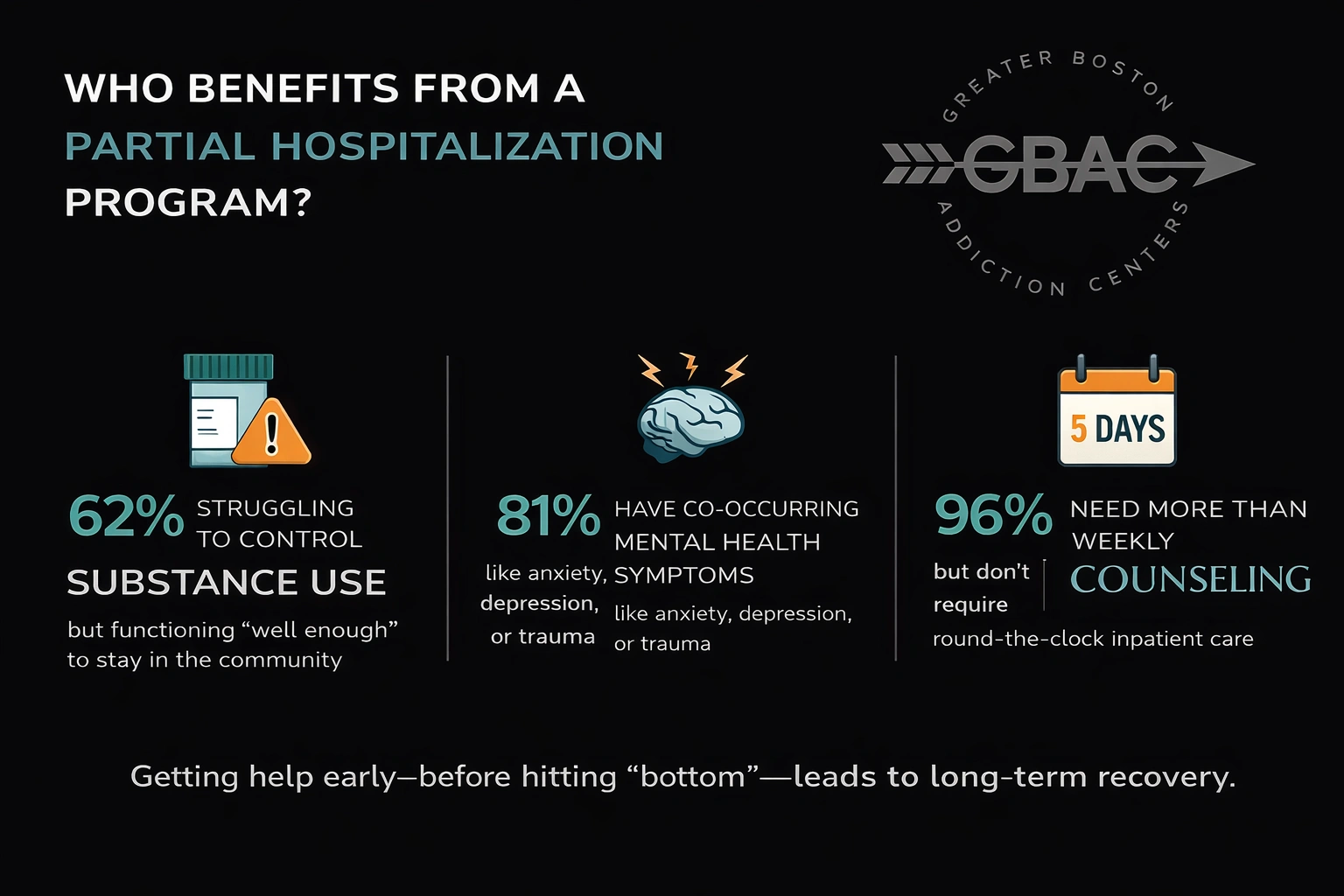
- Need more support than weekly sessions provide
- Feel overwhelmed managing symptoms alone
- Are transitioning from a more intensive setting
- Want consistent guidance while remaining connected to home life
Many people enter partial hospitalization during times when additional structure feels necessary for stability and growth.
How This Phase Fits Into a Longer Treatment Journey
Structured day treatment is rarely a stand-alone solution. Instead, it often serves as one step within a broader care journey.
Some people enter this phase after residential care, while others begin here and later step down to less intensive support. Movement through care is guided by progress, comfort level, and clinical recommendations — not a fixed timeline.
What Often Comes Next After This Phase
As stability improves, many individuals transition into care that offers more independence while maintaining therapeutic support. This gradual step-down approach helps reinforce skills learned while allowing people to re-engage more fully with everyday life.
Decisions about next steps are made collaboratively, with a focus on long-term well-being rather than rushing progress.
Taking the Next Step With More Clarity
Learning what to expect from structured day treatment can make the path forward feel less intimidating. This phase of care is designed to meet people where they are — offering support, routine, and guidance during a critical period of healing.
If you’re considering whether this phase of treatment fits your current needs, a conversation with someone who understands the process can help bring clarity and reassurance.
You’re Not Too Early. You’re Right on Time.
There’s a kind of strength in asking for help before everything breaks. It means you still believe in the possibility of something better. It means you still care.
Maybe you’re not ready for rehab. That’s okay. But you might be ready for this.
Call (877) 920-6583 to learn more. You don’t have to fall apart to start healing. You just have to start. We’ll meet you where you are.
