

You’ve probably whispered it to yourself late at night.
“Maybe this is just a phase.”
You want that to be true. You want this to be a rough season, not a crisis. But when heroin enters the picture, the emotional temperature in a home changes fast. If you’ve found yourself searching for answers about Heroin addiction treatment in Massachusetts, it’s likely because something in your gut is already telling you this is bigger than experimentation.
We want to speak to that part of you—the part that feels scared but doesn’t want to overreact.
When A Parent’s Instinct Gets Loud
Most parents can tell the difference between rebellion and risk.
A phase may include attitude shifts, messy rooms, changing friend groups. It may feel frustrating, but it doesn’t feel dangerous.
A crisis feels different.
It feels like the ground beneath your family has shifted. You may notice secrecy hardening into isolation. Conversations becoming volatile. Money disappearing. Eyes that seem distant. Sleep patterns that don’t make sense.
When heroin is involved, changes can escalate quickly. What starts as “trying something” can move into dependency faster than most families expect. If your home feels like it’s holding its breath, that’s not imagination. That’s your nervous system recognizing threat.
Signs This May Be More Than Experimentation
You don’t need a dramatic overdose to justify concern.
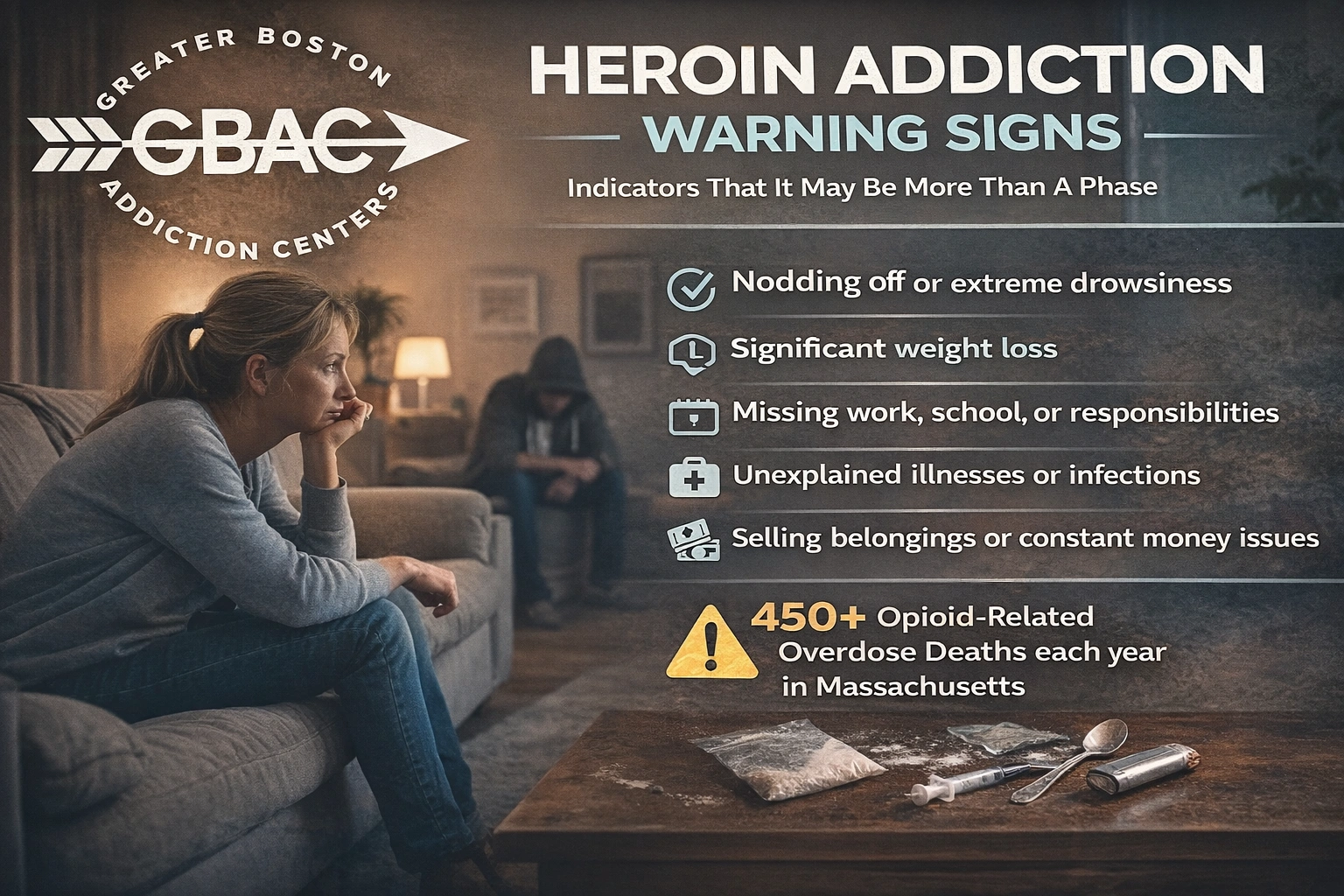
Subtle but serious signs can include:
- Nodding off unexpectedly or seeming unusually drowsy
- Significant weight loss
- Missing work or classes repeatedly
- Unexplained illnesses or infections
- Selling belongings or constant financial crises
- Sudden defensiveness paired with visible decline
Heroin doesn’t just alter behavior. It alters the brain’s reward system. Motivation shifts. Priorities change. What used to matter may no longer register.
If you feel like you’re watching your child slip behind a curtain you can’t pull back, you’re not being dramatic. You’re responding to real changes.
When Mental Health And Substance Use Collide
Sometimes heroin use begins as self-medication.
Anxiety that won’t quiet. Depression that feels suffocating. Trauma that was never processed. Social pressures that feel unbearable.
When mental health and substance use collide, heroin can feel like relief before it becomes a trap.
Parents often turn inward at this stage.
“Did we miss something?”
“Did we push too hard?”
“Did we not push enough?”
Addiction is not a parenting failure. It’s a complex condition involving biology, psychology, and environment. Your child’s use is not proof that you failed them.
But your involvement now matters more than ever.
The Question Every Parent Asks: Is It Time?
The hardest line to draw is between “monitoring” and “acting.”
If your child’s safety is compromised, if they are unable to function in daily life, or if heroin use is escalating in frequency or risk, it may be time to consider a higher level of support.
That doesn’t mean you’ve lost control. It means you are stepping in.
Live-in treatment or round-the-clock support can provide stabilization when home life feels unsafe or chaotic. For some families, exploring support in Residential becomes necessary when access to heroin cannot be interrupted any other way.
Other young adults may benefit from structured daytime care or multi-day weekly treatment while remaining connected to family. The right level depends on severity, mental health symptoms, and safety concerns.
What matters most is not waiting for things to get worse just to justify action.
If They Say You’re Overreacting
This is common.
Your child may minimize. They may insist they can stop anytime. They may accuse you of controlling them.
Denial often protects the substance, not the truth.
Heroin rewires priorities. When someone feels dependent on it, the idea of losing access can trigger fear and anger.
You don’t have to escalate. You don’t have to win the argument.
Stay calm. Name specific behaviors. “You missed work three times this week.” “I found paraphernalia.” “You’ve lost fifteen pounds.” Facts are steadier than emotion.
Consistency is more powerful than confrontation.
When Immediate Action Is Non-Negotiable
There are moments when waiting is not safe:
- A suspected overdose
- Mixing heroin with alcohol or other substances
- Suicidal comments
- Severe withdrawal symptoms
- Unsafe living environments
In these situations, hesitation can increase risk.
Heroin addiction treatment becomes necessary when health, safety, or stability are compromised. That threshold is often crossed quietly—before a dramatic crisis makes headlines.
If you live in communities like Needham, Massachusetts or Waltham, Massachusetts, it can be especially hard to accept that this is happening in your family. These are communities known for strong schools, stable neighborhoods, involved parents.
Addiction does not discriminate by zip code.
It often hides better in places where people are expected to hold it together.
Boundaries Are Not Betrayal
Parents fear that setting firm boundaries will push their child further away.
But boundaries are clarity, not cruelty.
You can:
- Limit financial access
- Refuse to allow drug use in your home
- Require participation in assessment or counseling
- Seek family therapy
- Reach out for professional guidance
Boundaries communicate that safety matters. They also protect you from becoming consumed by chaos.
Think of boundaries as guardrails. They don’t punish the driver. They prevent the car from going over the edge.
What Treatment Actually Changes
Parents often imagine treatment as a dramatic, last-resort move.
In reality, it can be the pause that interrupts momentum.
Heroin addiction treatment provides structure where there has been instability. It creates accountability where there has been secrecy. It offers clinical support when mental health and substance use have become intertwined.
Recovery rarely begins with fireworks. It often begins with exhaustion.
A young adult may resist at first. They may not thank you immediately. But stabilizing the brain and body creates the conditions for clearer thinking.
And clearer thinking creates possibility.
The Emotional Toll On You
We want to speak directly to something you may not be naming.
You are tired.
You may feel hyper-alert all the time. Checking phones. Listening for footsteps. Monitoring tone shifts. Your nervous system may feel stuck in fight-or-flight.
This is trauma for parents, too.
Seeking help for your child is also seeking relief for your family system. It allows professionals to share the weight.
You do not have to carry this alone.
FAQ
How Do I Know If This Is A Crisis And Not A Phase?
A crisis disrupts functioning. If your child cannot maintain work, school, health, or safety due to heroin use, it is beyond experimentation. Escalation, secrecy, and physical decline are key indicators.
What If My Child Refuses Help?
Resistance is common. Calmly expressing concern, setting boundaries, and consulting professionals can create pathways even if your child initially refuses. You can seek guidance as a parent before they agree.
Will Treatment Damage Our Relationship?
Temporary tension is possible. Long-term untreated heroin use poses far greater risks to the relationship. Many families report improved communication and trust after stabilization.
Is Residential Care Too Extreme?
Higher levels of support are appropriate when safety or severe dependency is present. It is not about punishment. It is about containment and protection during a vulnerable period.
What If They Relapse After Treatment?
Relapse does not erase progress. Addiction is a chronic condition for many. The goal is increased safety, faster intervention, and stronger coping skills over time.
How Quickly Does Heroin Addiction Develop?
It varies, but dependency can develop rapidly. Some individuals experience significant physical and psychological reliance within weeks or months of regular use.
Can Mental Health Issues Be Treated At The Same Time?
Yes. Addressing anxiety, depression, or trauma alongside substance use is often essential. When underlying pain is treated, reliance on heroin may decrease.
You Don’t Have To Wait For Rock Bottom
“Rock bottom” is not a requirement.
Waiting for catastrophe to justify action is one of the most painful patterns we see. Early intervention often leads to better outcomes and less trauma.
If your instincts are telling you this is more than a phase, listen to them.
Hope is not blind optimism. Hope is action paired with support.
You are not overreacting for wanting your child safe. You are responding to risk with love.
If you’re unsure what step to take next, start with a conversation.
Call (877)920-6583 or visit our Heroin addiction treatment in Massachusetts to learn more about.
