

Loving someone who’s struggling with substance use can feel like you’re trying to love through a wall. You see the person you know is still in there—underneath the irritability, the distance, the behaviors that don’t make sense. You want to help. You’ve read articles, offered support, maybe even begged them to get treatment. And still… they’re not ready.
That space between knowing they need help and waiting for them to want it is agonizing.
But here’s what we want you to know: you don’t have to go through this silently. And you don’t have to wait for them to agree to drug addiction treatment before you get support.
At Greater Boston Addiction Centers, we help families and partners understand the recovery process, build trust with professional support, and regain their own stability—even when their loved one is still in active use.
It’s Not Just Their Addiction—It Affects You Too
Addiction is often called a family disease for a reason. It ripples through relationships in quiet, exhausting ways.
You may find yourself over-functioning, managing chaos behind the scenes, or absorbing emotional fallout after another broken promise. You may be walking on eggshells, unsure of which version of your partner will walk through the door. You might even be hiding the truth from friends and family—because explaining it feels impossible.
Even if your partner says they’re “fine,” you might be feeling anxious, angry, isolated, or completely worn down.
That experience is valid. And it matters.
You don’t have to wait for a crisis to start asking questions. You deserve answers, clarity, and care now—not just when they hit a breaking point.
Drug Addiction Treatment Isn’t Just for the Person Using
When people think of drug addiction treatment, they often picture the person struggling going away to rehab. But real recovery—especially the kind that lasts—often begins long before someone checks into a program.
And it doesn’t only involve them.
As a partner, you’re often the closest person to the struggle. You see the signs before anyone else. You may be holding onto hope in one hand and heartbreak in the other. And you probably have questions: What will treatment look like? What if they’re not ready? Can I do anything to help?
That’s where we come in.
At Greater Boston Addiction Centers, we work with partners and family members every day. Sometimes that means education. Sometimes it means family counseling. Sometimes it means just having someone to talk to who understands what you’re carrying.
Whether you’re located nearby or looking for drug addiction treatment in Wellesley, you don’t have to do this alone.
Readiness Looks Different Than You Think
It’s easy to believe your partner needs to “want it” before treatment can work. And while willingness can make a difference, it’s not always a clear switch.
People often enter treatment full of resistance. Some do it to appease loved ones. Some just want to avoid consequences. That doesn’t mean treatment won’t help—it just means we start where they are.
What matters more than readiness is access.
When someone is met with support that’s compassionate, nonjudgmental, and personalized, it becomes easier to imagine change. And when they know their partner is learning and growing alongside them, they’re less likely to feel alone or cornered.
Your willingness to understand the process—and to build support now—might be the thing that helps them feel safe enough to consider getting help later.
You’re Allowed to Set Limits Without Abandoning Them
One of the hardest truths partners face is that love and boundaries can exist at the same time.
You can love someone deeply and still say, “I won’t lie for you.” You can stand by them emotionally and still say, “I won’t put myself in danger.” You can be present in the relationship and still say, “I need help too.”
Setting boundaries doesn’t mean you’re giving up on them. It means you’re trying to build something sustainable.
When addiction is active, chaos often becomes normal. Boundaries create a container—a place where healing might actually be possible. They give both of you a chance to step out of survival mode and into something steadier.
You Don’t Have to Have All the Answers
Trying to help someone through addiction often comes with an overwhelming sense of responsibility. You research everything. You monitor their behavior. You hope that the right words, the right tone, or the right threat will finally make them change.
But here’s something important: this isn’t all on you.
You’re not supposed to be their counselor, their detox nurse, their case manager, or their crisis hotline. You’re their partner. And you deserve the space to be just that.
Let us help you understand what’s realistic, what’s supportive, and what’s not yours to carry anymore. Whether your loved one is close by or you’re looking for drug addiction treatment in Waltham, we’re here to support both of you, wherever you are in this process.
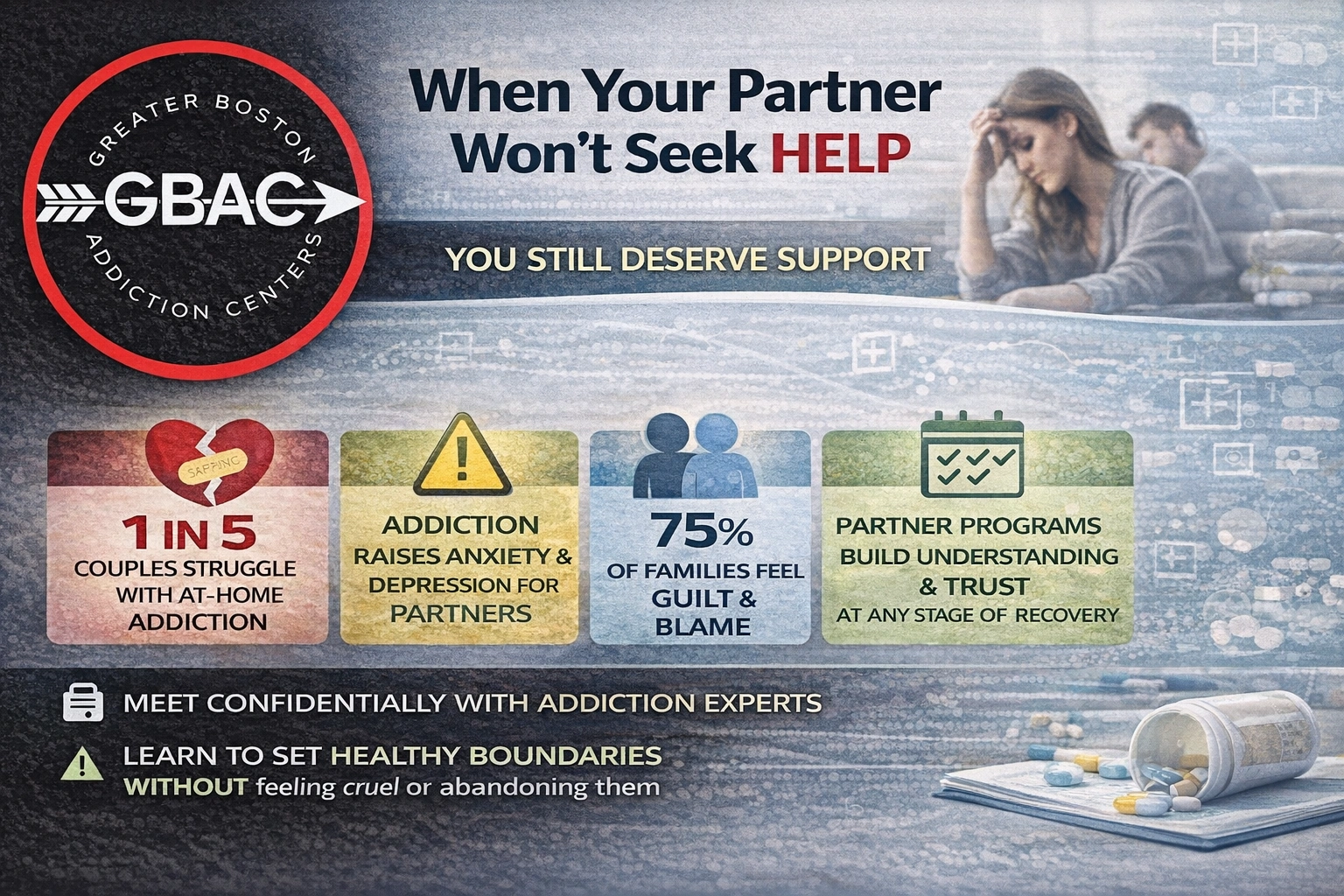
You Can Begin Healing—Even If They Haven’t
This might be one of the most hopeful truths we can offer: your healing doesn’t have to wait for theirs.
You can start individual therapy. You can join a support group. You can rebuild trust with yourself, with your boundaries, with your intuition. You can start breathing again—without waiting for them to “get better.”
And when they do reach that moment of readiness? You’ll be stronger, steadier, and better equipped to support them without losing yourself.
Recovery can be a shared experience. But it starts with someone—anyone—taking the first step.
FAQs: When You Love Someone Who’s Not Ready Yet
Can I talk to a treatment center even if my partner isn’t involved?
Yes. In fact, we encourage it. We can help you understand treatment options, support resources, and ways to prepare—without needing your partner to be on board first.
What if they don’t think they have a problem?
This is incredibly common. Many people using substances minimize or deny the impact. We can help you have effective, non-confrontational conversations and offer resources tailored to their level of openness.
Is it okay to take a break or step back from the relationship?
Yes. You’re allowed to protect your mental and emotional health, even if you love them. Taking space can sometimes help both people reflect and reset.
Will I be judged if I’ve enabled their behavior in the past?
Absolutely not. Many partners fall into patterns of enabling out of love, fear, or survival. There’s no shame in that. Our role is to help you understand those dynamics and move forward with compassion—not guilt.
What if I’m scared that bringing up treatment will push them away?
You don’t have to do this alone. We can help you plan conversations, understand their fears, and approach things in a way that feels supportive instead of confrontational.
Call (877) 920-6583 to learn more about our drug addiction treatment services in Boston, MA. Whether your loved one is ready for change or not, you are allowed to take care of yourself—and we’re here to help you do just that.
