

There was a time I thought maybe I just couldn’t be helped.
It’s not like I didn’t try. I showed up. I filled out the intake forms. I nodded in sessions. I even said the words out loud: “I don’t feel okay.”
But the truth? Therapy didn’t feel like it worked. Not back then.
So when someone suggested CBT—Cognitive Behavioral Therapy—I rolled my eyes. Not out loud, just…inside. Another thing to try. Another thing that probably wouldn’t stick.
But I went. And something happened.
Not everything changed. Not all at once. But something shifted.
And in that small shift, I started to find a way back to myself.
Therapy Didn’t Work—Until I Stopped Waiting for a Breakthrough
I used to think therapy was supposed to feel like some big moment.
Like you walk in broken and walk out with a glowing insight that rewrites your story. But what I got in CBT was a worksheet.
A literal worksheet.
I remember thinking, This is ridiculous. I’m barely holding it together and you want me to circle thought patterns?
But I did it. And on that page, I saw something. A loop I didn’t even realize I was caught in.
It didn’t solve anything. But it named something. And once you name it, you can’t unsee it.
That’s where CBT started for me: not with a breakthrough, but with a small flicker of understanding.
I Wanted Big Change. I Got Small Shifts—and That Was Better
I thought I needed a full-on transformation. A dramatic fix. Something that would finally make me feel like other people looked.
But CBT offered something smaller: the chance to pause. The chance to question. The chance to choose.
It sounds boring, maybe. But when your days feel like survival mode, boring can be revolutionary.
Like: instead of spiraling after one bad interaction, I could sit down and ask, “What’s the story I’m telling myself right now?”
That question didn’t change the facts. But it changed how I responded to the facts. And sometimes, that was enough to keep me from unraveling.
I Had to Learn That Thoughts Aren’t Always Truth
One of the first things CBT teaches is this: Just because you think it, doesn’t mean it’s true.
Sounds obvious. But when your brain is wired for self-doubt, that statement is radical.
CBT helped me slow down my thinking enough to see the automatic thoughts I had—ones I didn’t even know were running the show.
Stuff like:
- “I’ll never get this right.”
- “They probably think I’m annoying.”
- “I always mess things up.”
Once I could see those thoughts clearly, I could start asking: Is that always true? Is there another explanation?
Not to gaslight myself, but to give myself more options than shame or shutdown.
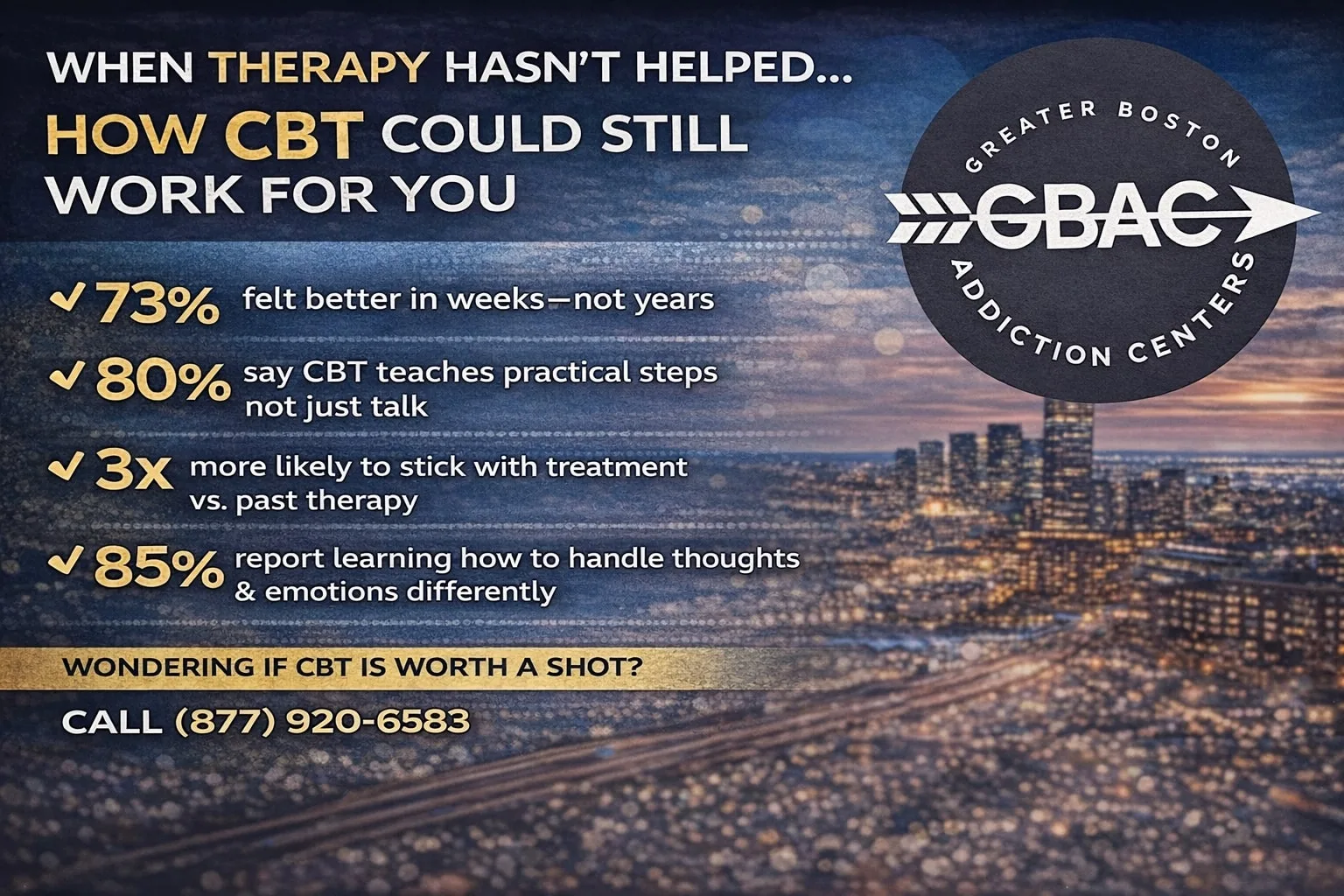
My Therapist Didn’t Push Positivity—And That Helped
What made CBT work for me wasn’t just the approach. It was the person guiding it.
My therapist didn’t tell me to “just think positive” or slap affirmations on top of trauma. She sat with my skepticism. She let me question the process. She made room for the days when I didn’t care.
There was no “fix it” energy. Just this steady invitation to notice, pause, and respond differently.
She once told me: “CBT isn’t here to make you someone else. It’s here to help you become more aware of how you relate to yourself.”
That stuck with me.
The First Changes Were Invisible—But They Were Real
It’s easy to overlook progress when you’re used to pain being loud.
No one threw me a party when I answered a text I would’ve ignored. No one clapped when I challenged a cruel thought instead of letting it ruin my day.
But those tiny moments—they were everything.
CBT helped me stack those moments into momentum. Not fast. Not flashy. But real.
If You’ve Tried Therapy Before and It Didn’t Help…
I want to say this directly: not every kind of therapy works for every person. That’s okay. It doesn’t mean you failed. It just means the fit was wrong.
CBT gave me something practical. Not just insight, but tools.
It helped me:
- Stop waiting to “feel motivated” and start acting differently anyway.
- Recognize when I was predicting failure before even trying.
- Notice when I was beating myself up for things outside my control.
And honestly? It made me feel less stuck.
If you’re near Boston and wondering whether CBT is worth trying again, this program is one place to start.
You Don’t Have to Believe It Will Work. You Just Have to Try.
If you’re reading this and feeling numb, flat, or just plain tired—I get it.
Hope doesn’t always show up like excitement. Sometimes it shows up like exhaustion that says: Maybe I’ll try one more time.
That was enough for me.
It might be enough for you, too.
FAQ: CBT When You’ve Tried Therapy Before
What is CBT, really?
CBT stands for Cognitive Behavioral Therapy. It’s a practical, short-term approach that helps you identify negative thought patterns and replace them with more balanced ones. It’s less about digging into your past and more about shifting how you respond in the present.
What makes CBT different from other therapies?
Unlike talk therapy that focuses on insight, CBT is structured and goal-oriented. It helps you do something with what you’re feeling—not just understand it.
Is CBT just “positive thinking”?
Not at all. CBT isn’t about slapping positivity on pain. It’s about recognizing when your thoughts are distorted or automatic—and learning how to pause, reframe, or redirect them.
What if I don’t feel like it’s helping?
That’s okay. CBT takes time. Some shifts are internal and subtle before they show up in your behavior or mood. Be honest with your therapist. They can adjust the approach.
Can I try CBT again if I’ve done it before and didn’t feel better?
Yes. Sometimes the fit (with the therapist or the timing) just wasn’t right. Trying CBT with a different provider, or when you’re in a new mental space, can make all the difference.
Where can I find CBT services in Boston, MA?
Greater Boston Addiction Centers offers CBT as part of their outpatient and individualized therapy programs. They understand skepticism and create space for real, honest conversations—not just clinical checkboxes.
Still Tired? Still Skeptical? That’s Okay.
You don’t need to believe in therapy with your whole heart. You just need a crack of willingness. That’s where CBT begins.
Call (877) 920-6583 or visit Greater Boston Addiction Centers’ CBT services to learn more about how CBT in Boston, MA can help—especially if you’re not sure it will.
