

You’re still performing.
You’re still producing.
Still answering emails. Still making the meetings. Still showing up for your family.
No one is staging an intervention. No one is threatening to leave.
And yet, something inside feels tight. Tired. Closer to the edge than you let on.
If you’re high-functioning and quietly struggling, I want to say this clearly: you do not need to hit bottom to deserve dbt. As a clinician, I’ve seen far too many capable, intelligent people wait for catastrophe before allowing themselves support.
You don’t have to wait.
The Myth That You Have To Lose Everything First
There’s a narrative that keeps high-functioning people stuck: “It’s not that bad.”
No arrests.
No lost jobs.
No dramatic public fallout.
So you tell yourself you’re fine.
But rock bottom is not a prerequisite for growth. It’s often the result of delaying it.
The truth is, high-functioning individuals are often the most skilled at hiding distress. You’ve built a life that looks stable. You’ve learned how to compartmentalize.
But containment is not the same thing as regulation.
High-Functioning Addiction Is Quiet And Calculated
You don’t drink in the morning.
You don’t miss deadlines.
You don’t implode at family gatherings.
Instead, you:
- Use alcohol or substances to “turn the volume down” at night.
- Push through stress without ever addressing it.
- Avoid vulnerability by staying productive.
- Manage anxiety privately, efficiently, silently.
From the outside, it looks like control.
From the inside, it can feel like constant pressure.
Many professionals and parents in communities like Newton, Massachusetts describe this exact tension—the appearance of composure paired with relentless internal strain.
And individuals in Needham, Massachusetts often tell us they’re terrified of disrupting the life they’ve built, even when that life feels unsustainable.
High-functioning doesn’t mean healthy. It means you’re good at masking.
What DBT Actually Addresses Beneath The Surface
DBT isn’t about labeling you as “severe.”
It’s about strengthening the emotional systems underneath your behavior.
DBT focuses on four core skill areas:
Distress Tolerance – Learning how to survive emotional spikes without reaching for numbing or impulsive behaviors.
Emotion Regulation – Identifying what you’re feeling before it hijacks you.
Interpersonal Effectiveness – Communicating directly instead of avoiding conflict or exploding later.
Mindfulness – Staying present instead of escaping into distraction.
For high-functioning individuals, DBT feels less like crisis intervention and more like recalibration.
It upgrades the operating system you’re already running.
The Signs You Might Need DBT—Even If Nothing Is “Falling Apart”
You might benefit from DBT if:
- You feel emotionally exhausted but can’t explain why.
- You rely on substances to decompress.
- You avoid hard conversations until they become bigger problems.
- You feel intense shame after snapping at someone.
- You struggle to sit with boredom or discomfort.
None of those require a dramatic bottom.
They require attention.
You don’t have to implode to justify growth.
Control Is Not The Same As Stability
High-functioning individuals often pride themselves on control.
You’ve learned to anticipate problems. Manage impressions. Stay ahead of consequences.
But control is exhausting.
When someone walks into my office and says, “I’m managing,” I often ask gently, “At what cost?”
DBT reduces the cost.
Instead of white-knuckling through stress, you build internal flexibility.
Instead of numbing discomfort, you tolerate it.
Instead of suppressing emotion, you regulate it.
That’s stability.
DBT As Preventative Care, Not Damage Control
We often think of therapy as something you do after everything breaks.
But DBT can be preventative.
It teaches you to:
- Pause before reacting.
- Identify emotional triggers early.
- Respond to shame without self-sabotage.
- Navigate conflict without escalating.
If substance use or emotional intensity begins escalating beyond what outpatient work can stabilize, there are higher levels of support available, including help in Residential settings.
But the goal is not escalation.
The goal is early intervention.
You reinforce the structure before it collapses.
The Burnout Bottom No One Talks About
High-functioning people don’t always hit traditional bottoms.
They hit burnout.
Emotional isolation.
Sudden relationship fractures.
Private panic attacks.
A growing dependence that sneaks up gradually.
The crash isn’t loud.
It’s quiet.
And by the time it’s visible, it’s often harder to untangle.
DBT helps prevent that crash.
It teaches you to respond before the spiral.
Why Waiting Feels Safer (But Isn’t)
There’s a part of you that might be thinking:
“I’m still fine.”
“It hasn’t affected my work.”
“I can stop if I need to.”
Those statements may be partially true.
But they don’t address the tension underneath.
Waiting feels safer because nothing has exploded yet.
But prevention is always less painful than repair.
You Don’t Have To Be The Worst Case To Deserve Support
Some high-functioning clients hesitate to reach out because they don’t want to take a spot from someone “worse.”
That belief is rooted in comparison, not reality.
Your pain doesn’t need to be catastrophic to be valid.
If you’re functioning but internally fraying, that matters.
If you’re succeeding but secretly exhausted, that matters.
DBT doesn’t require a public collapse.
It meets you where you are.
What Growth Looks Like Without A Bottom
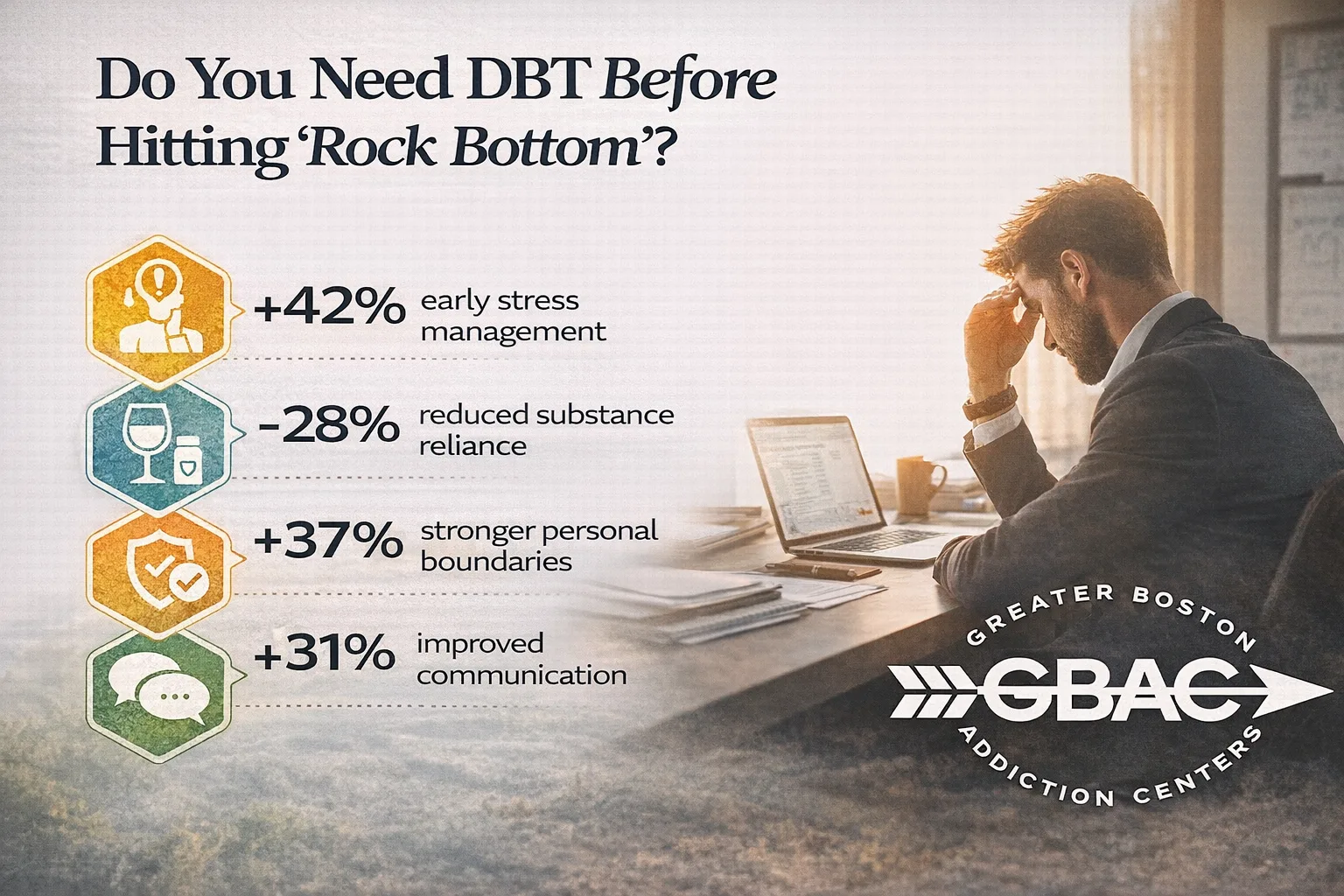
When high-functioning individuals engage in DBT early, we often see:
- More intentional stress management.
- Reduced reliance on substances to decompress.
- Stronger boundaries at work and home.
- Improved communication in relationships.
- A greater sense of internal steadiness.
It’s not flashy.
It’s sustainable.
You stop surviving your life and start participating in it.
Frequently Asked Questions
Do I Really Need DBT If I’m Still Functioning?
Functioning does not equal thriving. If you’re relying on control, avoidance, or substances to manage internal distress, DBT can help you develop healthier coping systems.
Is DBT Only For Severe Cases?
No. While DBT is effective for high-risk behaviors, it’s equally powerful for emotional regulation, stress tolerance, and relationship skills in high-functioning individuals.
What If I’m Afraid Of Being Labeled?
Seeking therapy is not a label. It’s a proactive step. DBT focuses on skill-building, not identity judgments.
Can I Do DBT Without Entering A Higher Level Of Care?
Yes. Many individuals engage in DBT through outpatient programming. Higher levels of care are only recommended when safety or stability requires more containment.
How Do I Know If I’m Just Stressed Versus Needing Help?
If stress consistently leads to numbing behaviors, emotional volatility, or relational strain, it’s worth exploring support before patterns deepen.
Is It Overreacting To Get Help Early?
No. Early intervention is strength. Waiting for collapse is unnecessary.
If you are high-functioning but privately struggling, you do not need to wait for a public failure to justify support.
You don’t need a DUI.
You don’t need a lost job.
You don’t need an ultimatum.
You can choose growth before crisis.
You can choose skill-building before breakdown.
You don’t need to hit bottom to need DBT.
Call (877)920-6583 to learn more about our Dialectical Behavior Therapy in Boston, Massachusetts.
