

There’s a specific kind of silence that comes after you stop showing up. No announcements. No closure. Just… distance.
If you’ve been there, you already know—this isn’t about failure. It’s about figuring out how to come back.
And yes, you can.
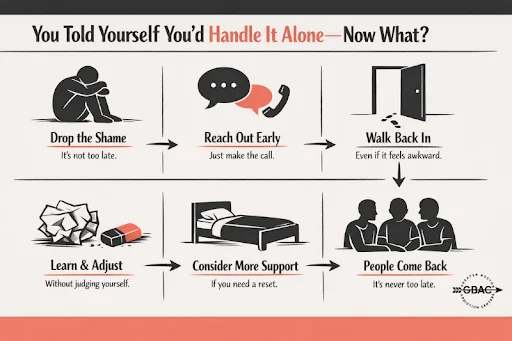
1. Start by Dropping the Story That You “Messed It Up”
Most people who leave mid-treatment carry the same quiet thought: “I probably ruined my chance.”
You didn’t.
People step away for all kinds of reasons—overwhelm, logistics, fear, feeling like it wasn’t working, or honestly just wanting your life back. None of those disqualify you from returning.
Programs aren’t keeping score. They’re used to people leaving and coming back.
You’re not the exception. You’re the pattern.
2. Reach Out Before You Feel “Ready”
You don’t need a perfect explanation.
You don’t need a speech.
You don’t even need to be sober yet.
Just reaching out—whether it’s a call, a message, or revisiting something like this multi-day weekly treatment option in Boston—is enough to reopen the door.
A lot of people wait until they feel “back on track” before they reconnect.
That delay keeps them stuck longer than anything else.
3. Expect It to Feel Awkward (And Walk In Anyway)
This part matters more than people admit.
Coming back can feel like showing up late to a class where everyone already knows each other. You might wonder:
- Do they remember me?
- Do I have to explain where I’ve been?
- Will it be weird?
Maybe. For about five minutes.
Then something shifts. Because the people in that room? They get it more than anyone else. A lot of them have left and come back too.
You won’t be the first. You won’t be judged like you think.
4. Let Your Return Be Messy, Not Perfect
There’s a version of you that thinks:
“If I go back, I have to do it right this time.”
That pressure will keep you out longer than anything.
Coming back isn’t about being “fixed.” It’s about being willing again.
Some people return still struggling. Some come back after a rough week. Some don’t even fully know why they’re there—they just know they don’t want to keep doing this alone.
That’s enough.
5. Learn From What Made You Leave (Without Beating Yourself Up)
You don’t have to turn your experience into a life lesson—but it can help to gently look at what happened.
Not to judge it. Just to understand it.
Maybe:
- It felt like too much, too fast
- You didn’t connect with the group yet
- Life got complicated
- Part of you wasn’t fully in
That information isn’t failure—it’s direction.
It helps shape what your next attempt looks like.
6. Consider More Support If You Need It
Sometimes leaving wasn’t the problem—it was the level of support.
If things felt too loose or unstructured, it might help to step into something more consistent for a while, like support in Residential.
Not as a punishment. As a reset.
There’s no rule that says you have to go back the same way you left.
7. Remember: People Come Back All the Time (Quietly)
Here’s something you don’t always see:
People leave. People ghost. People disappear for weeks or months.
And then they come back.
No spotlight. No announcement.
They sit down. They start again.
And over time, it becomes just another part of their story—not the ending.
“I thought they’d be annoyed or disappointed. They weren’t. They just said, ‘We’re glad you’re here.’ That was it.”
– Former outpatient client
You’re Not Starting Over—You’re Picking It Back Up
There’s a difference.
Starting over feels like losing everything.
Coming back means you already know something about yourself now. What works. What doesn’t. What gets hard.
That awareness matters more than a perfect track record ever will.
And if you’re even thinking about returning, something in you still wants this.
That part is worth listening to.
If you’re ready to take that step—even if it feels uncertain—call 877877920-6583 or explore your options through our intensive outpatient program services in Boston. You don’t have to explain everything. You just have to show up.
