

Sometimes the realization isn’t dramatic.
It’s quieter than that.
A morning headache that lingers too long. A conversation you barely remember. The creeping thought: “I don’t think this is helping me anymore.”
For people in that in-between space, exploring a structured daytime addiction treatment option can provide support without forcing an all-or-nothing decision about drinking.
You don’t have to arrive certain. Curiosity is enough.
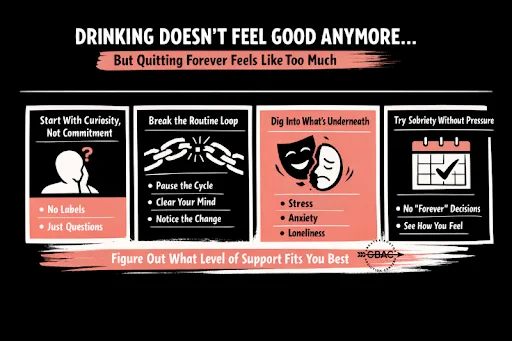
Start by Getting Honest With Yourself
Many sober-curious people live in a strange middle ground.
You’re functioning. Your life might look fine from the outside. But something internally feels off.
Maybe alcohol helps you relax—but it also leaves you anxious the next day.
Maybe social drinking feels normal—but lately it’s becoming the center of everything.
Treatment conversations allow you to talk openly about that gray area. No labels. No pressure. Just honest reflection.
Interrupt the Routine That Drinking Built
Alcohol often slips into daily life quietly.
It becomes the reward at the end of the day.
The stress relief after work.
The social glue that makes everything easier.
Over time, those habits can start running on autopilot.
Structured daytime care interrupts that cycle long enough for you to step back and see what’s really happening. Many people notice their mood, sleep, and focus shifting once that routine pauses.
Sometimes clarity only shows up when the pattern stops.
Talk With People Who Actually Understand the Middle Ground
One of the hardest parts of questioning drinking is feeling like you don’t fit anywhere.
You might not identify with severe addiction stories.
But you also know something about your relationship with alcohol isn’t sitting right anymore.
Group therapy often becomes a surprising relief. You’ll meet others navigating that same uncertain space—people who are curious, reflective, and trying to figure out what healthier living looks like.
And hearing those conversations out loud can make your own questions feel less isolating.
Explore What Alcohol Might Be Covering Up
Drinking rarely exists in isolation.
For many people, alcohol helps soften something deeper:
- Anxiety that never really turns off
- Stress that follows you home from work
- Loneliness that shows up at night
- Emotional overwhelm that’s hard to name
When alcohol steps out of the picture for a while, those underlying experiences become easier to understand.
Therapists help you build tools that actually address those feelings—so alcohol doesn’t have to carry that weight anymore.
Experiment With Change Instead of Declaring It
One misconception about treatment is that it requires an immediate lifelong decision.
In reality, many people begin by simply experimenting with sobriety in a structured setting.
Think of it less like a lifetime contract and more like a reset button.
You observe how your body feels.
You notice how your mind responds.
You gather information about what helps and what doesn’t.
Clarity grows from experience, not pressure.
Discover What Level of Support Feels Right
As people explore change, some realize they benefit from more immersive support for a period of time, such as live-in care like treatment in Massachusetts.
Others continue with daytime treatment while rebuilding healthier routines in their daily lives.
The goal isn’t forcing one path. It’s helping you discover what actually works for you.
Many People Arrive With One Question
They walk in thinking:
“Do I really need to stop drinking?”
What they often leave with is a different realization:
“I deserve to feel better than this.”
That shift—quiet but powerful—is often where real change begins.
If you’ve been wondering whether alcohol is helping or hurting your life, you don’t have to figure it out alone. Call (877)920-6583 or explore our structured daytime addiction treatment options to learn more about our partial hospitalization program services.
