

You did the hard part. You stopped using. You rebuilt pieces of your life.
So why does it sometimes feel like you’re just… existing?
For many alumni, that quiet question shows up years after getting sober. If that’s where you are, this might help you understand why—and what comes next. If you’re revisiting recovery support, some people start by exploring options like heroin recovery support to reconnect with guidance and community.
The Part of Recovery No One Talks About Enough
Early sobriety is loud.
There are milestones. Meetings. Applause for every 30, 60, or 90 days. Life feels intense and urgent.
But years later, the spotlight fades.
You’re working. Paying bills. Showing up for people. From the outside, everything looks stable. Yet inside, something feels muted.
Not relapse. Not crisis. Just… flat.
A lot of long-term alumni quietly ask themselves the same thing:
“Is this all recovery is supposed to feel like?”
That question doesn’t mean you failed. It means you’re human.
Why Long-Term Sobriety Can Feel Emotionally Flat
Addiction recovery removes chaos. But it also removes the emotional extremes that once shaped daily life.
For a while, the goal is simple: stay sober.
Years later, the deeper work begins figuring out how to actually feel alive again.
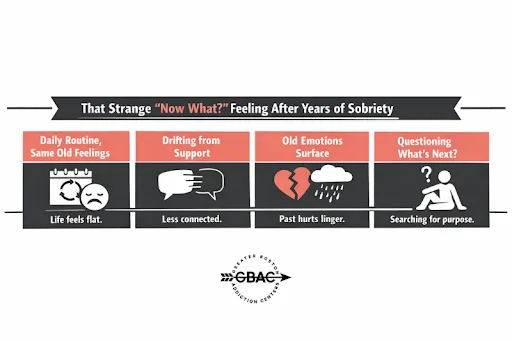
Some reasons people feel stuck include:
- Life becoming routine after years of crisis mode
- Losing connection with recovery communities
- Carrying unresolved grief or trauma that surfaces later
- Feeling pressure to be the “successful sober person”
Sobriety stabilizes life. It doesn’t automatically answer every emotional question.
And that realization often shows up years into recovery.
The Quiet Distance That Happens After the Milestones
At some point, many alumni drift away from the things that helped early on.
Meetings get less frequent. Conversations about recovery become rare. The urgency fades.
That’s not necessarily bad. Growth often means building a full life outside of recovery spaces.
But sometimes the distance grows too wide.
Without realizing it, people stop checking in with themselves. They stay sober, but the connection to purpose, community, or personal growth—slowly thins out.
Sobriety stays intact. Meaning gets blurry.
Feeling Stuck Doesn’t Mean You’re Doing Recovery Wrong
One of the biggest misconceptions about long-term sobriety is that it should feel permanently freeing.
But recovery isn’t a finish line. It’s more like learning how to live again without anesthesia.
Some years feel expansive.
Others feel like maintenance mode.
That doesn’t erase what you’ve accomplished.
Sometimes feeling stuck is actually a signal that the next stage of recovery is trying to begin. Not survival. Not stabilization.
Growth.
Reconnection Often Starts Smaller Than You Expect
When people feel disconnected from their recovery, they often think they need a massive reset.
They usually don’t.
Reconnection often starts with small shifts:
- Talking honestly with someone who understands recovery
- Revisiting a support group after years away
- Exploring deeper therapy work
- Finding new meaning in helping others
Sometimes people also benefit from structured environments again—even temporarily—especially if emotional patterns resurface. For example, some alumni reconnect through programs offering support in Residential, where the focus shifts from crisis to deeper personal rebuilding.
It’s not starting over.
It’s continuing the work.
You’re Not the Only One Asking These Questions
Here’s something that surprises many people:
A huge number of long-term alumni privately wonder if they’re the only ones feeling this way.
They aren’t.
People with five, ten, even twenty years sober still face periods of disconnection, emotional fatigue, or identity shifts.
The difference between those who stay stuck and those who grow again is usually simple:
They talk about it.
They stay curious.
They let recovery evolve.
Because the truth is, sobriety isn’t supposed to freeze you in time. It’s supposed to keep unfolding.
Recovery changes over time. If you’ve been feeling disconnected or unsure about what comes next, support is still available. Call (877)920-6583 or visit our heroin addiction treatment services to learn more about our Heroin addiction treatment services.
