

From the outside, everything looks solid.
The job is stable. The income is good. People rely on you. You show up, deliver results, and keep things moving.
But privately, substances start filling more and more of the space meant for rest, relief, or peace.
For many professionals, the realization doesn’t arrive with a crisis. It arrives with exhaustion and the question: How long can I keep this up?
Some begin exploring structured recovery options like a flexible outpatient treatment schedule that allows support without stepping away from work or family life.
The Kind of Stress That Doesn’t Show on the Outside
High-performing careers often come with invisible pressure.
Deadlines stack up. Expectations rise. People depend on you to stay composed and capable no matter what’s happening internally.
So many professionals learn to regulate stress privately.
A drink becomes a way to transition out of work mode.
A pill helps keep focus sharp.
Something at night helps quiet a brain that refuses to shut off.
At first, it feels manageable.
Then it slowly becomes necessary.
Why High-Functioning People Hide Struggles So Well
People who succeed professionally are often very good at managing appearances.
They plan ahead. They meet obligations. They keep personal problems contained.
Which means substance use can grow quietly in the background without triggering alarm bells.
You might still be:
- Showing up early
- Meeting deadlines
- Leading meetings
- Taking care of family responsibilities
But internally, the margin for error starts shrinking.
There’s less space to rest. Less clarity. Less control.
The Tired Feeling Many Professionals Recognize
One of the most common emotions high-functioning individuals describe isn’t chaos.
It’s fatigue.
The mental load of maintaining two realities becomes draining:
One life where everything looks successful.
Another where substances are quietly holding the system together.
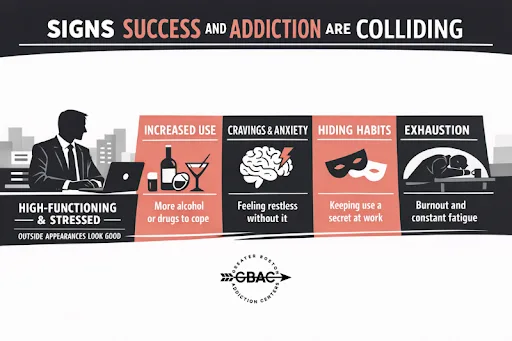
People begin noticing things like:
- Drinking becoming a daily routine instead of occasional
- Anxiety creeping in when alcohol or drugs aren’t available
- Difficulty sleeping without help
- A growing sense of dependence
It’s not dramatic. But it’s persistent.
The Moment of Honest Self-Reflection
Most professionals don’t wake up one day and declare they need treatment.
Instead, there’s a slow awareness building.
A question that keeps resurfacing.
Is this sustainable?
Maybe it shows up during a long flight home from work.
Maybe during a quiet weekend morning with lingering anxiety.
Sometimes the realization is simple but powerful:
Success shouldn’t feel this fragile.
That’s often the moment people begin searching for support that fits into their existing lives.
Finding Support Without Pressing Pause on Everything
One of the biggest fears professionals have about seeking help is losing control of their schedule, reputation, or responsibilities.
But many recovery paths are designed to fit into real-world obligations.
Multi-day weekly treatment allows individuals to work on recovery while maintaining careers, family commitments, and daily routines.
And for those who need a deeper reset, options like help in Residential can provide a focused environment before transitioning back into daily life.
Different people need different levels of support.
What matters is beginning somewhere.
The Strength Behind Asking for Help
Many professionals believe admitting they need help means losing control.
In reality, it’s often the moment they regain it.
The same qualities that built their careers—discipline, focus, resilience—can become powerful tools in recovery.
And many people discover something unexpected along the way.
The pressure doesn’t disappear overnight.
But life begins to feel lighter when substances are no longer carrying the weight of every stressful day.
If you’re a professional who feels like success and substance use have started overlapping in uncomfortable ways, you’re not alone—and support exists that respects your responsibilities and your privacy.
Call (877)920-6583 or visit our flexible outpatient treatment options to learn more about our intensive outpatient program services in Massachusetts.
