

When you’re watching your child unravel and you don’t know why—it’s terrifying. Maybe they’re not the same person they were six months ago. Maybe they won’t get out of bed, or they lash out, or they’ve pulled away completely. And no matter how much you try, you can’t seem to reach them.
As a parent, all you want is to know they’re safe and that something—anything—can help.
Cognitive Behavioral Therapy (CBT) isn’t a magic solution, but it is one of the most effective, research-backed therapies for young adults in behavioral health crisis. And at Greater Boston Addiction Centers, we use CBT to help bring clarity, structure, and relief when everything feels overwhelming.
What Is CBT—and Why Is It So Widely Used?
CBT stands for Cognitive Behavioral Therapy. It’s a structured, time-limited form of psychotherapy that focuses on how our thoughts, emotions, and behaviors are connected. Instead of digging endlessly into the past, CBT asks: What’s happening now? And what can we do to shift it?
For a young adult in crisis—whether they’re battling depression, anxiety, mood swings, or trauma—this approach is often more approachable than abstract talk therapy. CBT breaks overwhelming emotions into manageable patterns and teaches real-world strategies for coping.
At its core, CBT helps someone believe: “I’m not broken. My thoughts are powerful—but I can learn to manage them.”
CBT Works Fast Enough to Matter—But Builds Tools That Last
In a behavioral health crisis, time feels urgent. Parents often think, We don’t have months to wait and see if something helps. CBT acknowledges this. It’s designed to start helping in just a few sessions by introducing practical tools to manage distress.
Here’s how it works:
- Early sessions focus on education and safety: understanding the basics of CBT, identifying harmful thought patterns, and building a sense of stability.
- As therapy progresses, clients begin practicing new thinking and behavior skills, often both in and outside of sessions.
- Over time, they learn how to respond to negative thoughts without spiraling—and how to take small, meaningful steps even when their brain is screaming that nothing will work.
Even if your child is deeply resistant to treatment, the structure of CBT helps lower the emotional barrier. It doesn’t ask them to spill their heart on day one—it invites them to test small shifts that create real change.
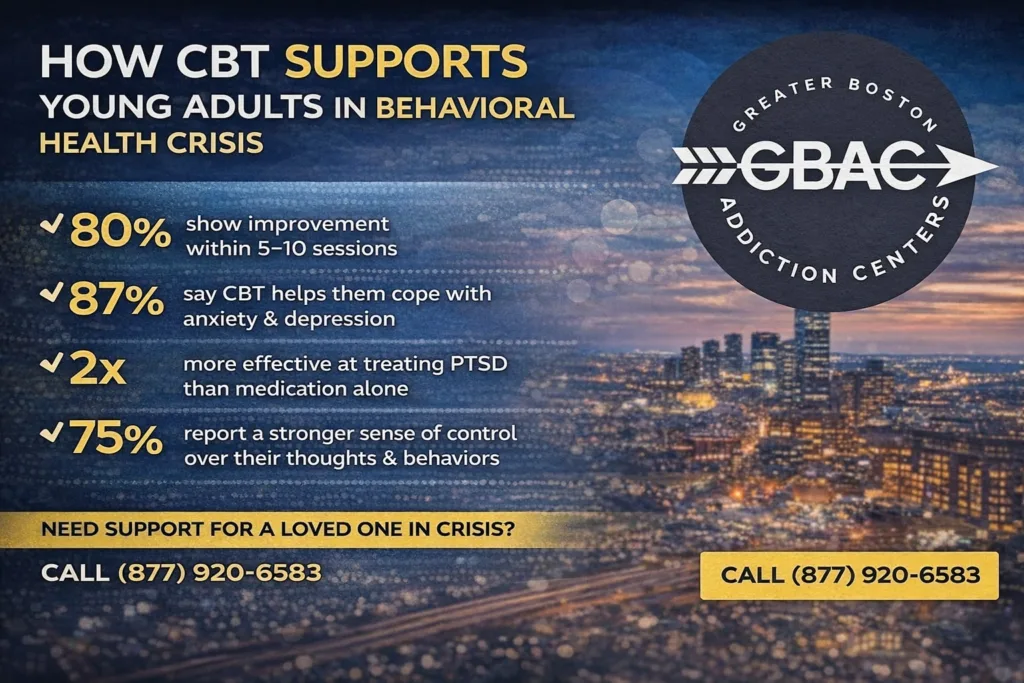
Why Young Adults Respond Well to CBT
Emerging adulthood (ages 18–25) is full of transition. For many young people, this is when anxiety, depression, and other mental health issues intensify. It’s also a time when autonomy, identity, and trust are particularly fragile.
CBT respects that. It’s collaborative, not prescriptive.
Rather than telling a young adult what they should feel or how they should act, CBT helps them become curious about their own patterns. This builds confidence and self-awareness without shame.
Some key reasons CBT is a good fit for young adults:
- It feels relevant – CBT connects directly to challenges they face: social anxiety, panic attacks, relationship struggles, academic pressure, self-doubt.
- It gives back a sense of control – Crisis often makes people feel powerless. CBT teaches them that thoughts can be observed, challenged, and reshaped.
- It works with or without full buy-in – Even if a client doesn’t believe in therapy, CBT can help. The exercises themselves work to reduce symptoms.
CBT Creates a Sense of Safety Through Structure
In a behavioral health crisis, unpredictability becomes the norm. Sleep is irregular. Emotions swing. Families feel like they’re walking on eggshells. For a young person living in this chaos, structure itself becomes therapeutic.
CBT offers a sense of rhythm:
- Sessions are consistent and goal-oriented
- Strategies are taught step by step
- Progress is tracked and celebrated—even if it’s small
This framework provides psychological safety. Your child may not be able to control everything happening in their mind or life—but they can start learning how to respond differently.
A Different Kind of Help—Without Shame or Blame
Families in crisis often feel overwhelmed by guilt. You may be asking yourself: Did I miss the signs? Did I push too hard? Is this my fault?
Here’s the truth: mental health struggles are never about failure. Not theirs. Not yours.
CBT doesn’t dwell on blame. It doesn’t label your child as damaged. It helps them understand how their brain reacts to fear, pain, and stress—and how they can interrupt those cycles. It also teaches healthy ways to cope with distressing emotions that don’t involve self-isolation, self-harm, or avoidance.
For parents, CBT can be a relief. You don’t have to fix everything. But with the right support, your child can start learning how to help themselves.
CBT at Greater Boston Addiction Centers: How We Help
At Greater Boston Addiction Centers, we use CBT as part of our comprehensive behavioral health services for young adults. Our team of licensed therapists and counselors has deep experience helping clients through acute emotional distress.
What makes our approach different:
- Individualized Care – We don’t use CBT as a one-size-fits-all method. We adapt it to each client’s pace, symptoms, and learning style.
- Collaborative Approach – Families are supported, not sidelined. When appropriate, we offer guidance on how to support your loved one without stepping into conflict or rescue mode.
- Realistic Hope – We’re not here to overpromise. We’re here to walk beside you with calm, compassionate clarity—and a treatment plan that works.
FAQ: CBT for Young Adults in Crisis
What mental health issues does CBT help with?
CBT has been shown to be effective for a wide range of mental health conditions including depression, anxiety disorders, PTSD, OCD, and self-harming behaviors. It also supports emotional regulation and problem-solving, which can help in general behavioral crises.
How quickly does CBT start working?
Many people begin noticing small shifts within a few sessions. While full progress takes time, CBT is designed to offer practical tools early on, which can help reduce distress quickly—even if deeper healing is still underway.
Does CBT work even if my child doesn’t want help?
Yes. CBT can still be helpful even if the person is skeptical. Because it’s focused on immediate thought-behavior links, some clients start engaging with it just because it makes them feel slightly better—even if they’re unsure about therapy overall.
Can parents be involved in the CBT process?
In many cases, yes. While sessions are private, therapists may involve parents in supportive roles, especially when working with young adults still living at home or in close contact with family.
Is CBT enough on its own?
Sometimes, yes. But for young adults in deeper crisis, CBT is often combined with other therapies, medication management, or more intensive treatment programs like IOP (intensive outpatient programming).
If You’re in Boston and Don’t Know What to Do Next
You’re not alone—and you’re not expected to figure this out on your own. Whether your child is already asking for help or you’re still trying to reach them, our team is here to support you. Greater Boston Addiction Centers offers CBT services in Boston, MA designed to meet young adults where they are—with respect, warmth, and proven tools. If you live near Boston, Dedham, Waltham, or West Roxbury, Massachusetts, you can find the same evidence-based care and personalized treatment through GBAC’s nearby programs.
Call (877) 920-6583 or visit Greater Boston Addiction Centers to learn more about how CBT can help your loved one find their way forward.
